How Travel Enhances Career and Networking Opportunities
Adrian Park September 18, 2025
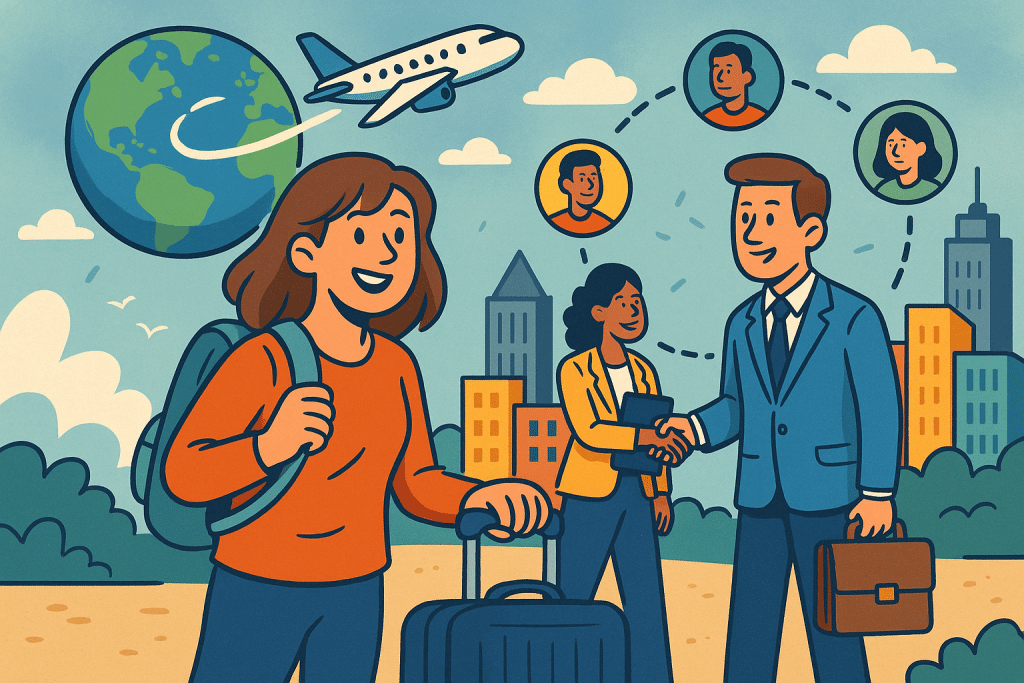
Travel isn’t just about sightseeing anymore—it’s increasingly seen as a strategic investment in career growth. From global networking events to digital nomad hubs, professionals are discovering that travel enhances career and networking opportunities in ways that staying local simply can’t.
The Rise of Travel as a Career Accelerator
In today’s globalized economy, location has become less of a barrier and more of a tool. Professionals who travel for work or leisure often report expanded opportunities to network, gain skills, and access new markets. A 2023 survey by Statista found that 72% of business travelers believe international trips directly boosted their career opportunities (Statista 2023).
What’s more, companies increasingly view mobility as an asset. A study by Harvard Business Review highlighted that employees who work across cultures build stronger leadership and problem-solving skills (Neeley 2020).
Why Travel Enhances Career and Networking Opportunities
1. Global Networking Beyond LinkedIn
Attending international conferences, trade shows, or co-working meetups opens doors to personal interactions that digital platforms can’t replicate. Research shows face-to-face interactions are 34 times more effective than email exchanges when it comes to building professional relationships (Harvard Business Review 2017).
These interactions often lead to mentorships, collaborations, or even new job offers that may not have been possible without in-person networking.
2. Building Cross-Cultural Skills
Employers increasingly seek talent that can navigate cultural differences. Traveling helps professionals build “cultural intelligence,” the ability to adapt to new environments and work effectively with diverse teams.
For instance, a LinkedIn Workplace Learning Report revealed that cultural adaptability is one of the top soft skills employers demand in 2024 (LinkedIn 2024). Travel provides a hands-on way to develop it.
3. Access to Emerging Job Markets
Remote work has made it easier than ever for professionals to tap into opportunities abroad. Cities like Lisbon, Bali, and Mexico City have become hotspots for digital nomads, offering vibrant ecosystems of entrepreneurs, startups, and freelancers.
By traveling to these hubs, professionals gain exposure to innovative industries, broaden their network, and often discover career paths unavailable in their home countries.
4. Expanding Personal Brand and Visibility
Traveling professionals often document their journeys on LinkedIn, blogs, or podcasts. This not only builds credibility but also positions them as global thinkers. Recruiters and clients are drawn to individuals who demonstrate adaptability and a global perspective—qualities strongly associated with success in leadership roles.
5. Hybrid Work and Travel: The Bleisure Trend
The rise of “bleisure”—combining business and leisure travel—is another trend fueling career growth. According to the Global Business Travel Association, half of business travelers now extend their work trips for personal networking and exploration (GBTA 2023).
This trend allows professionals to immerse themselves longer in new markets, fostering deeper connections while also improving work-life balance.
Practical Guide: Using Travel to Boost Your Career
Attend Industry Events Abroad
Global conferences like Web Summit in Lisbon or CES in Las Vegas are more than just tech showcases—they are networking arenas where billion-dollar deals and partnerships often begin. By showing up in person, you gain access to keynote speakers, private mixers, and opportunities to exchange ideas with the brightest minds. These events often feature career fairs and startup competitions, making them perfect platforms to pitch yourself or your business.
Join Co-Working Communities
Remote work hubs such as WeWork, Selina, and Hubud in Bali attract digital nomads, entrepreneurs, and corporate innovators. These communities don’t just provide office space—they create ecosystems where collaboration happens naturally over coffee, workshops, and evening networking mixers. Many co-working memberships also include access to global branches, allowing you to build an international network across multiple countries without extra effort.
Leverage Government or NGO Programs
Programs like Erasmus+ in Europe or the Fulbright Scholarship in the U.S. are designed to facilitate academic and professional exchanges. They often cover travel, housing, or living stipends, making them cost-effective ways to gain international exposure. Participating in these structured opportunities demonstrates adaptability and global competence—qualities highly valued by employers in multinational industries.
Document Your Experience
In today’s digital age, your professional visibility depends on how well you share your journey. Posting insights on LinkedIn, publishing articles on Medium, or even starting a niche YouTube channel can establish you as a thought leader. Recruiters and potential collaborators increasingly look for candidates who showcase not only expertise but also the ability to articulate it to a global audience.
Plan Strategic Destinations
Instead of traveling randomly, align your destinations with industries that are thriving. For example, Singapore is a fintech powerhouse, Berlin has become a hub for startups and creative industries, and Copenhagen is a global leader in sustainability. By placing yourself where innovation is concentrated, you can immerse yourself in ecosystems that accelerate your career trajectory.
Go Beyond the Obvious
Career-focused travel doesn’t always mean jetting off to big-name cities. Sometimes, emerging markets provide even greater opportunities. For example, Nairobi is quickly becoming Africa’s Silicon Savannah, while Medellín, Colombia has transformed into a tech and innovation hub. Exploring these less conventional destinations not only gives you access to untapped markets. It also sets you apart as a forward-thinking professional willing to go where others don’t.
Conclusion
In an age where opportunities are borderless, travel is more than an escape—it’s a career strategy. By expanding networks, developing cultural intelligence, and gaining access to global markets, professionals can position themselves ahead of peers who remain static.
Beyond short-term gains such as new contacts or immediate job prospects, travel nurtures adaptability, problem-solving, and resilience—skills increasingly sought after in global workplaces (Ashbourn, 2014). It creates unique experiences that can be leveraged in interviews, business negotiations, and cross-cultural collaborations, giving professionals an undeniable edge.
Moreover, exposure to diverse perspectives fuels innovation and creativity, qualities that employers now rank among the most valuable for leadership roles (Thomas & Tian, 2021). Whether through international conferences, digital nomadism, or short-term study abroad programs, the investment in travel multiplies returns across an entire career journey.
The key takeaway: travel enhances career and networking opportunities not just in the short term, but also as a long-term investment in personal and professional growth. Those who embrace the world as their classroom and marketplace are better equipped to lead, adapt, and thrive in an interconnected economy.
References
- LinkedIn (2022) How Travel Can Advance Your Career and Personal Development. Available at: https://www.linkedin.com/ (Accessed: 18 September 2025).
- Forbes (2021) Why Traveling Is The Best Education You Can Get. Available at: https://www.forbes.com/sites (Accessed: 18 September 2025).
- Harvard Business Review (2020) The Career Benefits of Travel and Global Experience. Available at: https://hbr.org/2020/03/ (Accessed: 18 September 2025).

 Emerging Trends in Fitness and Body Care