How Marketing Influences Consumer Decisions in 2025
Nathan Cole September 22, 2025
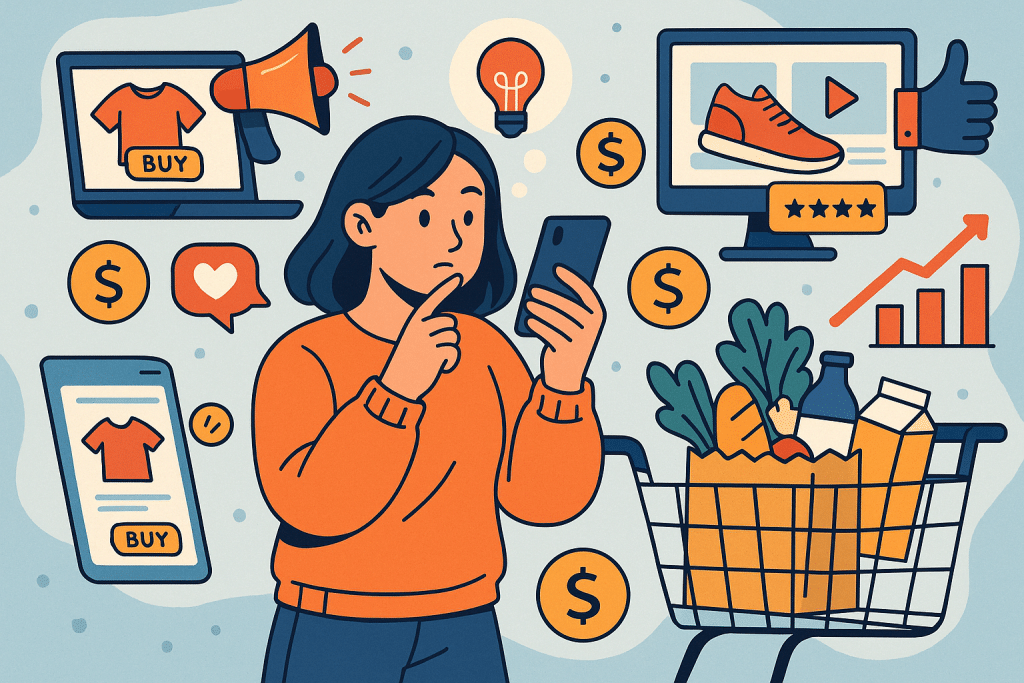
How marketing influences consumer decisions in 2025 is no longer a mystery—it’s data-driven, hyper-personalized, and shaped by artificial intelligence (AI). From TikTok ads that predict your next purchase to retail stores powered by neuroscience, marketing is rewriting the psychology of choice.
The Shifting Landscape of Consumer Decision-Making
In 2025, consumers are bombarded with thousands of ads daily, but what’s different now is how precisely those ads are targeted. Unlike the banner-blind days of early internet marketing, modern campaigns use behavioral data, machine learning, and predictive analytics to anticipate needs before a consumer even articulates them.
A recent Deloitte survey revealed that 62% of consumers now expect brands to personalize their experiences across digital platforms, and more than half said they are more likely to purchase from companies using AI-driven recommendations (Deloitte 2024).
This shift means consumer decision-making is less about random preference and more about how effectively brands integrate into everyday life.
Key Trends Defining Marketing in 2025
1. AI-Powered Personalization
Artificial intelligence sits at the core of how marketing influences consumer decisions in 2025. Brands are not just segmenting audiences; they’re creating dynamic campaigns tailored to individuals.
- Hyper-targeted ads: Algorithms now adjust copy, visuals, and offers in real-time.
- Predictive recommendations: Retailers like Amazon and Alibaba are deploying AI to anticipate needs, with product suggestions that feel eerily intuitive.
- Voice assistants: Alexa, Siri, and Google Assistant are serving as gatekeepers, guiding purchase decisions based on partnerships and data history.
According to McKinsey, companies using AI personalization see revenue lifts of up to 15%—a massive edge in saturated markets (McKinsey 2024).
2. Neuromarketing and Consumer Psychology
2025 is also witnessing the rise of neuromarketing—techniques that analyze eye movement, brainwave activity, and emotional responses to optimize ads. Companies are using biometric tools to test how consumers react subconsciously to colors, sounds, and even textures displayed on screen.
For example, Coca-Cola recently launched campaigns informed by fMRI research, showing how brand visuals activate pleasure centers in the brain (Harvard Business Review 2023). This science-backed approach goes beyond persuasion—it taps into the biology of decision-making.
3. The Power of Social Commerce
Social media platforms have transformed into full-scale shopping hubs. TikTok Shop, Instagram Checkout, and YouTube Live Shopping dominate impulse buying. What makes these platforms effective is the blending of entertainment with purchasing opportunities.
- User-generated content (UGC): Peer influence now trumps traditional advertising.
- Creator partnerships: 70% of Gen Z consumers say they trust influencers as much as their friends (Pew Research 2024).
- Frictionless checkout: Consumers can buy directly within apps without leaving the platform.
This seamless experience demonstrates how marketing influences consumer decisions in 2025 by collapsing the gap between inspiration and transaction.
4. Sustainability as a Marketing Imperative
Today’s consumers demand more than low prices and flashy ads—they want values that align with their own. Sustainability messaging is no longer optional; it’s essential.
Brands like Patagonia, IKEA, and Tesla are embedding green commitments into every ad. In fact, Nielsen found that 73% of global consumers are willing to pay more for sustainable products (Nielsen 2024).
Marketing campaigns now emphasize carbon footprints, ethical sourcing, and circular economies. This trend directly affects consumer decision-making: buyers increasingly equate spending with activism.
5. Immersive Technologies: AR and VR Marketing
Augmented reality (AR) and virtual reality (VR) have finally moved from novelty to necessity in 2025. Virtual try-ons, 3D product demos, and immersive brand experiences are reshaping retail.
- Fashion: AR mirrors in Zara allow shoppers to visualize outfits without trying them on.
- Home goods: IKEA Place app lets consumers redesign their living rooms in seconds.
- Travel: Tourism boards offer VR experiences of destinations before booking.
These tools reduce uncertainty, making consumers more confident in their purchases.
Why Consumers Are More Vulnerable Than Ever
While personalization feels convenient, it also raises questions about consumer autonomy. If algorithms constantly anticipate desires, are people still making independent choices?
A 2025 MIT study warns that predictive marketing could reinforce biases, nudging consumers toward purchases that maximize profit for companies rather than benefit for individuals (MIT 2025).
This ethical tension underscores the need for transparent practices in AI-driven marketing.
Practical Takeaways for Brands in 2025
To stay competitive, businesses should focus on:
Leveraging AI responsibly – Artificial intelligence is no longer optional, but its use must be transparent. Consumers are increasingly wary of personalization that feels invasive. Brands that openly explain how they use data and give users meaningful control over their preferences will gain loyalty, while those who cross the line risk reputational damage.
Balancing influence with authenticity – Social influence remains powerful, but over-engineered campaigns are losing credibility. In 2025, authenticity is the true currency. Customers can spot manipulation quickly, and brands that partner with genuine voices, foster two-way conversations, and show vulnerability will cultivate stronger trust than those chasing superficial reach.
Integrating sustainability into storytelling – Greenwashing is no longer tolerated. Audiences want proof, not promises. Companies that back up their eco-claims with measurable impact—whether through carbon reduction reports, recyclable packaging initiatives, or transparent supply chains—will stand apart. Storytelling must highlight real change, not surface-level marketing gimmicks.
Exploring immersive experiences – With AR and VR adoption accelerating, early adopters have a chance to dominate consumer mindshare. Immersive product demos, virtual shopping, and branded 3D experiences allow businesses to stand out and create lasting emotional connections. As costs fall, waiting to act will only leave brands behind.
Embracing community-driven marketing – In 2025, peer recommendations outweigh brand promises. Online communities, micro-influencers, and social circles now shape purchasing decisions far more than glossy ad campaigns. Brands that empower their customers to share authentic stories, foster co-creation, and reward advocacy will thrive in this era of community-led growth.
Conclusion
How marketing influences consumer decisions in 2025 comes down to one central truth: technology doesn’t just sell products, it shapes desires. From AI personalization to neuromarketing, today’s marketing is less about convincing and more about guiding choices before they’re consciously made.
For businesses, the future means blending data, psychology, and ethics into every campaign. For consumers, it’s a new reality where decision-making is both more convenient and more subtly influenced than ever before.
References
- Kotler, P. and Keller, K.L. (2023) Marketing Management: 17th Edition. Harlow: Pearson Education. Available at: https://www.pearson.com/en-us/ (Accessed: 21 September 2025).
- NielsenIQ (2024) Global consumer trends shaping purchase decisions in 2025. Available at: https://nielseniq.com/global-consumer-trends-2025 (Accessed: 21 September 2025).
- Harvard Business Review (2025) ‘How AI-driven marketing reshapes consumer choices’, Harvard Business Review. Available at: https://hbr.org/2025/02/(Accessed: 21 September 2025).

 Strategies for Building a Resilient Entrepreneurial Mindset