What You Miss About Deepfake News in Social Media
Giulia Bianchi September 26, 2025
Deepfake news stories are reshaping public opinion and fueling online debates. This guide explores the technology behind viral synthetic media, its impact on trust in journalism, and strategies everyday readers use to spot manipulated content online.
The Rise of Deepfake News
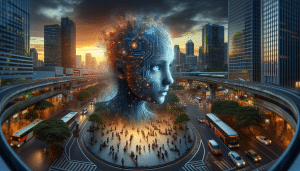
Deepfake news refers to fabricated content created using advanced artificial intelligence, particularly machine learning algorithms. In recent years, the technology behind deepfakes has progressed rapidly, making it harder than ever for the average social media user to distinguish genuine information from manipulated media. Deepfake videos, which can convincingly mimic politicians, celebrities, or ordinary individuals, have gone viral across platforms. This sudden surge of hyper-realistic fake news has prompted widespread concern about the reliability of information online and heightened demands for digital literacy among news consumers.
Unlike traditional misinformation that relies mainly on altered text or staged photographs, deepfakes utilize neural networks to generate moving images and audio that appear authentic. Such innovations have enabled creators to synthesize events, replicate voices, and create entirely fictional scenarios. While some deepfakes are intended for satire or entertainment, others are deployed with more harmful intentions, including political manipulation, financial scams, or reputational damage. These advances mean that even trained eyes often struggle to verify visual content, let alone casual internet users.
Public awareness about synthetic media manipulations is only just beginning to catch up. Reports of international misinformation campaigns, digitally altered interviews, and viral deepfake hoaxes spark widespread debates about the future of trusted journalism. As exposure increases, many users find themselves questioning the authenticity of online headlines and clips. This uncertainty raises new questions about the influence of artificial intelligence on news ecosystems and how digital platforms should respond to protect audiences.
How Deepfake Technology Works
Deepfake technology relies on sophisticated algorithms known as generative adversarial networks (GANs) to create imitations of real people or events. In essence, two neural networks—one generating and one evaluating—compete with each other to improve the realism of the produced content. Over time, the generator becomes highly skilled at mimicking subtle facial expressions, speech inflections, and body language. This makes it possible to fabricate convincing news videos that are almost indistinguishable from actual footage. Understanding how GANs operate demystifies the process as more than just digital trickery—it’s a technical evolution in synthetic media creation.
The primary input for a deepfake system is a large dataset of video and audio clips of the target person or subject. The software analyzes this data, extracting visual and audio cues, and then uses the information to re-create scenes or conversations. The rapid advancement in computing power combined with publicly available open-source software means that almost anyone with basic tech skills can produce surprisingly convincing deepfakes. Concerns arise when these tools become accessible for malicious use, especially in the realm of viral news stories shared on social media channels.
Researchers and journalists tracking synthetic media are sounding alarms about the widespread impact and democratization of deepfake technologies. While developers also create detection tools that use reverse analysis and AI screening to spot manipulated files, the escalating sophistication of deepfakes means the battle between creators and detectors is ongoing. As a result, the average social media user may no longer be able to rely solely on instinct or visual cues to spot false content, further complicating digital news consumption.
Why Deepfake News Goes Viral
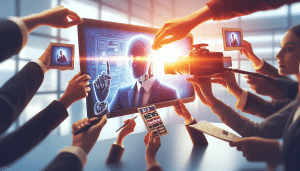
Deepfake news content spreads faster than traditional misinformation because it appeals to visual curiosity and leverages the instant shareability of social media. When users encounter a video that looks authentic but contains shocking or controversial claims, they’re more likely to share it without verifying its legitimacy. The emotional engagement triggered by such videos—ranging from humor to outrage—fuels viral trends and amplifies misinformation. This widespread distribution can have significant real-world consequences, influencing public discourse and even swaying opinions ahead of political events.
Algorithms powering news feeds on major platforms tend to favor eye-catching or sensational content. Deepfakes that tap into trending narratives or topical events often gain elevated visibility purely through the mechanics of digital engagement, not factual value. Furthermore, the rapid pace of news cycles leaves little room for careful verification. Professionals in the field have identified coordinated campaigns that exploit trending hashtags or key phrases to maximize reach for synthetic news, further compounding the challenge for fact-checkers.
Psychological studies have indicated that people are more likely to remember and believe information presented in visually compelling formats. Deepfake news capitalizes on this tendency, embedding false narratives into memorable videos or audio overlays. Even when debunked, these fabrications can persist in public memory, overshadowing corrections or factual updates. The challenge for newsrooms and educators, therefore, is not just to detect deepfakes but to educate audiences about their lingering effects on perception and memory.
The Impact on Public Trust
Widespread exposure to deepfake news leads to increased skepticism about all media. This phenomenon, known as “the liar’s dividend,” allows some individuals or groups to dismiss legitimate news as fake simply because manipulated alternatives exist. The resulting erosion of public trust threatens the foundation of journalism and complicates efforts to build consensus on key issues. News consumers may begin to doubt everything they see or hear online, which inhibits constructive dialogue in democratic societies.
Trust in journalism now depends more than ever on transparency and proactive public education. Many respected news outlets have implemented new editorial protocols, such as multi-step verification processes and AI-powered analysis, to screen for possible manipulations. These systemic changes, although necessary, are not foolproof. They depend on collaboration across technology firms, academic researchers, and news creators. Efforts to enhance transparency with watermarks or digital signatures are also gaining momentum, but adoption rates and standardization vary by region and platform.
Most importantly, the prevalence of deepfake news forces individuals to reconsider how they engage with current events. Some choose to cross-check startling news through multiple reputable sources or wait for independent fact-checking before reacting. Others enroll in digital literacy workshops or pursue online toolkits designed to detect misinformation. These personal strategies can slow the spread of deepfakes and empower audiences to reclaim some control in the information landscape.
How to Spot Manipulated News Online
Spotting deepfake news requires a combination of critical thinking, technical savvy, and a healthy dose of skepticism. One effective method is to analyze the consistency of facial features and lip movements throughout a video. In many deepfakes, mismatched shadows, warped backgrounds, or unnatural blinking patterns serve as telltale signs. Free browser extensions and AI detection apps have also emerged as helpful tools for casual users seeking to vet suspicious news media.
Comparing controversial news stories against verified reports from trusted outlets can make a significant difference. If a video or audio clip is only available on untrusted platforms or lacking credible attribution, caution is warranted. Media literacy organizations advise against sharing viral videos without confirming their authenticity through established fact-checkers. By pausing before sharing, individuals help slow the viral spread of manipulated content and minimize unintended contributions to online misinformation.
Familiarity with emerging verification technologies adds another layer of protection. Tools like reverse image search, audio forensics, and blockchain-based watermark verification allow anyone to dig deeper into suspect content. These resources offer internet users a chance to defend themselves against hoaxes and play an active role in upholding trustworthy news environments. Being equipped with digital literacy skills is proving as important as ever in navigating the modern information ecosystem.
What Platforms and Policy Makers Are Doing
Social media platforms are rolling out initiatives aimed at curbing the rise of deepfake news. Many have invested in automated detection systems that scan uploads for signs of synthetic manipulation, flagging questionable content for further review. While these interventions work to some extent, they frequently struggle to keep pace with new deepfake variations. Some platforms label suspected deepfakes, while others remove content deemed intentionally misleading or harmful.
Policy makers worldwide are also weighing in, drafting legislation to address the challenges posed by synthetic news media. Recent proposals range from establishing criminal penalties for creators of malicious deepfakes to mandating transparency standards for AI-generated content. Critics warn that such measures must balance combating misinformation with protecting freedom of expression. International collaboration is likely necessary, as the global flow of digital news transcends national borders and regulatory frameworks.
Meanwhile, advocacy groups and research organizations are developing public awareness campaigns and educational workshops focused on deepfake detection. These programs aim to empower users and foster resilience against media manipulation. The evolving battle lines between creators and defenders highlight the ongoing responsibility shared by technologists, journalists, lawmakers, and news consumers alike to safeguard the public sphere from synthetic media threats.
References
1. Chesney, R., & Citron, D. (2019). Deep Fakes: A Looming Challenge for Privacy, Democracy, and National Security. Retrieved from https://www.lawfareblog.com/deep-fakes-looming-challenge-privacy-democracy-and-national-security
2. World Economic Forum. (2022). Deepfake Technology: What Are the Dangers? Retrieved from https://www.weforum.org/agenda/2022/11/deepfake-technology-threat
3. MIT Technology Review. (2023). AI and the Spread of Deepfake News. Retrieved from https://www.technologyreview.com/2023/03/14/1069222/ai-and-the-spread-of-deepfake-news
4. Harvard Kennedy School Misinformation Review. (2021). Detecting Deepfake Videos in the News. Retrieved from https://misinforeview.hks.harvard.edu/article/detecting-deepfake-videos-in-the-news
5. Pew Research Center. (2022). The State of Deepfake Detection and Its Impact. Retrieved from https://www.pewresearch.org/internet/2022/11/15/the-state-of-deepfake-detection-and-its-impact
6. National Academies of Sciences, Engineering, and Medicine. (2021). The Impacts of Deepfake Technologies on News Integrity. Retrieved from https://www.nap.edu/read/26017/chapter/1

 Why You Should Explore Alternative Investments