Tips for Reducing Energy Consumption in Your Home
Marcus Liu September 18, 2025
Energy costs are rising and climate goals are tighter than ever — reduce home energy consumption by leveraging smart energy management systems, combining solar + AI + battery storage for real savings.
What Is Smart Energy Management and Why It Matters
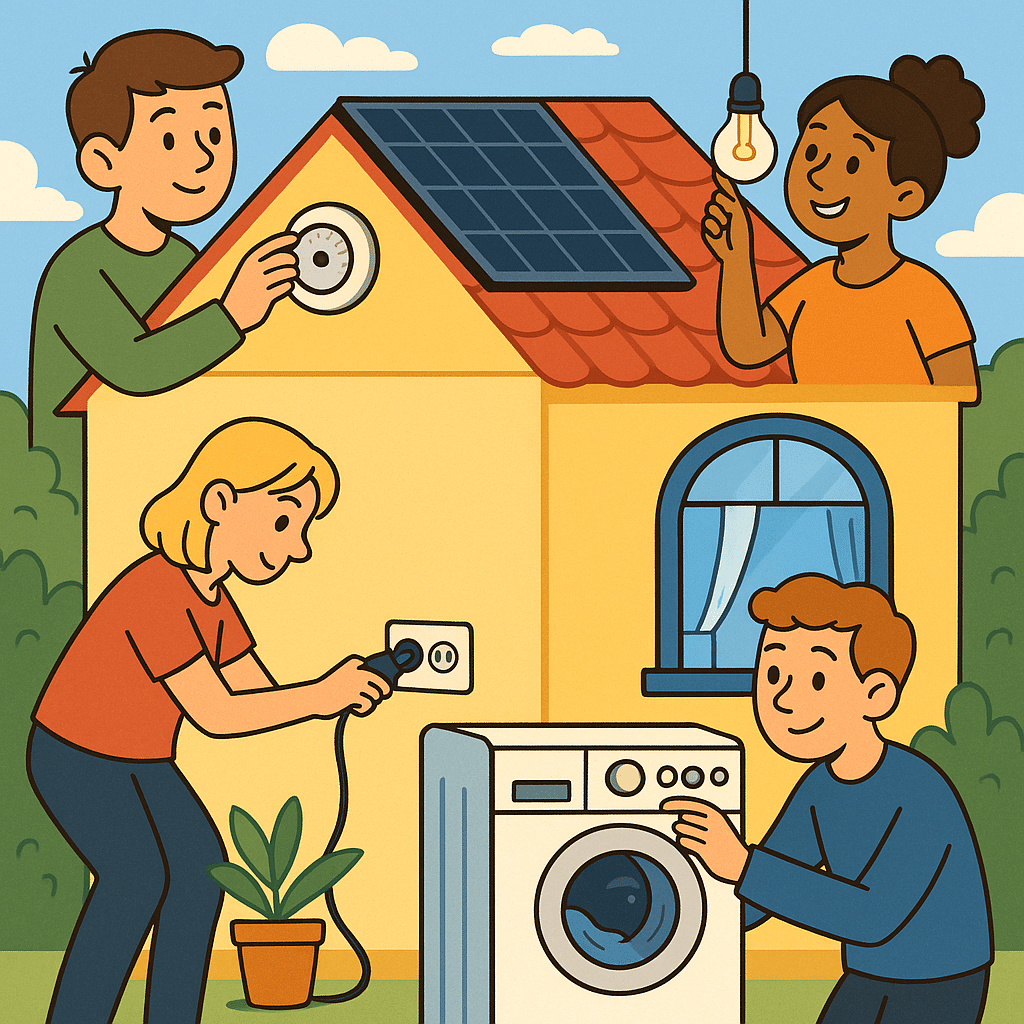
Smart energy management refers to systems that monitor, automate, and optimize how much energy your home uses — through smart thermostats, appliances, solar panels, batteries, sensors, etc. With global electricity demand rising sharply — in part due to more air conditioning, greater electrification, and expansion of data centers — homeowners are under greater pressure (and incentive) to cut usage.
This trend is not just about being green. It’s about reducing bills, increasing resilience (e.g. during outages), and possibly benefiting from evolving policies (net metering, incentives).
Emerging Trends in 2025 That Help Reduce Home Energy Consumption
Here are several developments shaping how homeowners can reduce home energy consumption more effectively.
- Home Energy Management Systems (HEMS) + AI/ML Optimization
- Systems that learn your usage patterns and adjust heating/cooling, lighting, appliances accordingly. AI-driven platforms can predict your demand and shift operations to lower-cost or low-carbon times.
- Recent studies show deep reinforcement learning approaches can optimize multiple appliances while respecting comfort preferences — more efficient than traditional scheduling.
- Solar Panels + Battery Storage + IoT Integration
- Solar PV remains a major way to offset grid electricity. But coupling solar with battery storage ensures you can use your self-generated power even when the sun isn’t shining.
- IoT (Internet of Things) devices make this combo smarter — sensors, smart plugs, smart inverters that can shift loads (run dishwashers, EV chargers) when solar production is high or prices are lower.
- Heat Pumps and Sustainable HVAC Innovations
- New, highly efficient heat pumps that operate well across varying climates are gaining adoption. These reduce the energy needed for heating and cooling, which is often the largest part of a home’s energy bill.
- Combined with improved insulation, sealing of drafts, and better window technologies (double or triple glazing, low-e coatings), the HVAC load drops significantly. Renovations focusing on building envelope improvements are a top trend.
- Microgrids and Net‑Metering Evolutions
- Home microgrids (solar + battery + sometimes local grid collaboration) offer energy independence, reduced peak charges, and greater reliability.
- Net metering policies (which credit households for excess solar power they send to the grid) are changing. Some places are reducing per‑kWh credit, adding fixed “grid access” fees, or moving toward time‑of‑use/value‑of‑solar billing. Being aware of your local policy helps you design your system more effectively.
- Smart Home Standards and Device Interoperability (e.g. Matter 1.4)
- New smart home standards (like Matter 1.4) are adding explicit support for energy management: e.g. enabling devices to report usage, shift operations during peak demand, better co‑ordination across devices (HVAC, EV chargers, water heaters). This helps reduce home energy consumption by making the system smarter, more responsive.
Practical Tips You Can Use Today to Reduce Home Energy Consumption
Putting trends aside, here are concrete tips homeowners can apply now. Many of these work better when integrated with the emerging technologies above.
| Tip | What to Do | Why It Helps |
|---|---|---|
| Use a smart thermostat | Replace old thermostat with one that learns, can be scheduled, or is remote‑controllable. Set higher temp in summer, lower in winter when you’re away or sleeping. | Heating/cooling is often 40‑50%+ of energy cost. Smarter control reduces wasted conditioning. |
| Install LED lighting + adaptive lighting controls | Use LEDs everywhere. Add motion sensors, daylight sensors, dimmers. Turn off or dim lights in unused rooms. | LEDs use much less energy. Adaptive lighting reduces unnecessary lighting. |
| Seal and insulate your home envelope | Seal drafts, add insulation in roof/attic, improve window performance (weather stripping, double/triple glazing), use insulating curtains. | Prevents heat loss/gain so air conditioning/heating work less. |
| Schedule heavy appliances during off‑peak / high solar times | Run washing machines, dishwashers, EV chargers when electricity is cheaper or when your solar panels are producing. Use smart plugs or HEMS to automate. | Moves load away from expensive/dirty grid power times. Makes full use of your solar energy. |
| Upgrade inefficient appliances | Replace old refrigerators, washers, dryers, HVAC units with high efficiency models (look for energy rating labels). | Newer appliances can use a fraction of energy for same service. |
| Monitor and analyze your usage | Use energy monitors or apps to see where energy is being used (or wasted). Identify “energy hogs” (old devices, phantom loads). | Awareness is often the first step to changing behavior. Data helps prioritize. |
| Use shading, passive cooling, and natural ventilation | Plant trees, use shading devices, install reflective roofing, employ cross‑ventilation. | Reduces reliance on active cooling systems, lowering cooling demand. |
How to Plan Your Strategy: Steps for Implementation
To make sustained change, you want a strategy rather than one‑off fixes. Here’s a plan you could follow:
- Audit your current energy use
- Check past bills to see usage patterns.
- Use energy monitors or smart meters to understand daily loads.
- Identify biggest energy consumers (HVAC, water heating, electronics, lighting).
- Set goals
- Decide, for example, “reduce energy consumption by 20% over 1 year”, or “cover 50% of electricity with solar/battery”.
- Decide on budget, payback time you’re comfortable with.
- Incremental upgrades
- Prioritize low cost/high return items (LEDs, sealing, smart plugs).
- Then move to larger investments (solar + battery, heat pump, insulation).
- Integrate smart automation and schedule loads
- Use home energy management systems to connect devices.
- Automate shifting of usage: run dishwasher during solar peak / off‑peak hours, auto‑turn off standbys.
- Use smart thermostat schedules or geo‑fencing (e.g. reduce HVAC when you leave home).
- Monitor, adapt, maintain
- Check metrics (electricity bills, system dashboards).
- Adjust schedules or device settings as needs change (seasonal, occupancy changes).
- Maintain systems (like cleaning filters, checking solar panels, or sealing again if gaps appear).
Challenges & What to Watch Out For
- Upfront costs: Solar + battery systems, efficient HVAC, insulation can be expensive initially. But many places have incentives or rebates.
- Policy/regulation variation: Net metering, feed‑in tariffs, subsidies differ widely. What makes sense in one region may not in another.
- Technical complexity: To fully optimize, devices need to interoperate. Standards (like Matter 1.4) help, but sometimes things don’t work nicely together.
- Behavioral hurdles: Even with smart systems, human behavior (leaving windows open, overriding settings) can reduce savings.
- Maintenance: Solar panels, sensors, HVAC systems need upkeep to retain efficiency.
The Bottom Line
If you want to reduce home energy consumption, the combination of smart energy management, solar + storage, efficient HVAC, improved envelope (insulation, sealing), and better policy incentives is currently the most powerful path. While some investments are larger up front, many technologies and aiding trends (AI/automation, smarter standards) are helping reduce cost and friction. Starting with small steps (monitoring, lighting, scheduling) builds momentum for larger upgrades.
References
- U.S. Department of Energy. Energy Saver Guide: Tips on Saving Money & Energy at Home. Energy.gov, 2023. https://www.energy.gov
- ENERGY STAR. Low‑ to No‑Cost Tips for Saving Energy at Home. U.S. Environmental Protection Agency, 2024. https://www.energystar.gov
- García, Óscar, et al. “A Framework to Improve Energy Efficient Behaviour at Home.” International Journal of Environmental Research and Public Health, vol. 14, no. 10, 2017. https://www.ncbi.nlm.nih.gov

 How to Launch a Startup With Limited Funding