How Cultural Tourism Supports Sustainable Economies
Nathan Cole September 18, 2025
Cultural tourism supports sustainable economies in powerful ways — from preserving heritage to empowering local communities. In 2025, some new trends are amplifying this impact, offering models for growth that are both economically viable and socially conscious.
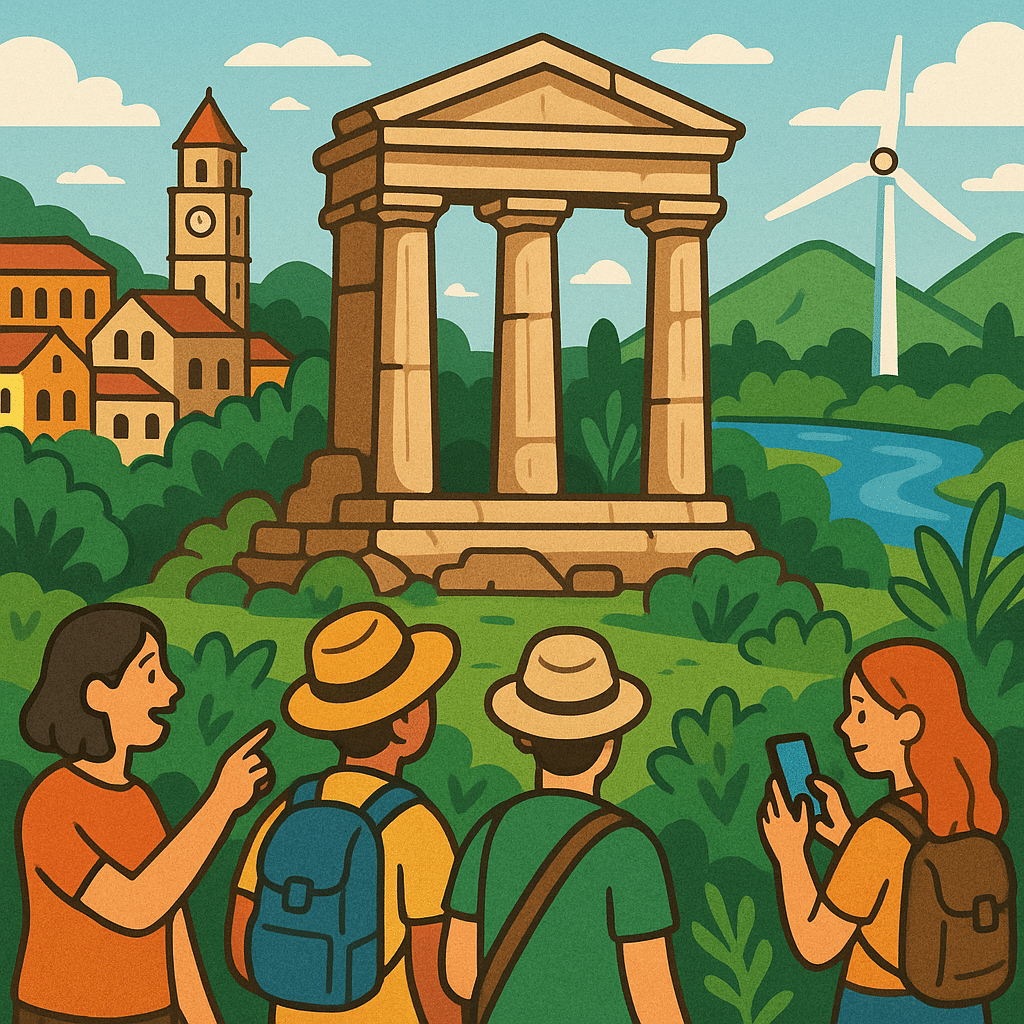
What Is Cultural Tourism and Why It Matters
Cultural tourism refers to travel motivated by interest in arts, heritage, traditions, indigenous culture, festivals, and the human story of places. When done right, it:
- Generates revenue for local businesses
- Promotes and preserves heritage
- Creates jobs (especially in often under-resourced areas)
- Fosters social cohesion and identity
But there are also risks: over-commercialization, loss of authenticity, environmental damage, and displacement of communities. The key is implementing cultural tourism in ways that support sustainability.
Three Emerging Trends Boosting the Role of Cultural Tourism in Building Sustainable Economies
Here are some of the most important trends right now in how cultural tourism supports sustainable economies:
1. Community-Led Heritage Tourism
What’s happening: More tourism projects are being initiated and controlled by local communities. They decide what aspects of culture to highlight, how to manage visitors, and how to share the economic returns.
Why this trend matters: It helps reduce economic leakage (money going to outside firms), ensures cultural authenticity, improves stewardship of local heritage, and builds long-term resilience. A study on creative tourism found that community-based tourism (CBT) enterprises that leverage local creative assets (crafts, performances, traditions) can significantly boost sustainable development.
Examples & implications:
- Festivals in smaller regions that were once neglected are being revived by locals and now draw domestic and international tourists.
- Homestays, craft villages, local guiding services are growing in places where previously tourism was top-down.
- Economic benefits: increased incomes, more diverse sources of revenue. Social benefits: preservation of intangible heritage like oral histories, local dialects, rituals.
2. Tech-Enhanced Storytelling & Immersive Experiences
What’s happening: Use of Augmented Reality (AR), Virtual Reality (VR), multimedia experiences, digital storytelling is increasing. These tech tools allow visitors to engage deeply with culture (past and present), even when physical access is limited or preservation is needed.
Why this trend matters: It lets destinations manage visitor impact more sustainably (fewer crowds at sensitive sites), widens access (remote or immersive experiences), and adds value (higher willingness to pay, longer dwell time).
Data & evidence:
- Research on environmental policies and tourism flows shows that sustainability measures in combination with visible innovations (often tech) tend to draw more tourists, with positive spillover effects.
- A study of creative tourism found that integrating technology and culture helps improve both visitor satisfaction and economic returns while preserving heritage.
3. Inclusive, Regenerative Cultural Tourism Models
What’s happening: More projects are focusing on regenerative frameworks — not just “do no harm” but “leave places better than before.” Also, inclusion (of marginalized communities, indigenous peoples, women) is increasingly central.
Why this trend matters: It ensures benefits are broadly shared, strengthens social equity, helps conserve cultural and natural resources, and builds resilience against shocks (like climate, economic downturns).
Examples or evidence:
- The Sustainable Tourism Market is projected to grow at ~15% CAGR from 2025–2033, driven in part by demand for authentic, local, sustainable travel experiences.
- Sustainable heritage tourism discussions emphasise preserving both tangible and intangible cultural heritage while benefiting rural and urban areas economically.
- Policies in multiple countries (OECD etc.) are pushing tourism that promotes local culture and products, aligned with SDGs.
Challenges & How to Overcome Them
Even with strong potential, there are obstacles. These include:
| Challenge | Description | Possible Strategies |
|---|---|---|
| Overtourism & environmental pressure | Popular sites get overcrowded, leading to damage and loss of visitor satisfaction | Cap visitor numbers, use tech for scheduling, encourage off-peak and lesser-known sites |
| Loss of authenticity | Commercialized culture loses meaning; commodification of traditions | Empower locals to lead design, maintain authenticity, provide education and interpretation |
| Economic leakage | External firms or foreign investors capturing benefits more than local populations | Favor local ownership, community-based enterprises, fair trade models |
| Inadequate policy/ infrastructure | Poor transport, weak heritage protection, lack of funding | Integrate cultural tourism into national planning, secure heritage protection laws, invest in supportive infrastructure |
Practical Guide: How Destinations Can Ensure Cultural Tourism Supports Sustainable Economies
If you’re a policymaker, community leader, tourism operator or stakeholder, here’s a step-by-step approach to maximize sustainable benefits from cultural tourism:
- Map Cultural Assets Broadly
Inventory tangible (monuments, architecture, artifacts) and intangible (music, oral history, rituals, dance) heritage. Include minority/indigenous culture. - Engage Community in Decision Making
Use participatory planning. Let locals set priorities: what to preserve, how to present, how much tourism is acceptable. - Set Clear Sustainability Goals
Define what you want: for example, job creation, income distribution, reduced environmental footprint, cultural preservation. Tie to SDGs where possible. - Design Experiences, Not Mass Visits
Small group tours, immersive cultural workshops, festivals, artisan demonstrations. Use tech (AR, VR) where helpful to reduce physical load on heritage sites. - Build Local Capacity
Train local guides, craftspeople, event managers. Support local entrepreneurship. Capacity in marketing, storytelling, digital engagement. - Implement Monitoring & Feedback Loops
Track economic indicators (income, employment), social indicators (community satisfaction, preservation), environmental health (site condition, waste). Adjust policies as needed. - Protect the Authentic Circle
Safeguard intangible heritage, prevent commodification that erases meaning. Protect language, stories, rituals. Allow the living culture to evolve but with respect. - Diversify Tourism Offerings
Promote lesser-known cultural sites, rural culture, off-season festivals. This spreads economic benefit and reduces pressure on hot spots.
Case Study Highlights
- Chettinad Heritage & Cultural Festival, India: Old mansions renovated into heritage hotels; local artisans and local guide services scaled up. Domestic tourism grew ~8%.
- Uttar Pradesh, India – Tharu Tribal Region near Dudhwa: Eco-tourism initiatives are helping tribal communities via homestays, craft villages, cultural experiences. Economic uplift and cultural preservation go hand in hand.
Looking Ahead: What’s Next in Cultural Tourism & Sustainable Economies
- Increased demand from travelers for deep cultural immersion over superficial sightseeing.
- More regulation around how sustainability claims are made — consumers are getting critical of “greenwashing.”
- Growing role of story-driven experiences, digital archives, immersive VR/AR tours especially for sites that are fragile or remote.
- Climate change pressures reshaping what is possible: higher risk to heritage sites, need for adaptive conservation.
- Stronger alignment with global goals: e.g. SDG 8.9 (jobs and local culture) and SDG 12.b (tools to monitor sustainable tourism) as defined by UN bodies.
Conclusion
Cultural tourism, when designed and managed properly, is among the most powerful levers in building sustainable economies. It supports livelihoods, preserves identity, spreads economic gains, and creates jobs. Emerging trends—community leadership, tech-enhanced experiences, regenerative models—are helping to push the field toward truly sustainable impact. For destinations and stakeholders, the challenge is to balance growth with authenticity, preservation with accessibility, and commerce with culture.
References
- World Tourism Organization (UNWTO). (2021) Tourism and culture synergies. Available at: https://www.unwto.org(Accessed: 17 September 2025).
- Richards, G. (2020) Cultural tourism: A review of recent research and trends. Journal of Tourism Futures. Available at: https://doi.org (Accessed: 17 September 2025).
- OECD. (2023) Cultural and creative sectors: Supporting sustainable economies. Available at: https://www.oecd.org (Accessed: 17 September 2025).

 Emerging Trends in Online Learning Platforms