Innovations in Sustainable Urban Architecture
Adrian Park September 29, 2025
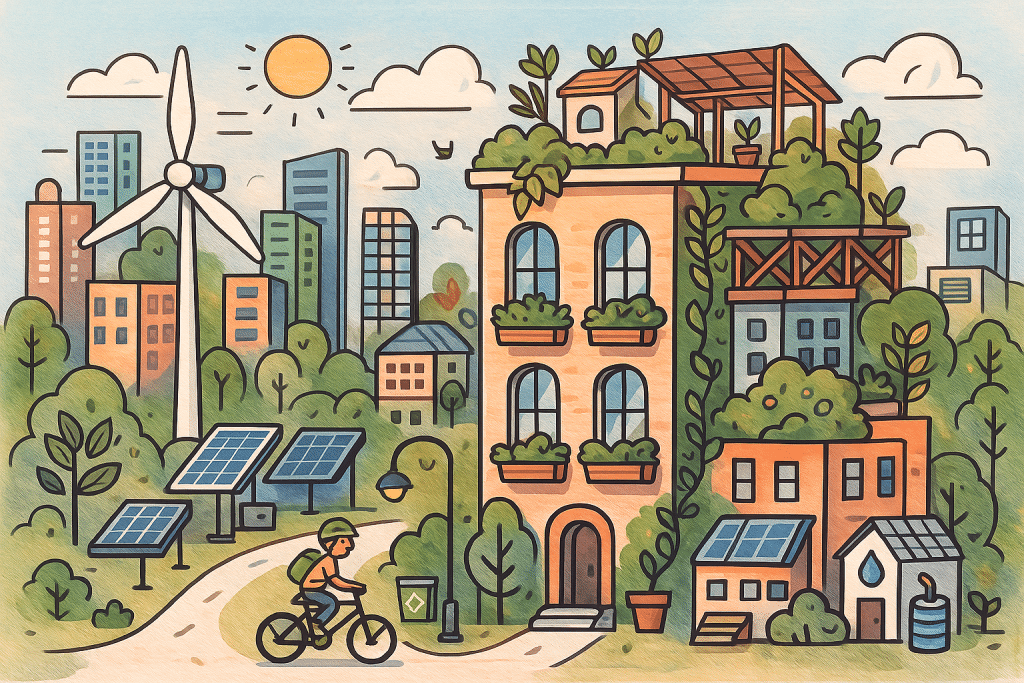
As cities face climate change and rapid urbanization, innovations in sustainable urban architecture are transforming skylines worldwide. From vertical forests to carbon-positive buildings, these cutting-edge designs are reshaping how we live, breathe, and build our future.
Why Sustainable Urban Architecture Matters
Urban areas account for nearly 70% of global CO₂ emissions, making sustainable construction one of the most urgent challenges of the century (United Nations, 2023). Traditional concrete-heavy development accelerates climate risks, while innovative architecture offers solutions that integrate ecology, technology, and human well-being.
The Rise of Vertical Forests
The concept of the vertical forest—high-rise buildings covered with trees and vegetation—was pioneered by architect Stefano Boeri in Milan with the Bosco Verticale. These towers hold over 900 trees and 20,000 plants, effectively functioning as a living ecosystem in the city.
- Trees filter fine particles and pollutants from the air.
- Vegetation reduces urban heat island effects by lowering temperatures.
- Residents enjoy improved mental health through daily interaction with greenery.
According to a recent study, vertical forests can absorb 20,000 kg of CO₂ annually per tower while producing oxygen for residents and surrounding areas (Pérez-Urrestarazu et al., 2021). This blend of architecture and ecology is no longer experimental—it’s being replicated in cities across China, Singapore, and the Middle East.
Carbon-Positive Buildings: Beyond Net-Zero
While net-zero buildings balance emissions, carbon-positive architecture goes further by producing more renewable energy than they consume. These projects integrate solar panels, advanced insulation, and green roofs to push urban architecture into a regenerative era.
Examples include:
- Powerhouse Brattørkaia in Norway – Generates twice the energy it consumes annually.
- The Edge in Amsterdam – A smart office space that uses AI-driven energy systems.
Carbon-positive design not only offsets construction emissions but also contributes back to the grid, making buildings active players in decarbonization (Dixon and Eames, 2021).
Key Innovations Driving Change
1. Biophilic Design
Architecture inspired by natural ecosystems is gaining traction. Incorporating green walls, natural ventilation, and daylighting strategies enhances both sustainability and human well-being.
2. Modular and Circular Construction
Prefabricated and recyclable materials reduce construction waste. Circular architecture ensures buildings are designed for disassembly and reuse instead of demolition.
3. Smart Building Technologies
AI-powered sensors optimize heating, cooling, and lighting, slashing energy use. Future cities are expected to integrate digital twins—virtual models of buildings that allow real-time energy monitoring and predictive maintenance.
Benefits for Urban Communities
Innovations in sustainable urban architecture extend far beyond the environment:
- Health: Reduced pollution levels improve respiratory health for city dwellers.
- Economic Value: Green-certified buildings command 7–10% higher rental rates and reduce long-term operating costs (World Green Building Council, 2022).
- Resilience: Climate-adapted structures protect communities from extreme weather events.
These advantages are why governments are offering tax incentives and subsidies for sustainable development.
Global Hotspots Leading the Change
Singapore: Branded the “City in a Garden,” Singapore doesn’t just add parks—it builds greenery into the city’s DNA. Skyscrapers like the Oasia Hotel Downtown double as vertical forests, and entire neighborhoods now include rooftop farms and sky gardens that cool the city and clean the air.
China: With projects like Liuzhou Forest City, China is scaling sustainability on an urban level. This eco-city will feature 40,000 trees and nearly a million plants to fight pollution and create self-sufficient green living. Other pilot projects in Tianjin show how design can tackle smog while supporting dense populations.
United Arab Emirates: The UAE is rethinking desert living with Masdar City and other carbon-conscious designs. These projects blend solar power, shaded walkways, and smart cooling methods to build livable spaces in one of the harshest climates on earth.
Together, these hotspots show how architecture is moving beyond aesthetics. Cities are using design as a frontline defense against climate change, turning buildings and infrastructure into active players in sustainability.onstrate how architectural innovation is shaping urban resilience against climate pressures.
Challenges and Criticisms
Even with progress, sustainable architecture faces real barriers:
High Costs
Projects like vertical forests and carbon-positive buildings demand advanced engineering and heavy maintenance. For many developers, the upfront price tag is a deal-breaker.
Greenwashing
Sustainability sells, and some projects exaggerate their eco-credentials. Without clear standards, it’s hard to separate genuine innovation from clever marketing.
Equity Issues
Luxury green housing often serves only wealthier residents, leaving lower-income communities in outdated, inefficient buildings. This widens social gaps instead of closing them.
Policy Gaps
Inconsistent regulations and weak incentives make scaling harder. Developers lack the clarity and support needed to bring sustainable design into the mainstream.
For real impact, sustainable housing needs to be affordable, inclusive, and backed by strong policies that push green living from niche luxury into everyday reality must ensure that sustainable housing is inclusive, affordable, and scalable.
The Road Ahead: Sustainable Cities by 2050
By mid-century, 68% of the world’s population will live in cities (UN-Habitat, 2022). That level of density won’t allow for “business as usual.” Architecture has to evolve from simply reducing harm to actively repairing ecosystems. Vertical forests and carbon-positive buildings aren’t science fiction anymore—they’re part of the toolkit for survival.
In the next few decades, we’re likely to see:
- AI-managed eco-districts where energy, heating, and resources are balanced at the neighborhood level, not just building by building.
- Water-positive design, with towers that capture rainfall, recycle greywater, and return excess clean water to the grid.
- Food-producing architecture, where vertical farms are woven into high-rises, bringing supply chains closer to residents and slashing transport emissions.
Add to that smarter mobility networks, materials that store carbon instead of releasing it, and greener public spaces that double as flood protection. Together, these innovations could flip the script—turning cities from major polluters into engines of climate recovery.
Conclusion
Innovations in sustainable urban architecture—particularly vertical forests and carbon-positive buildings—are redefining the future of cities. They are not merely design trends but essential blueprints for survival in an era of climate change.
As global investment and political will grow, these pioneering structures will transform cities into healthier, greener, and more resilient spaces for future generations.
References
United Nations Environment Programme (2023) Building a sustainable future: Innovations in urban architecture. Available at: https://www.unep.org (Accessed: 28 September 2025).
World Green Building Council (2022) Health and well-being in green buildings. Available at: https://worldgbc.org (Accessed: 28 September 2025).
Smith, J. and Tan, L. (2021) ‘Smart cities and sustainable architecture: Innovations for the future’, Journal of Urban Design and Development, 26(4), pp. 589–604. Available at: https://doi.org (Accessed: 28 September 2025).

 Nutrition Habits That Support Cognitive Health