How AI Supports Innovation in Small Businesses
Nathan Cole September 24, 2025
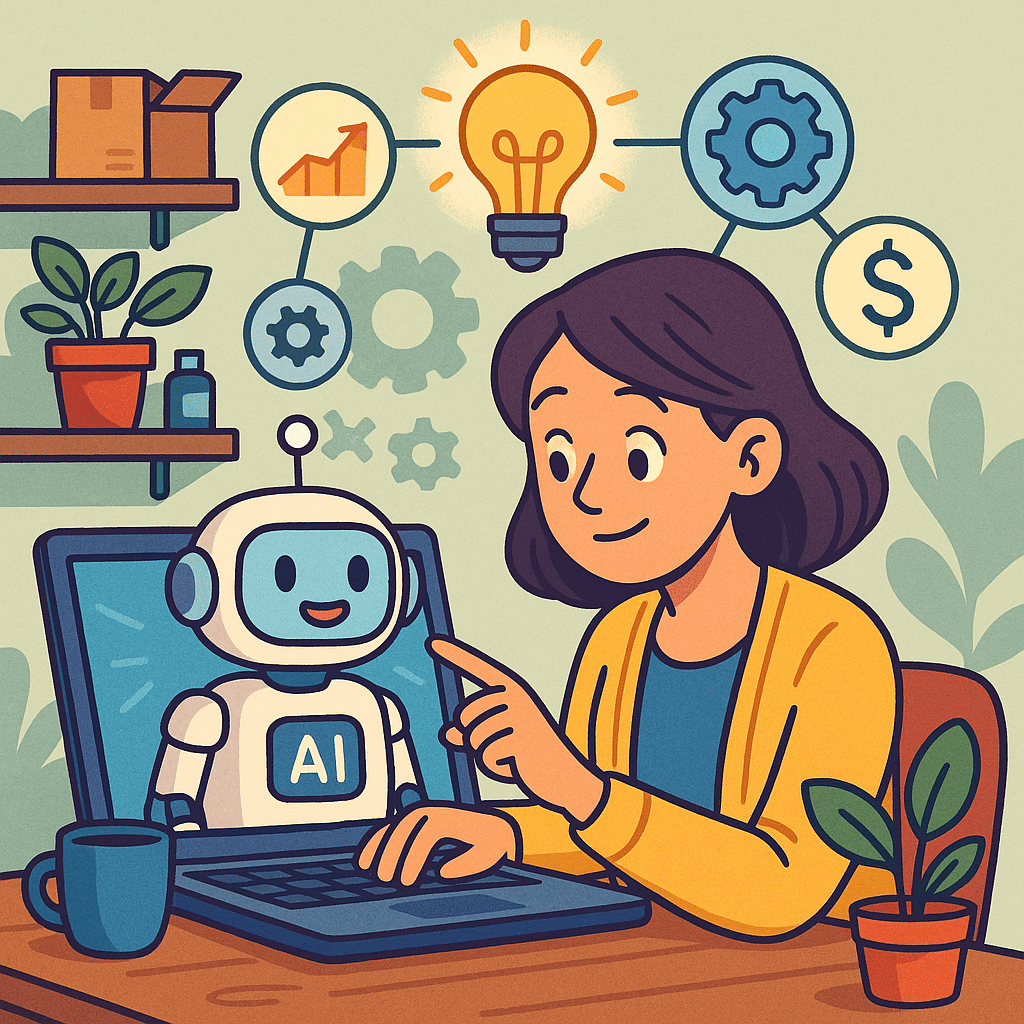
Artificial Intelligence (AI) is no longer a luxury for big corporations—it’s now one of the most powerful drivers of innovation in small businesses. From automating tasks to offering predictive insights, AI supports innovation in small businesses by helping them stay competitive, cut costs, and adapt quickly in fast-changing markets.
Why AI Is a Game-Changer for Small Businesses
For decades, small businesses struggled to keep up with corporations that had bigger budgets and advanced technologies. But AI has leveled the playing field. Cloud-based AI solutions allow even a small bakery, marketing agency, or local retailer to harness tools that previously required millions in R&D.
According to a recent McKinsey report, 56% of companies have adopted AI in at least one business function—with smaller firms increasingly leading in creative applications (McKinsey 2022).
AI enables:
- Cost efficiency: Automating repetitive processes reduces overhead.
- Smarter decisions: Predictive analytics help anticipate customer needs.
- Personalization: AI-driven marketing creates targeted campaigns with higher conversion rates.
- Innovation opportunities: By freeing up time and resources, small businesses can experiment with new products, services, or models.
AI in Action: Emerging Trends Driving Innovation
1. AI-Powered Customer Service
Chatbots and virtual assistants are transforming how small businesses interact with customers. Instead of hiring 24/7 support teams, companies can deploy AI-driven bots that handle FAQs, process orders, and escalate complex issues.
Research from Gartner predicts that by 2027, chatbots will become the primary customer service channel for roughly 25% of businesses (Gartner 2023). This isn’t just about cost savings—it’s about responsiveness and customer satisfaction.
2. Personalized Marketing and Sales
AI tools like HubSpot’s predictive lead scoring and Shopify’s product recommendation engines allow small businesses to personalize customer experiences at scale. Personalization drives stronger engagement and revenue: Epsilon found that 80% of consumers are more likely to purchase from brands offering personalized experiences (Epsilon 2021).
3. Smarter Inventory and Supply Chain Management
For small retailers or restaurants, stocking too much or too little can be costly. AI-powered demand forecasting tools analyze trends, weather, and customer behavior to predict needs more accurately.
Amazon has pioneered AI-driven logistics, but even small shops now have access to affordable solutions like TradeGecko and Odoo, which integrate predictive analytics for smarter stock management.
4. AI-Driven Financial Tools
Accounting platforms like QuickBooks and Xero integrate AI to categorize expenses, flag anomalies, and even generate cash flow forecasts. This allows small business owners to make real-time decisions without relying solely on accountants.
5. Generative AI for Creativity
One of the hottest trends is the rise of generative AI tools like ChatGPT, Jasper, and MidJourney. These platforms enable small businesses to:
- Generate marketing copy in seconds.
- Create product designs and logos.
- Develop social media strategies tailored to specific audiences.
This creative empowerment accelerates innovation by reducing the cost and time barriers that typically limit small firms.
Overcoming Barriers to AI Adoption
Despite the opportunities, many small businesses hesitate to adopt AI due to:
- Cost concerns: Fear of high expenses, though many AI tools now offer tiered pricing or free versions.
- Lack of expertise: Owners may not have technical staff.
- Data privacy: Concerns over compliance with GDPR and other regulations.
However, governments and tech providers are working to close these gaps. For example, the U.S. Small Business Administration (SBA) has launched programs to help small businesses integrate AI responsibly, while companies like Microsoft offer AI training resources designed for non-technical users (SBA 2023).
Practical Ways Small Businesses Can Start with AI
For businesses curious about integrating AI, the good news is you don’t need to jump straight into expensive enterprise-level systems. Starting small makes it easier to test what works and gradually build confidence. Here are a few practical entry points:
Enhance customer service
AI chatbots and virtual assistants can save time by handling common questions. Tools like Drift, Intercom, or Tidio allow you to automate FAQs, direct customers to the right resources, and escalate only the tricky cases to humans.
Experiment with predictive analytics
Platforms such as Tableau or Power BI can plug into your existing data to uncover patterns—like which products are likely to sell well in a certain season or which customers are at risk of leaving.
Automate marketing campaigns
Small businesses often struggle with consistency in email marketing. AI-powered tools like Mailchimp and Klaviyo can personalize subject lines, recommend send times, and segment audiences automatically.
Use generative AI for creative tasks
Whether it’s drafting social media posts, brainstorming blog outlines, or designing ad visuals, AI tools can speed up creative work. ChatGPT can help with writing drafts, while Canva’s AI design features can generate fresh visual ideas.
Simplify HR and recruitment
Hiring is time-consuming, but AI can help filter resumes based on job requirements, flag promising candidates, and even run employee engagement surveys. This reduces the admin load while giving HR teams more space to focus on interviews and building company culture.
The best approach is to start with one or two areas where AI can remove bottlenecks. Once you see results—like faster customer response times, more accurate sales forecasts, or better email performance—you can gradually expand. This way, AI feels less like a giant leap and more like a series of small, manageable steps toward efficiency and growth companies to see immediate results without overextending resources.
The Future: AI as a Growth Partner for Small Businesses
Looking ahead, AI is expected to become even more accessible. As costs drop and adoption grows, small businesses will move beyond automation into AI-driven innovation ecosystems.
Key upcoming trends include:
- AI-powered sustainability solutions helping small firms cut waste and optimize energy use.
- Hyper-personalization in e-commerce—where every shopper sees a completely unique experience.
- Voice AI integration, enabling smaller brands to offer Alexa- or Siri-like assistants for their customers.
The businesses that embrace these shifts early will not only compete with larger firms—they may outpace them in agility and creativity.
Conclusion
AI supports innovation in small businesses by turning barriers into opportunities. From customer service to financial planning, from marketing to product design, AI provides the tools that enable smaller firms to work smarter, not just harder.
In today’s digital economy, the real risk isn’t adopting AI—it’s ignoring it.
References
- Deloitte. (2020) AI Adoption in Small and Medium-Sized Enterprises. Available at: https://www2.deloitte.com/us/en/pages/ (Accessed: 23 September 2025).
- McKinsey & Company. (2021) How Artificial Intelligence is Driving Small Business Growth. Available at: https://www.mckinsey.com/business-functions (Accessed: 23 September 2025).
- OECD. (2022) The Digital Transformation of SMEs: Leveraging AI for Innovation. Available at: https://www.oecd.org/industry (Accessed: 23 September 2025).

 Steps to Build a Successful Entrepreneurial Mindset