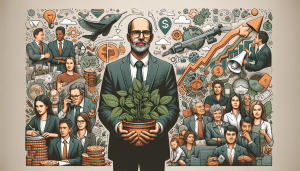
Emerging Marketing Trends That Shape Entrepreneurship
Nathan Cole September 26, 2025
Emerging marketing trends that shape entrepreneurship are redefining how startups grow, attract customers, and survive in an increasingly competitive digital economy. From AI-driven personalization to community-led branding, entrepreneurs in 2025 face both opportunities and challenges that demand adaptation.

Why Marketing Trends Matter More Than Ever
Entrepreneurship has always been tied to market demand, but today’s marketing landscape shifts faster than business models themselves. A decade ago, traditional ads and email marketing dominated. Now, businesses thrive by leveraging real-time data, social commerce, and hyper-personalized customer engagement.
Entrepreneurs who understand emerging marketing trends not only stay ahead but also reduce risks, secure funding more easily, and build sustainable growth paths. According to McKinsey, companies that adopt next-gen personalization generate 40% more revenue from marketing activities compared to slower competitors (McKinsey 2021).
Trend 1: AI-Driven Hyper-Personalization
Artificial Intelligence (AI) is no longer a “future tool”—it is the present driver of entrepreneurial marketing strategies. AI-powered platforms now analyze customer behavior in real-time, adjusting messaging, product recommendations, and even pricing.
For entrepreneurs, AI is affordable and scalable. Tools like ChatGPT, Jasper, and HubSpot AI allow small startups to create enterprise-level personalization without large teams.
- Why it matters: Personalized marketing increases ROI by up to 30% (Deloitte 2022).
- Practical use: E-commerce entrepreneurs can implement AI-based upselling, while SaaS startups can leverage AI chatbots for lead qualification.
Trend 2: Community-Led Growth and Micro-Influencers
Consumers are increasingly distrustful of traditional advertising. Instead, they rely on peer recommendations and niche communities. For entrepreneurs, this means building micro-communities around their brands is essential.
Community-led growth not only boosts trust but also lowers acquisition costs. A study by Nielsen showed that 92% of consumers trust recommendations from people they know over branded content (Nielsen 2023).
- Why it matters: Entrepreneurs can establish loyalty without massive ad budgets.
- Practical use: Launch a private Discord group, a Telegram channel, or a niche LinkedIn community.
Trend 3: Social Commerce Dominates
Social commerce—direct shopping via platforms like Instagram, TikTok, and YouTube—is transforming entrepreneurship. By 2025, social commerce is expected to reach 1.2 trillion dollars globally (Accenture 2023).
Entrepreneurs can bypass traditional websites by selling directly through short-form video and live streams. This lowers friction and meets consumers where they spend most of their time—on social apps.
- Why it matters: Conversion rates on social commerce are often higher than on traditional e-commerce sites.
- Practical use: Entrepreneurs can run TikTok Shop campaigns or host Instagram Live product launches.
Trend 4: Sustainability as a Core Marketing Message
Modern consumers want more than products; they want purpose. Entrepreneurs who integrate sustainability into their marketing strategies not only attract eco-conscious customers but also future-proof their businesses.
A report from IBM revealed that 62% of consumers are willing to change shopping habits to reduce environmental impact (IBM 2022). Startups that highlight eco-friendly practices in packaging, sourcing, or logistics can gain a competitive advantage.
- Why it matters: Sustainability is becoming a purchasing trigger.
- Practical use: Highlight transparent supply chains or carbon-offset initiatives.
Trend 5: Short-Form Video and Interactive Content
TikTok, Instagram Reels, and YouTube Shorts continue to dominate attention spans. For entrepreneurs, short-form content isn’t just entertainment—it’s a conversion tool.
Video-first strategies increase customer engagement by 2.6 times compared to text-based strategies (Wyzowl 2023). Interactive polls, quizzes, and gamified experiences add to this trend, offering a deeper connection between entrepreneurs and their audiences.
- Why it matters: Entrepreneurs can go viral without big ad budgets.
- Practical use: Use storytelling-based reels to showcase behind-the-scenes processes or customer testimonials.
Trend 6: Functional Marketing Through Data Transparency
Functional marketing is about providing utility beyond the product—like financial calculators, health trackers, or educational content. Entrepreneurs who offer tools rather than just ads build deeper trust.
Data transparency is also part of functional marketing. Consumers want to know how their information is used. Startups that are open about data policies gain long-term loyalty.
- Why it matters: Transparency is a trust currency in 2025.
- Practical use: A fintech startup offering free budget tools gains both leads and credibility.
Trend 7: The Rise of “Scalp and Functional” Marketing Niches
The beauty and health sectors are seeing a surge in scalp health and functional wellness products. Entrepreneurs in wellness are pivoting to scalp treatments, adaptogen-infused supplements, and functional beverages.
According to Grand View Research, the scalp care market is projected to grow at a CAGR of 7.5% through 2030, driven by demand for natural and functional wellness (Grand View Research 2023).
- Why it matters: Entrepreneurs in health and beauty can capitalize on niche demand.
- Practical use: Launch DTC scalp serums, market them via TikTok, and bundle with functional nutrition products.
Trend 8: Subscription and Membership Models
Entrepreneurs are moving away from one-time purchases to recurring revenue models. Subscription boxes, membership apps, and exclusive communities ensure stability and predictable growth.
A report from Zuora revealed that subscription-based businesses grew 4.6 times faster than traditional ones over the last decade (Zuora 2022).
- Why it matters: Predictable cash flow reduces startup risk.
- Practical use: Entrepreneurs can create membership clubs around products or services.
Practical Guide for Entrepreneurs: How to Apply These Trends
- Start small with AI – Use free AI tools for copywriting and personalization.
- Pick a community niche – Build where your ideal customers already engage.
- Experiment with TikTok Shops – Start with micro-budgets and scale based on results.
- Embed sustainability – Make it part of your story, not just a campaign.
- Leverage scalp and functional niches – Position products at the intersection of beauty and health.
- Offer free value tools – Financial, wellness, or educational tools attract leads.
- Adopt subscriptions – Secure predictable growth.
Conclusion
Emerging marketing trends that shape entrepreneurship in 2025 are centered around AI, community, sustainability, short-form video, and functional wellness niches like scalp health. Entrepreneurs who embrace these trends early will not only survive but thrive in a digital-first economy.
Marketing is no longer about just selling—it’s about building ecosystems of trust, transparency, and engagement.
References
- Chaffey, D. (2023) Digital Marketing: Strategy, Implementation and Practice. 8th edn. Harlow: Pearson. Available at: https://www.pearson.com(Accessed: 25 September 2025).
- Deloitte Insights. (2022) Global Marketing Trends 2022: Thriving Through Customer Centricity. Available at: https://www2.deloitte.com (Accessed: 25 September 2025).
- Statista. (2023) Social Media Advertising – Statistics & Facts. Available at: https://www.statista.com (Accessed: 25 September 2025).

 Travel Destinations That Offer Cultural Immersion