Emerging Trends in Sustainable Business Practices
Nathan Cole September 30, 2025
In 2025, tokenized carbon credits are emerging as a breakthrough trend in sustainable business practice. They combine blockchain, transparency, and market access — and are transforming how companies manage emissions, invest in nature-based solutions, and earn stakeholder trust.
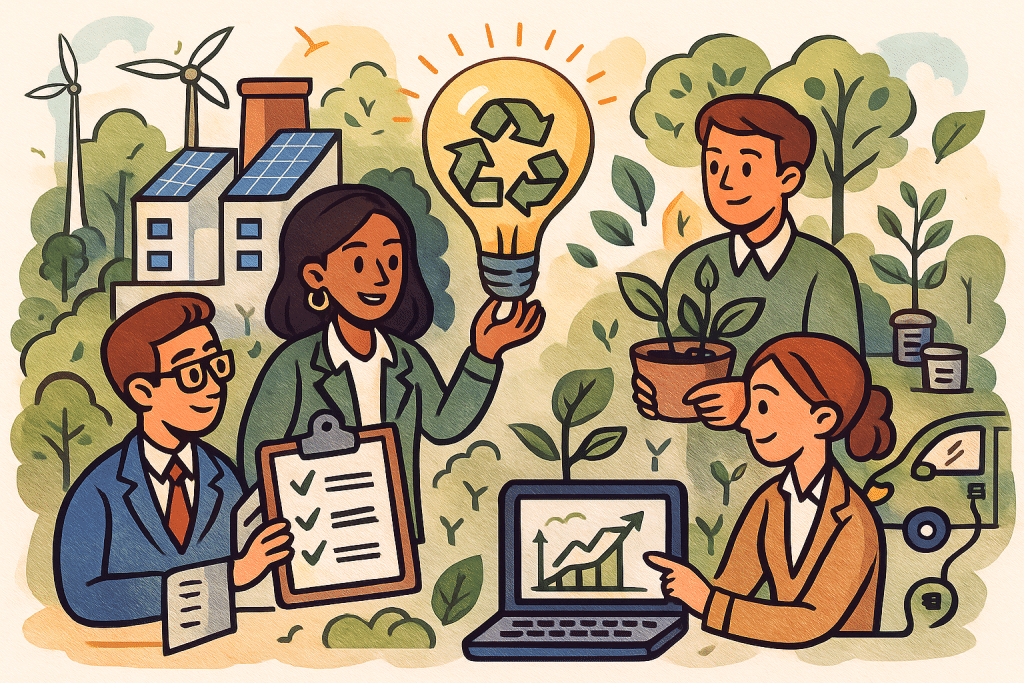
In this article, I’ll explain what tokenized carbon credits are, why they’re gaining momentum now, which risks remain, and how companies can get started in a practical way.
Why this trend matters now
To understand the urgency around tokenized carbon credits, it helps to see the landscape:
- The voluntary carbon market grew to 16.3 billion dollars in 2024 as companies raced to retire “high-quality removal” credits.
- The overall carbon credit market is projected to reach USD 576.4 billion by 2035, up from about USD 133 billion in 2025.
- Meanwhile, the carbon credit market has been plagued with trust issues — concerns about double counting, weak verification, and “junk credits.”
- Blockchain-based tracking and tokenization promise to address these concerns by making credits traceable, immutable, and programmable.
Thus, tokenized carbon credits are not just a fad; they may become a central pillar in how businesses credibly claim carbon-neutral or regenerative credentials.
What are tokenized carbon credits?
Put simply:
- A carbon credit represents a unit (often one metric ton) of CO₂-equivalent emissions either avoided or removed through a verified project (e.g. reforestation, renewable energy, direct air capture).
- Tokenization means issuing a digital token (typically using blockchain or distributed-ledger technology) that corresponds to a carbon credit unit. That token can be traded, retired, or analyzed in a transparent ledger.
- These tokens often embed metadata such as project location, vintage, standard, and retirement status to enhance traceability.
In effect, tokenized carbon credits bring digital-native tools — smart contracts, transparency, fractional ownership — into carbon markets.
Key features / advantages
| Feature | Benefit in Sustainability / Business |
|---|---|
| Transparency & immutability | Reduces risk of fraud or double counting |
| Fractional trading | Companies with smaller emissions can participate; credits can be subdivided |
| Programmability | Rules like retirement, lock-up periods, or premium tiers can be encoded |
| Liquidity | Faster trading, lower transaction cost, improved market efficiency |
| Verification linkage | Tokens can be tied to automated MRV (measurement, reporting, verification) tools, including satellite, sensors, or IoT |
By bridging carbon accounting with token economics, tokenized carbon credits could help make sustainability practices more rigorous, market-driven, and scalable.
Why the timing is right
Several converging forces are making tokenized carbon credits feasible and attractive now:
- Rising regulation & disclosure pressure
New frameworks—for example, the EU’s Corporate Sustainability Reporting Directive (CSRD)—are pushing greater disclosure and penalizing greenwashing.
Tokenized credits, with traceability baked in, help companies meet disclosure demands more credibly. - Maturation of blockchain & digital infrastructure
The tech underpinning tokenization has matured. There is growing literature on blockchain-enabled carbon markets.
Pilot platforms and smart contract designs are now viable. - Demand for high-quality removal credits
In 2024, buyers shifted preferences from “avoidance” credits (which prevent emissions) to removal credits (which pull carbon from the atmosphere).
Tokenization makes tracking and differentiating credit quality easier. - Pressure on small & midsize companies (SMEs)
Many SMEs lack the resources to deal with complex carbon markets. Tokenization can lower the barrier to entry by automating processes and lowering friction. - Emergence of digital MRV systems
Satellite data, IoT sensors, AI analytics, and digital twins are increasingly used in verifying carbon projects. These tie more naturally to token-led systems than legacy methods.
Risks and challenges companies must navigate
No innovation is without pitfalls. Tokenized carbon credits bring new risks and challenges:
- Verification and standards complexity
Tokenization does not eliminate the need for rigorous third-party verification. Weak project baselines, over-crediting, or insecure MRV can still afflict token systems.
If blockchain systems are built over shaky foundations, they become a digital shell over flawed credits. - Regulatory uncertainty
Carbon markets are governed differently across jurisdictions. The legal status of tokens, taxation, liability, and compliance obligations remain evolving. - Market fragmentation & interoperability
Multiple token standards and platforms may emerge, leading to siloing or difficulty crossing systems. Interoperability among registries, blockchains, and standards is key. - Liquidity risk & price volatility
As tokens are traded, price swings may discourage long-term holders. Tokens may end up being treated as speculative assets rather than purely environmental instruments. - Technological maturity & security
Smart contract bugs, hacks, or blockchain vulnerabilities are real risks. Governance models around token issuance and retirement must be robust. - Greenwashing backlash
If companies use tokenization as a superficial devices without credible climate strategy, this could provoke backlash and reputational risk.
Understanding these tradeoffs is essential before jumping in.
How companies can begin with tokenized carbon credits (practical steps)
If your organization is exploring this frontier, the following roadmap can help:
1. Assess your baseline and climate strategy
- Define what emissions you need to offset or remove (Scope 1, 2, 3).
- Identify whether tokenized credits will complement or replace existing offset strategies.
- Build a climate or net-zero roadmap that includes credible investment in emission reductions first.
2. Choose credible carbon projects & standards
- Work with established registries (e.g. Verra, Gold Standard) that support high integrity in standards.
- Prioritize carbon removal projects (e.g. technologies like direct air capture, biochar, or nature-based regeneration).
- Make sure projects use robust, digital MRV systems (satellite, sensors) so that automated data tie-ins are possible.
3. Pick or build a tokenization platform
- Evaluate existing platforms or consortia that enable tokenization of carbon credits.
- Ensure the platform supports metadata, retirement logic, audit trails, and standard interfaces.
- Check for interoperability (i.e. ability to work across blockchains or integrate with registries).
4. Token issuance design & governance
- Design smart contract logic: retirement rules, fractionalization limits, lock-up periods, audits, etc.
- Decide how tokens map to underlying credits and how redemption or retirement will occur.
- Set governance for disputes, updates, or upgrades.
5. Pilot small, scale gradually
- Begin with a pilot: perhaps a limited number of credits on token form, or a project with trustworthy partners.
- Monitor performance, market response, user feedback, and security.
- Use pilot data to refine your architecture, pricing, marketing, and risk controls.
6. Engage stakeholders & communicate transparently
- Report in sustainability reporting on tokenized credits, linking token IDs to credit projects.
- Educate investors, customers, regulators on how tokenization strengthens credibility (versus “opaque offsets”).
- Be transparent about methodology, audit reports, carbon budgets, and token retirement.
7. Plan for integration & scale
- As systems mature, integrate tokenized credits into procurement, supply chain decarbonization, or internal carbon price mechanisms.
- Explore fractional trading, revenue-backed issuance, or token-backed financing of climate projects.
By following this progressive journey, companies can reduce risk and build legitimacy.
Use cases & real-world signals
Here are a few illustrative signals and use cases:
- Carbon credit platforms adopting blockchain
Scientific studies show that integrating blockchain into carbon-linked digital markets improves transparency and reduces informational asymmetry.
Some emerging tokenization platforms are already focused on converting carbon credits into tradable digital tokens. - SME-focused tokenization
A recent academic proposal built a blockchain-based carbon trading system tailored for SMEs, showing reductions in cost and barrier to entry. - Blockchain addressing greenwashing
Analysts and commentators argue that the “unchangeable ledger” nature of blockchain can help reduce greenwashing by making every movement of a credit visible and immutable. - Market expansion and investor pressure
As demand for credible climate solutions intensifies and regulators clamp down on weak offset claims, companies may find tokenization a competitive differentiator.
These signs suggest tokenized carbon credits are passing from theory to early-stage adoption.
Tokenized carbon credits vs traditional offsets
It helps to compare the two:
Traditional offsets
- Often traded through registries or brokers, with limited visibility.
- Risk of double issuance, over-crediting, or opaque methodology.
- Slower settlement, higher friction in trading.
- Lower flexibility and manual processes in retirement.
Tokenized carbon credits
- Operate on chain, providing traceable audit trails.
- Fractionalization and liquidity enable broader participation.
- Smart contracts enforce retirement rules automatically.
- Can embed metadata, oracles, and governance logic.
That said, tokenized systems are not a panacea; their integrity depends on foundational project quality and system design.
Best practices and guiding principles
To increase the likelihood of success, companies should adhere to these principles:
- Prioritize integrity over novelty
Tokenization is a tool, not a substitute for strong climate strategy. Never let technology overshadow substance. - Lean on rigorous standards & third-party review
Partner with established registries, auditors, and verification bodies to ensure legitimacy. - Favor removal credits with durable permanence
Where possible, steer toward credits that store carbon permanently (e.g. mineralization, DAC, biochar) rather than avoidance credits. - Enforce transparency & open data
Publish token metadata, link to audit reports, and allow third parties to audit your system. - Build with interoperability in mind
Use or conform to token standards that can interoperate across blockchains or registries to avoid fragmentation. - Migrate gradually with pilot use cases
Avoid “big bang” rollouts. Use controlled pilots to validate your architecture, assumptions, and market behavior. - Communicate clearly & responsibly
Avoid confusing your stakeholders with technical jargon; explain tokenization in plain terms and link tokens to real-world climate impact.
Looking ahead: what to watch in 2026 and beyond
If tokenized carbon credits gain traction, here are some key developments to monitor:
- Standardization & interoperability protocols
Expect consolidation around a few token standards, registries, and APIs. - Regulation catch-up
Governments may issue rules on token taxation, liabilities, environmental assets classification, and auditing requirements. - Decentralized finance (DeFi) synergies
Some forecasts suggest tokenized credits could be embedded in DeFi instruments — for example, lending against carbon token holdings, token-backed bonds, or yield-generating climate assets. - Automated MRV & AI verification
As satellite, sensor, and AI-based verification matures, token issuance may be more tightly coupled to real-time data. - Broader corporate adoption
As early adopters prove value, more Fortune 500 firms and international supply chains may require tokenized credits in their procurement and auditing standards.
The maturation and role that tokenization plays could shift carbon markets from fragmented and opaque exchanges toward a more efficient, trust-powered, digital-native ecosystem.
Conclusion
The rise of tokenized carbon credits represents a pivotal emerging trend in sustainable business practices. By merging blockchain’s promise of transparency and smart contracts with the rigor of carbon markets, tokenization could make carbon accounting more credible, liquid, and programmable.
However, this is not a plug-and-play fix. Success will require deep attention to project quality, MRV integrity, governance, regulatory compliance, and communication. But for firms willing to pioneer, tokenized carbon credits offer a pathway to scale climate action with both credibility and innovation.
If you’re ready to explore tokenized carbon credits for your business, come away with a concrete pilot plan, choose high-integrity projects, and build step by step—letting trust, not hype, guide your route.
References
- World Economic Forum. (2021) Sustainability trends shaping business in 2021 and beyond. Available at: https://www.weforum.org (Accessed: 30 September 2025).
- Harvard Business Review. (2020) The comprehensive business case for sustainability. Available at: https://hbr.org (Accessed: 30 September 2025).
- United Nations Global Compact. (2022) Sustainable business and climate action. Available at: https://www.unglobalcompact.org (Accessed: 30 September 2025).

 Interior Organization Solutions That Maximize Space