Emerging Trends in EdTech Platforms
Marcus Liu September 22, 2025
In 2025, LLM-powered personalization in EdTech is rapidly shifting from experimental feature to central strategy—giving students custom-tailored content, real-time feedback, and learning paths tuned to how they learn best. Platforms that get this right are redefining what education means.
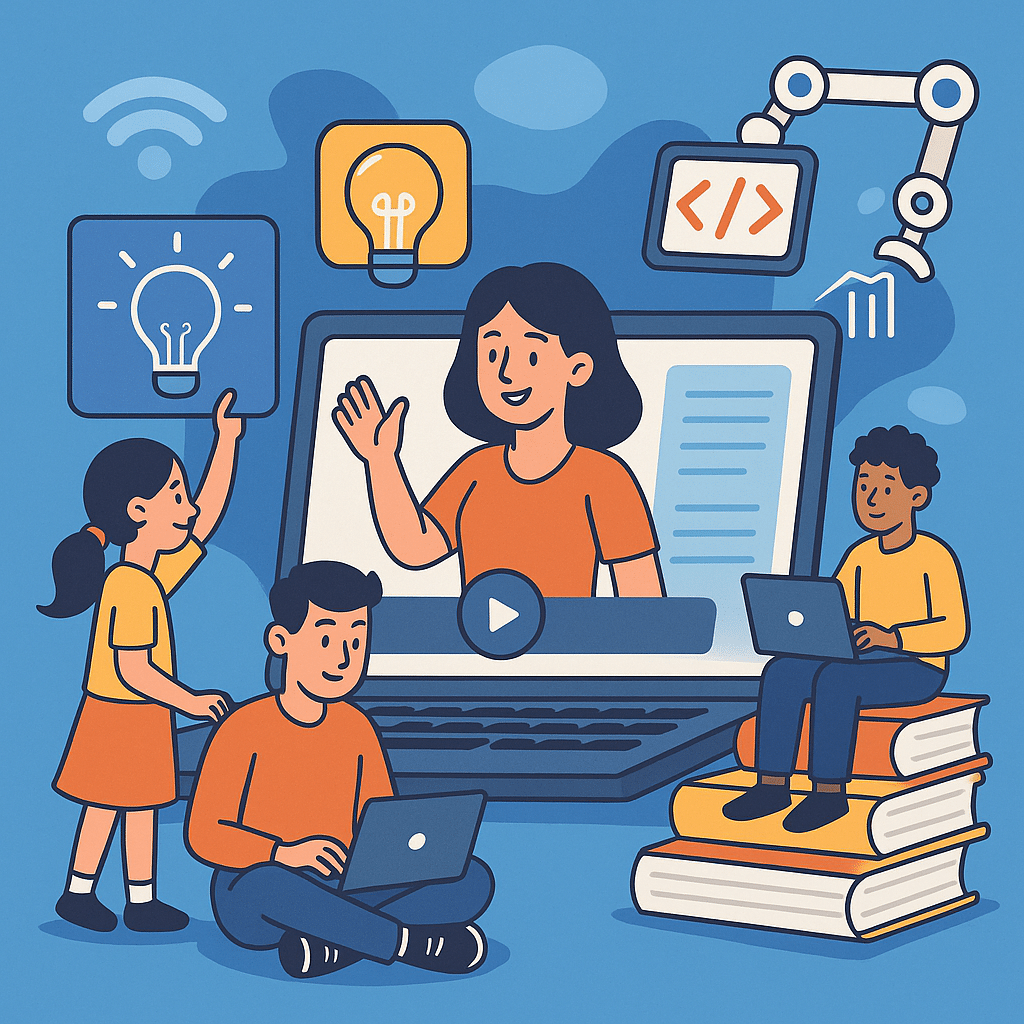
Students and educators are fed up with “one size fits all.” EdTech platforms powered by large language models (LLMs) are doing more than tweaking quizzes—they are reshaping learning journeys. LLM-powered personalization in EdTech is now delivering individualized content, timely feedback, and adaptive pathways that match each student’s pace and needs.
What Is LLM-Powered Personalization in EdTech?
“LLM-powered personalization in EdTech” refers to the use of large language models (like GPT-series, Claude, etc.) to dynamically adjust what a learner sees, when they see it, how they interact, and how they’re supported. Key features often include:
- Adaptive content delivery: changing difficulty, style, or presentation based on student performance
- Contextualized feedback: explanations, hints, or human-like dialogue to help when someone is stuck
- Learning plan generation: mapping out what the student should do next, predicting gaps, suggesting resources
- Explainability & control: giving learners visibility into why certain recommendations appear
Why It’s Hot Now: Drivers Behind the Trend
Several forces are making LLM-powered personalization a major trend in EdTech:
- Maturing Large Language Models & Tools
LLMs have improved in fluency, generalization, and safety. They now handle not only text but often multimodal content. This makes them more usable in pedagogy. - Demand for Personalized & Adaptive Learning
Traditional learning models struggle to serve varied learning styles. Teachers and learners want platforms that respond to what they know or don’t, not what the average is. Adaptive learning has been shown repeatedly to improve outcomes. - Need to Scale Quality Education
As online and hybrid learning expand, personalized support at scale becomes essential. Human tutoring is great, but expensive. LLMs offer scalable ways to provide feedback, extra help, etc. - Data & Analytics Infrastructure Is Stronger
Platforms have better data about how learners engage, where they struggle. That data fuels personalized recommendation engines, which LLMs can augment. - Educational Equity & Inclusion Pressures
There’s growing concern that standard curricula leave many students behind (due to background, learning pace, etc.). LLM-driven personalization can help close gaps—if done well.
Emerging Implementations: What Platforms Are Doing
Here are concrete ways EdTech platforms are using LLM-powered personalization:
- Intelligent Tutoring Systems + Virtual Mentors
Systems where LLMs act as tutors, giving instant feedback, answering questions, or guiding learners through problems. These systems adapt content delivery and help students catch up when they fall behind. - Dynamic Learning Path & Plan Generation
Platforms collect data on performance, then LLMs generate or adjust learning paths—what to study next, how much revision is needed, which style (visual, textual, mixed) works best. The recent LearnMate system is one example: it builds personalized plans and gives ongoing support. - Automatic Content Adaptation & Contextualization
Not just adjusting difficulty, but adapting explanation style, content examples, even local cultural or background relevance. One recent study showed improved engagement and trust when content is adapted to student major, interests, etc. - Explainable Recommendations & Learner Control
Students are more likely to trust models when they see why certain lessons are recommended and can tweak those recommendations. Features like “what-if” simulations (e.g., “if I do more practice in area X, I will improve here”) are being tested.
Benefits & Challenges: What to Watch For
Here are pros and cons of adopting LLM-powered personalization in EdTech:
| Benefits | Challenges / Risks |
|---|---|
| Improved engagement: learners see content relevant to them | Bias in LLMs: content may reflect cultural, gender, or other biases outside student’s context |
| Better retention & performance, since gaps can be caught and remedied early | Accuracy issues: incorrect explanations, hallucinations possible in LLMs |
| Scalability: can give 24/7 feedback, reduce load on instructors | Privacy & data usage: collecting personal data & learning histories raises concerns |
| Flexibility of learning: different styles, speeds, modalities | Infrastructure & cost: need good backend, reliable internet, computational resources |
| Increased equity: helping underserved learners by adapting to their pace or needs | Explainability, trust: learners and teachers need transparency in recommendations |
Best Practices: How Platforms Should Do It
For EdTech platforms planning to leverage LLM-powered personalization in EdTech, here are guidelines to maximize benefit and reduce risks:
- Start with Small, Measured Pilots
Test in small user groups, get feedback from both students and teachers. Use that to iterate. - Ensure Transparency & Learner Control
Let users see why a recommendation is made; allow them to modify or override it. - Ethical Data Governance
Use anonymized data when possible; ensure compliance with local laws around student data; set policies for safe usage of AI. - Blend Human & AI Support
AI doesn’t replace teachers; it augments. Teachers should be able to review AI recommendations, intervene, and also be trained in how to use the tools. - Focus on Local Relevance
Adapt content examples, cultural references, and curriculum alignment. What works in one country or region may not in another. - Monitor & Mitigate Bias
Regular auditing of model outputs for unfair patterns; feedback channels for students to report issues.
Case Study Snapshot: Alice.Tech
A good example is Alice.Tech, a startup dubbed “Duolingo for exams.” They raised 4.8 million dollars in recent funding to build platform features that convert generic materials into flashcards, explainers, quizzes tailored to each learner’s style and exam goals. They also include social learning features.
This illustrates how LLM-powered personalization in EdTech isn’t theoretical—it’s being productized now, with real adoption.
What’s Coming Next: Trends & Futures
Looking ahead, platforms that lean into these directions are likely to lead:
- Multimodal Personalization: combining text, speech, video, maybe even VR/AR, to adapt content format as well as content topic.
- Emotion & Engagement Sensing: Detect when a student is frustrated, bored etc., then adjust—maybe with lighter content, alternate approach.
- Peer & Community-Driven Personalization: using inputs from learners’ communities, peer ratings, collaborative filtering, etc.
- More Granular Micro-Adaptive Learning: not just big units, but micro-lessons that adapt in real time as the learner works.
- Regulatory & Standards Development: as LLM-powered personalization becomes widespread, expect stronger legal / ethical / policy standards around fairness, privacy, transparency.
Conclusion
In 2025, LLM-powered personalization in EdTech is no longer an experimental add-on. It is becoming core to what learners expect and what platforms need to compete on. When done well—with ethical guardrails, transparency, human support, and local relevance—it has the potential to make learning more effective, engaging, and fair.
For learners, it means courses that actually match your pace and style; for educators, it means tools to help you see where help is needed before it’s too late; and for EdTech companies, it means this trend is not optional—it’s essential.
References
- Selwyn, N. (2022) Education and technology: Key issues and debates. 3rd edn. London: Bloomsbury Publishing. Available at: https://www.bloomsbury.com/ (Accessed: 21 September 2025).
- Johnson, L., Becker, S.A., Cummins, M. and Estrada, V. (2021) ‘The NMC Horizon Report: 2021 Higher Education Edition’, EDUCAUSE Review. Available at: https://er.educause.edu/(Accessed: 21 September 2025).
- UNESCO (2023) Technology in education: A tool on whose terms? Paris: United Nations Educational, Scientific and Cultural Organization. Available at: https://unesdoc.unesco.org/ (Accessed: 21 September 2025).

 Fitness Habits That Improve Mental Health