Smart Home Devices That Simplify Daily Life
Giulia Bianchi September 23, 2025
Smart home devices that simplify daily life are no longer futuristic luxuries—they’ve become essential tools for saving time, boosting convenience, and even cutting household costs. From AI-powered assistants to energy-saving systems, 2025 is packed with innovations designed to make everyday living smoother.
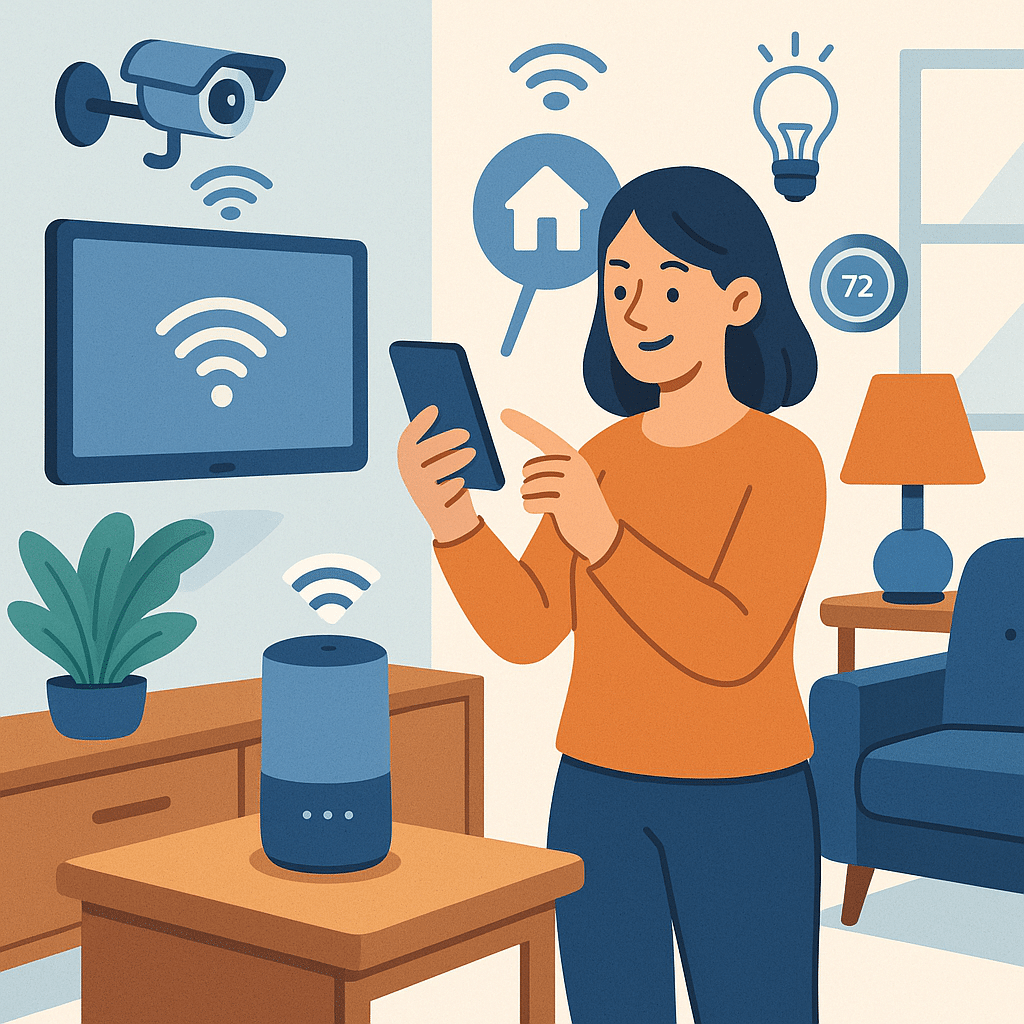
The Growing Demand for Smart Home Devices
The smart home market has been expanding rapidly, with global spending expected to surpass 222 dollars billion by 2027 (Statista 2024). Consumers are adopting devices not just for novelty, but because they provide real functional benefits: reducing energy bills, automating daily chores, and enhancing security.
As homes become more connected, the demand for integration and ease-of-use has skyrocketed. Homeowners want devices that seamlessly work together—whether it’s adjusting the thermostat based on your commute or syncing lighting with your Netflix watchlist.
Voice Assistants: The Center of the Smart Home
No smart home is complete without a reliable voice assistant. Amazon Alexa, Google Assistant, and Apple Siri remain the top contenders, but in 2025, AI-driven enhancements have made them far more proactive.
Instead of waiting for commands, today’s assistants predict your needs. For example, they might:
- Suggest leaving early if traffic is heavy.
- Turn down heating when no one is detected in a room.
- Place grocery orders automatically when supplies run low.
A recent Pew Research Center study found that 62% of U.S. households now own at least one smart speaker, highlighting just how central these devices have become (Pew Research 2024).
Energy Efficiency: Smart Thermostats and Appliances
Smart thermostats such as Nest and Ecobee are more advanced than ever. In 2025, they don’t just learn your schedule—they integrate with weather forecasts and utility company data to optimize energy savings.
According to the U.S. Department of Energy, homeowners can cut 10% annually on heating and cooling bills with smart thermostats (DOE 2024). That’s not just convenience—it’s money back in your pocket.
Other energy-efficient smart appliances making waves include:
- Smart refrigerators that track expiration dates and suggest recipes.
- Smart washers that adjust water use automatically.
- Connected ovens that preheat via voice command.
Smart Security: Peace of Mind Made Simple
Home security has shifted from bulky alarm systems to AI-powered smart cameras and locks. Brands like Ring, Arlo, and Eufy now offer real-time monitoring with facial recognition.
Key features trending in 2025:
- Smart locks with biometric access (fingerprint or facial ID).
- Cameras with AI filtering to avoid false alerts from pets or passing cars.
- Neighborhood integration where communities share real-time alerts.
A 2024 Consumer Technology Association report revealed that over 40% of smart home buyers prioritize security devices first, showing that peace of mind remains a leading motivator (CTA 2024)
Health and Wellness Devices at Home
Another major trend in smart home devices that simplify daily life is health monitoring. Post-pandemic, consumers are focused on wellness at home.
Popular devices in 2025 include:
- Smart air purifiers that track indoor air quality in real-time.
- Connected sleep trackers built into mattresses.
- Smart mirrors that analyze skin health and recommend routines.
These tools don’t just simplify life—they help detect issues early, improving long-term health outcomes.
Cleaning Made Effortless: Robot Helpers
Robot vacuums like iRobot’s Roomba have been around for years, but in 2025, multi-functional cleaning robots dominate.
Modern models can:
- Vacuum and mop simultaneously.
- Empty their own dust bins.
- Detect floor types automatically.
There’s also a rise in window-cleaning robots and lawn-mowing robots, saving homeowners countless hours of chores.
Integration and Ecosystem: Matter Standard Leading the Way
One of the biggest challenges for years was device compatibility. In 2025, the Matter standard—a universal protocol backed by Apple, Amazon, Google, and Samsung—has finally gained traction.
This means:
- Devices from different brands now “speak the same language.”
- Set-up times are drastically reduced.
- Consumers no longer fear investing in “dead-end” tech.
Industry experts believe Matter is the single most important development in smart homes, as it shifts focus from brand loyalty to consumer convenience (TechCrunch 2024).
The Future of Smart Kitchens
The kitchen is quickly becoming the smartest room in the house. Beyond connected ovens and refrigerators, emerging devices include:
- AI-powered coffee machines that adjust brewing based on your sleep quality.
- Smart faucets that measure exact water quantities.
- Pantry scanners that help automate grocery lists.
With food waste being a major issue, these innovations help households save money while promoting sustainability.
Accessibility and Affordability
For years, smart home devices were criticized as being for the wealthy. But now, thanks to mass production and partnerships with utility companies, prices are dropping significantly.
For instance:
- Entry-level smart bulbs cost less than 10 dollars each.
- Security cameras start at 30 dollars.
- Many devices are offered with subscription models, reducing upfront costs.
This democratization means smart living is no longer exclusive—it’s accessible for all.
Challenges Ahead
Despite progress in smart home technology, several challenges remain that both consumers and manufacturers must navigate.
Sustainability Questions
With rapid product turnover and the short lifespan of some gadgets, e-waste is becoming a growing issue. Smart devices may save energy in the home, but their production and disposal raise environmental questions that are still being addressed.
Privacy Concerns Over Data Collection
Many smart devices constantly gather data on daily routines, preferences, and even conversations. While this data is used to personalize experiences, it also raises serious concerns about who has access to it, how it’s stored, and whether it can be misused by third parties. Regulations are improving, but gaps still exist, leaving users vulnerable.
Cybersecurity Risks With Connected Devices
Every new device connected to a network becomes a potential entry point for hackers. From smart cameras to connected thermostats, unsecured devices can expose entire households to attacks. A compromised device doesn’t just risk personal data—it can also lead to broader security breaches across other connected platforms.
Over-Reliance on Automation
While automation simplifies life, it also creates a dependency. A system outage or device malfunction can disrupt daily routines, from not being able to unlock a smart door to losing access to heating or lighting. The more integrated and automated a home becomes, the greater the impact when things go wrong.
Cost and Accessibility Barriers
Cutting-edge devices often come with a high price tag, limiting access for many households. Even when affordable options exist, the learning curve for setup and use can discourage adoption among less tech-savvy users. This creates a digital divide where only certain groups benefit fully from the technology.
Conclusion: Smart Living in 2025
Smart home devices that simplify daily life are no longer gimmicks. They’re practical, cost-effective, and increasingly essential. From energy savings to health monitoring and home security, the latest innovations are designed to give homeowners more time, comfort, and peace of mind.
As integration improves through standards like Matter, we’re heading toward a world where every device in the home communicates seamlessly—making daily living not just simpler, but smarter.
References
- Statista (2023) Smart Home Report 2023: Market Size, Devices & Adoption. Available at: https://www.statista.com/outlook (Accessed: 22 September 2025).
- Smith, C. (2022) ‘The Rise of AI-Powered Smart Homes’, Forbes. Available at: https://www.forbes.com/sites/forbestechcouncil (Accessed: 22 September 2025).
- Consumer Reports (2024) Best Smart Home Devices for 2024. Available at: https://www.consumerreports.org/ (Accessed: 22 September 2025).

 Gardening Tips for Urban Spaces