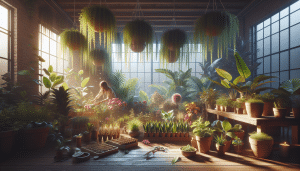
Gardening Ideas That Encourage Sustainable Practices
Giulia Bianchi September 26, 2025
In 2025, more gardeners are seeking sustainable gardening ideas that go beyond organic labels—practices that restore soil, conserve water, and produce food. This article highlights new and rising trends you can adopt now for both beauty and function.
Why Sustainable Gardening Ideas Matter Now
The climate is shifting, water is scarcer in many regions, and chemical-heavy landscapes are taxing ecosystems. Gardeners are no longer just cultivating for aesthetics—they’re building resilient micro-ecosystems in yards, containers, and urban lots.
- Regenerative practices (cover cropping, minimum tillage, residue retention) have been shown to increase soil carbon sequestration and improve soil health.
- Diversified landscapes over decades can boost biodiversity, ecosystem services, and even financial returns.
- Urban areas are adopting features like green roofs, sponge city drainage, and edible landscapes to buffer floods, reduce heat, and improve food security.
Thus, sustainable gardening ideas are not just trendy—they’re becoming necessary.
Top Emerging Sustainable Gardening Ideas in 2025
Here are seven (plus bonus) trends gaining traction—each offering tangible ecological value and practical appeal.
1. Foodscaping: edible beauty
Foodscaping (also called edible landscaping) integrates fruit, herbs, and vegetables into ornamental designs. Rather than relegating edibles to a separate vegetable patch, you scatter them amidst borders, pathways, and decorative beds.
Why it’s powerful:
- You get food + visual appeal.
- Reduces food transportation (food miles) and packaging waste.
- Edible plants often bring pollinators, beneficial insects, and more biodiversity to your garden.
Tips to start:
- Identify underused ornamental zones (e.g. side borders, raised beds) and swap in edible shrubs or herbs.
- Choose dual-purpose plants (e.g. flowering kale, chives, berry bushes).
- Combine with mulch and companion planting to reduce pests and feed soil.
2. Cover Cropping & Soil Building
One of the core regenerative tools, cover crops help rebuild soil structure, fix nitrogen (in legumes), prevent erosion, and feed microbial life.
- In studies across arable land, regenerative techniques (cover cropping, no-till, crop rotations) consistently boosted carbon storage.
- Cover crops can supply 20–60 kg N/ha or more, depending on species, reducing synthetic fertilizer needs.
To adopt:
- Use a mix (legumes + grasses) rather than a single species.
- Plant in off-season gaps.
- Terminate (mow or roll) before flowering, then mulch into the soil.
3. Micro-forests and Pocket Foresting
Inspired by the Miyawaki method, micro-forests densely plant native trees and shrubs in small plots to accelerate ecosystem restoration. This “stacked” planting rebuilds soil, captures carbon, and attracts wildlife in compact spaces.
Benefits:
- Rapid biodiversity gains.
- Carbon sequestration in woody biomass.
- Cooling, shade, and habitat provision in urban zones.
This is a cutting-edge trend especially in densifying cities.
4. Water-smart designs: Xeriscaping & sponge landscapes
With unpredictable rainfall, water-wise design is no longer optional.
- Xeriscaping emphasizes drought-tolerant and native plants to slash irrigation needs.
- Sponge city / green infrastructure features (rain gardens, permeable paving, retention basins) help absorb excess storm water.
You can blend both: rearrange your garden so downhill areas become rain gardens, and group low-water species together.
5. Smart Soil Sensors & AI Monitoring
Technology is meeting sustainability. Researchers have showcased systems that integrate environmental sensors, imagery, and ML models to monitor plant stress and optimize water and nutrient delivery.
In gardens, you can use:
- Soil moisture sensors (DIY or commercial kits).
- Smart controllers that adjust irrigation based on real-time data.
- Apps that track growth, moisture, and sensor readings in one dashboard.
These tools improve efficiency and reduce waste—key in a sustainable garden setup.
6. Chaos Gardening (a freer, wild-eye trend)
“Chaos gardening” is less about rigid structure and more about embracing a semi-wild aesthetic. You plant seeds randomly and let nature fill in gaps, creating a spontaneous, dynamic garden.
Why it’s compelling:
- Lower maintenance (less weeding, simplified planning).
- High diversity—species self-select, sometimes bringing unexpected gifts.
- Aligns with “letting nature lead” rather than controlling every inch.
You can moderate it: designate “chaos zones” or blend with more structured areas.
7. Alternative Lawn Systems: Clover & Groundcovers
Traditional turf is water- and labor-intensive. Alternatives are gaining popularity:
- Clover lawns reduce mowing, use less water, and support pollinators. Some designers are now swapping grass entirely for clover.
- Other groundcovers like creeping thyme, sedum, or moss offer texture and ecological benefit.
To shift:
- Kill or suppress existing turf (smothering, solarization, selective herbicides).
- Seed a mix of clover + companion groundcovers.
- Mow infrequently (or not at all) once established.
How to Select the Right Sustainable Gardening Ideas for You
It’s tempting to adopt all the trends, but wise selection is key. Use this decision path:
| Consideration | Questions to Ask | Recommendation |
|---|---|---|
| Climate & water availability | Is your region arid, seasonal, or wet? | Prioritize xeriscaping, drought-tolerant natives, sponge gardens as needed |
| Space constraints | Are you in a small yard, containers, or larger plot? | Foodscaping, smart sensors, and chaos zones work well in limited space |
| Budget & ROI timeframe | Do you want fast returns or long-term payoffs? | Cover cropping and diversity pay dividends over years; edible plants may yield sooner |
| Technical familiarity | Comfortable with tech, sensors, or AI? | Dip into smart tools gradually; analog practices still powerful |
| Aesthetic preference | Do you prefer structured gardens or naturalistic looks? | Use chaos gardening or mixed aesthetic zones |
One recommended combination: start with foodscaping + cover crops, then add a sensor or moisture monitor, and convert one lawn sector to clover. Over time, build out micro-forest or sponge garden areas.
Practical Steps to Begin Your Sustainable Garden
Here’s a five-phase roadmap to implement sustainable gardening ideas.
1: Audit & Planning
- Map sun, shade, water flow, soil conditions.
- Note problem areas (erosion, soggy patches, compacted soil).
- Sketch zones for edible, wild, low-water, high-visual interest areas.
- Choose a small pilot bed (e.g. 2m x 2m) for testing.
2: Soil Building
- Initiate cover cropping in fall/winter.
- Add compost, leaf mold, mulch.
- Use minimal tillage or no-till when integrating amendments.
3: Design & Planting
- Begin foodscaping transitions in the pilot bed.
- Introduce native shrubs or dwarf fruit trees.
- Create micro-forest patches or garden edges.
- Use multipart plantings: groundcover → herbaceous → shrubs.
4: Infrastructure
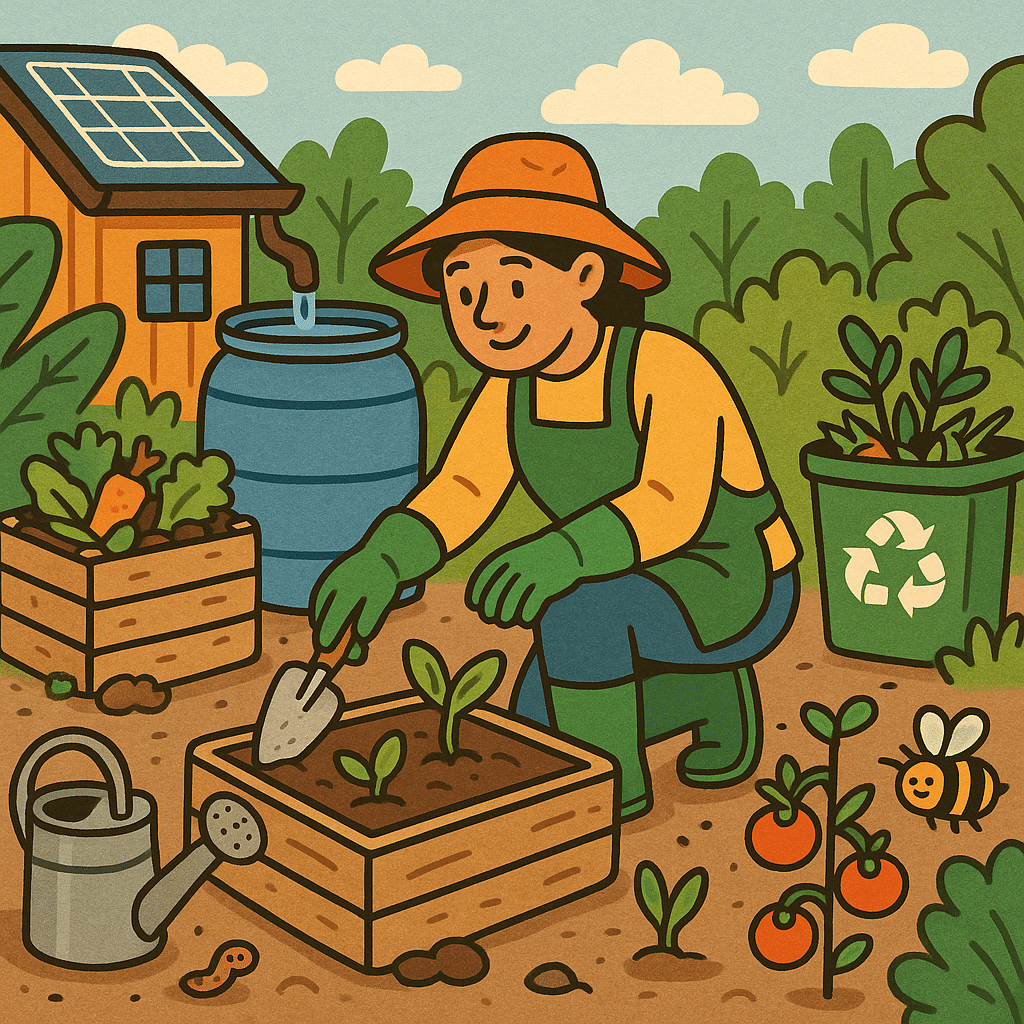
- Install a rain catchment or barrel.
- Create permeable paths or rain gardens to capture runoff.
- Add soil moisture sensors or smart irrigation controllers.
Phase 5: Maintenance & Adaptation
- Monitor sensor data or visual signs.
- Terminate cover crops before flowering; mulch them in.
- Adjust watering schedules based on data.
- Let chaos zones evolve; intervene only if invasive species dominate.
Common Challenges & Solutions
| Challenge | Solution |
|---|---|
| Cover crops overtaking the design aesthetic | Use termination strategies (mow, roll) and plant annual transitions |
| Sensor/tech cost too high | Start with one zone or repurpose old sensors |
| Invasive volunteer species in chaos zones | Maintain occasional checks and pull only aggressive intruders |
| Slow fruit tree or micro-forest growth | Use fast-growing understory shrubs initially to provide structure |
| Extreme drought or heavy rains | Harden margins with rock mulch or seasonal borders; buffer with deep-rooted plants |
Measuring Success & Impact
To know your efforts are effective:
- Soil tests — measure organic matter, pH, and structure annually.
- Moisture audits — compare water use before and after installation.
- Biodiversity counts — record pollinators, beneficial insects, birds.
- Yield tracking (for edible plants) — quantify how much food is produced versus inputs.
- Carbon proxy estimates — use cover-crop biomass and woody plant growth estimates.
Over time, you should see richer soil, lower water use, more wildlife, and more food yield per square meter.
Why These Concepts Will Become Standard
- The scientific community is increasingly validating regenerative methods: combining no-till, residue retention, and biological diversity consistently leads to improved soil carbon and ecosystem health.
- Agricultural diversification yields long-term gains in ecosystems and profitability.
- AI and digital tools are accelerating adoption by making data-driven decisions accessible.
- Climate resilience, water stress, and urban density will push more gardeners toward sustainable solutions out of necessity, not choice.
Summary
The era of reactive gardening is giving way to proactive, ecology-aligned practices. Sustainable gardening ideas in 2025 offer more than pretty blooms—they rebuild soil, conserve water, nurture biodiversity, and yield edible rewards.
Whether you adopt foodscaping, cover cropping, smart sensors, chaos gardening, or clover lawns—or blend them all—the key is to begin small, measure outcomes, and evolve the design over time. Today’s experiments can become tomorrow’s resilient ecosystems.
References
- Royal Horticultural Society. (2021) Sustainable gardening: How to garden with the planet in mind. Available at: https://www.rhs.org.uk (Accessed: 26 September 2025).
- United States Environmental Protection Agency (EPA). (2022) Green landscaping with native plants. Available at: https://www.epa.govs (Accessed: 26 September 2025).
- National Wildlife Federation. (2023) Eco-friendly gardening practices. Available at: https://www.nwf.org/ (Accessed: 26 September 2025).

 Smart Finance Tools That Improve Daily Budgeting