Strategies for Maintaining Physical Fitness on a Tight Schedule
Lucia Fernandez September 18, 2025
Balancing work, family, and personal responsibilities makes staying fit feel impossible for many. Yet, strategies for maintaining physical fitness on a tight schedule are becoming a hot topic in 2025, with new methods and tech-driven solutions helping people stay active without sacrificing time.
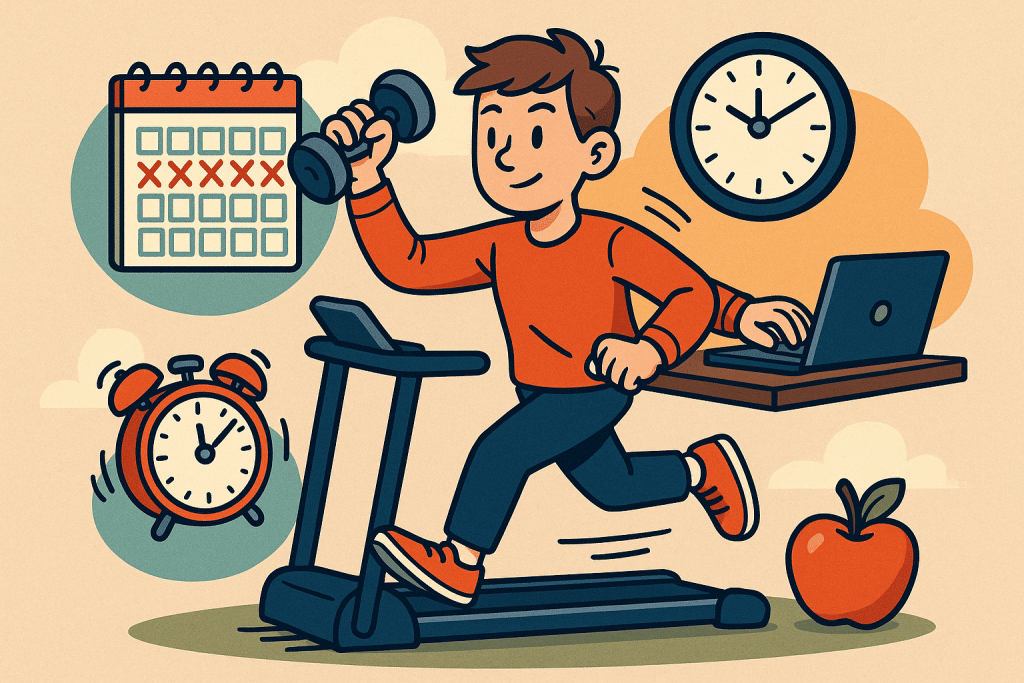
Why Time is the Biggest Barrier to Fitness
One of the most cited reasons people skip exercise is lack of time. A 2023 American Heart Association survey found that over 60% of adults reported being “too busy” to work out regularly (American Heart Association, 2023). At the same time, sedentary lifestyles are linked to higher risks of obesity, cardiovascular disease, and type 2 diabetes (Mayo Clinic, 2023).
The challenge is clear: finding efficient, practical ways to stay active without rearranging an already packed schedule.
Trend #1: Micro-Workouts Are Taking Over
Short, intense “micro-workouts” are becoming mainstream. These are 5–15 minute exercise sessions designed to be slotted into busy days. Research shows that even a few minutes of high-intensity interval training (HIIT) can improve cardiovascular fitness and strength (Gibala & McGee, 2008).
Examples of micro-workouts you can fit anywhere:
- 10-minute HIIT: 30 seconds of burpees, squats, or push-ups followed by 30 seconds rest, repeated.
- Desk workouts: chair dips, seated leg lifts, or resistance band pulls during Zoom meetings.
- Stair sprints: running stairs at home or at work for just 5 minutes.
The appeal is obvious: minimal time, maximum benefit.
Trend #2: The Rise of “Exercise Snacking”
Closely related to micro-workouts is the concept of “exercise snacking.” Instead of one long gym session, people break movement into several short bursts throughout the day.
A recent study in the British Journal of Sports Medicine found that just 1–2 minutes of vigorous activity, such as climbing stairs, three or four times daily can significantly reduce mortality risks (Stamatakis et al., 2022).
How to apply this trend:
- Walk briskly while taking calls.
- Do squats while waiting for your coffee to brew.
- Replace short elevator rides with stairs.
This approach removes the mental barrier of “finding an hour to exercise.”
Trend #3: Tech-Supported Fitness Efficiency
Wearables, AI-driven apps, and “smart gyms” are redefining time-efficient fitness. Devices like WHOOP, Fitbit, and Apple Watch now track micro-activities (like a short walk or standing up frequently), helping users see progress without marathon workouts.
AI-driven apps (such as Future and Freeletics) personalize short workouts, recommending what fits your schedule and recovery needs. Virtual reality fitness platforms, like Supernatural VR, make workouts engaging and time-efficient by combining cardio with gamified experiences.
Trend #4: Active Commuting Is Back
As hybrid work stabilizes in 2025, more people are incorporating activity into their commute. Cycling to work, walking to the train, or even parking farther away from the office counts as daily exercise.
The U.S. Department of Health and Human Services recommends at least 150 minutes of moderate aerobic activity per week, and even short active commutes can help meet this target (HHS, 2018).
Practical Strategies for Busy People
Staying fit doesn’t have to mean two-hour gym sessions or complicated fitness regimens—especially when life’s already on overdrive. For those juggling work, family, and everything in between, here are 7 realistic, high-impact strategies to keep your body active and strong, no matter how packed your schedule is:
- Schedule “Movement Breaks” Like Meetings
Block out 5-10 minute intervals on your calendar just like important Zoom calls. Use them for stretching, quick jumping jacks, or a brisk walk around the block. These micro-breaks don’t just improve mobility—they boost productivity too. - Master the Power of Bodyweight Exercises
No equipment? No time? No problem. Think squats, lunges, planks, and push-ups. These exercises build strength, torch calories, and require zero prep. They’re your portable, full-body gym. - Leverage Smart Home Fitness Tech
Devices like Peloton, Tempo, and Tonal bring a world-class fitness studio right into your living room—no commute required. Quick 15-minute guided sessions can deliver serious results when done consistently. - Mix It Up with Hybrid Routines
Try “exercise snacking”—multiple short sessions during the week—combined with one longer workout on weekends. This routine adapts to your life, not the other way around, and still delivers fitness gains. - Make Family Time Physically Active
Transform screen time into sweat time. Go for evening walks, have a dance-off in the living room, or plan Saturday hikes. It’s quality bonding and fitness wrapped into one. - Focus on Compound Movements
Choose time-efficient moves that work multiple muscle groups at once. Deadlifts, squats, push-ups, and rows provide the best return on your limited time investment. - Track Progress with Wearables
Smartwatches and fitness bands keep you accountable. Set daily step goals, monitor your heart rate, and get that dopamine hit from closing your rings or crushing a goal.
When time is tight, it’s about working smarter, not longer. Even 10 minutes a day, used wisely, can make a visible difference in your energy, mood, and physique.
Nutrition Hacks That Save Time
Fitness is incomplete without nutrition, but meal prep can feel overwhelming. Emerging trends in 2025 focus on time-efficient healthy eating:
- Batch cooking once a week and freezing meals.
- Meal delivery kits tailored to fitness goals (like high-protein or low-carb).
- Portable snacks (protein bars, nuts, boiled eggs) to avoid unhealthy fast food.
Proper fueling ensures energy levels remain high despite tight schedules.
The Mental Health Factor
Time constraints not only affect the body but also mental well-being. Exercise is proven to reduce stress and anxiety while improving cognitive function (Harvard Medical School, 2021). Even a 10-minute daily workout has measurable mental health benefits.
For busy professionals, reframing exercise as a mental health tool—not just a physical one—makes it easier to prioritize.
The Future of Fitness for the Busy Individual
The fitness industry is moving toward flexibility, personalization, and accessibility. Whether through AI workout coaches, short-burst exercise routines, or active commuting, the message is clear: you don’t need hours in the gym to stay fit.
In 2025, strategies for maintaining physical fitness on a tight schedule are not only possible—they’re redefining what sustainable fitness looks like.
Conclusion
Time is no longer an excuse. From micro-workouts to active commuting and AI-powered fitness tools, anyone can integrate exercise into their schedule. The key is consistency over duration. Even minutes a day add up to long-term health, energy, and resilience.
References
- American Heart Association. (2021) Recommendations for Physical Activity in Adults. Available at: https://www.heart.org/en(Accessed: 17 September 2025).
- Harvard Health Publishing. (2022) Exercising When You Have No Time: Quick Workouts That Work. Available at: https://www.health.harvard.edu (Accessed: 17 September 2025).
- Mayo Clinic Staff. (2023) Fitness Tips for Busy People: Finding Time for Exercise. Available at: https://www.mayoclinic.org(Accessed: 17 September 2025).

 How Cultural Tourism Supports Sustainable Economies