Travel Experiences That Encourage Cultural Understanding
Adrian Park October 1, 2025
Across 2025, cultural immersion travel experiences are redefining how people explore the world: not just sightseeing, but living, learning, and connecting. In this article, we examine the hottest trends transforming travel into a tool for deeper cultural understanding.
Why Cultural Immersion Travel Experiences Matter Now
The demand for cultural immersion travel experiences is rising sharply. According to consumer surveys, around 70% of travelers express strong interest in more immersive, local-based experiences in future trips — from cooking classes and community tours to volunteer efforts and home stays.
Moreover, industry experts confirm that luxury travel is shifting focus away from opulence toward authenticity, placing culture and local connection at its core.
In short: travelers want to belong to their destinations, not just pass through them—and that shift opens a rich space for travel that encourages cultural understanding.
Trend 1: Community-Based Homestays & Cultural Host Programs
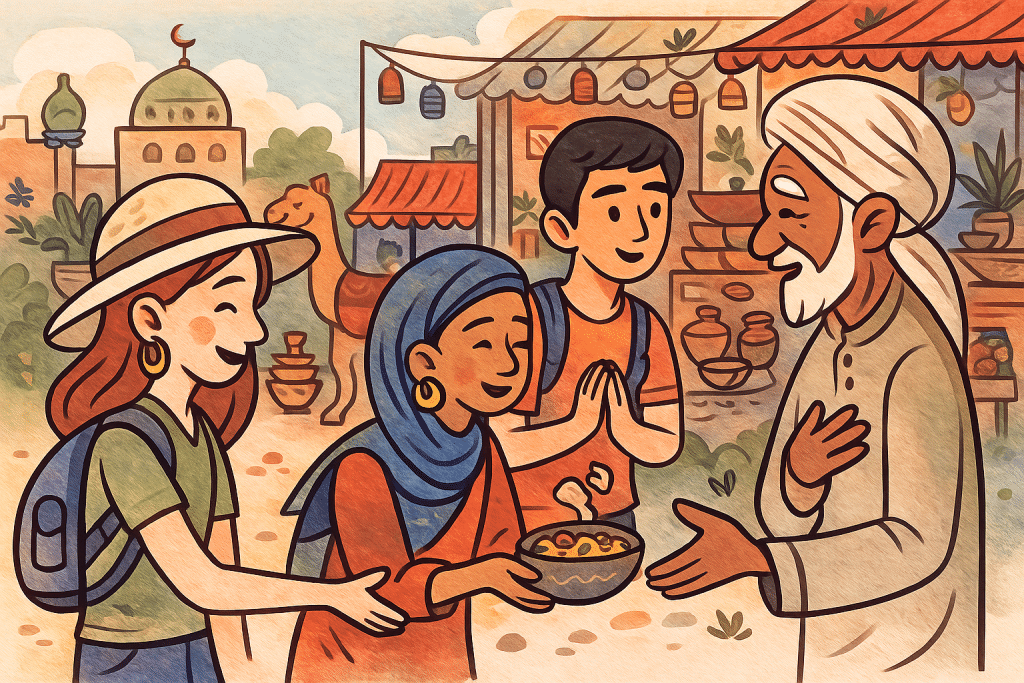
One of the strongest trends in cultural immersion travel experiences is the rise of organized homestays, where visitors live with local families, sharing meals, chores, and stories. These programs often go hand-in-hand with community-run tourism initiatives.
Why it matters:
- Enables day-to-day interaction—not just guided tours—for real conversations and cross-cultural exchange.
- Empowers local hosts economically and socially, giving them agency over how culture is presented and experienced.
- Helps travelers move beyond tourist bubbles and glimpse daily life, traditions, values.
Examples & notes:
- In Mongolia, an eagle-hunter cultural center now offers homestay-linked experiences, allowing visitors to participate in falconry and hear local legends.
- Indigenous tourism ventures (e.g. in Canada, Australia) are gaining ground as communities create and manage experiences around storytelling, craft, and land-based practices.
Tips for travelers:
- Choose homestays operated or approved by local NGOs or cooperatives.
- Communicate expectations clearly (privacy, schedules, meals).
- Be respectful, open-minded, and ready to adapt.
- Bring small gifts or contributions if welcomed (art supplies, local products).
Trend 2: Narrative-Driven Itineraries (Role-Play & Storytelling)
A compelling evolution in cultural immersion travel experiences is the use of storytelling frameworks to structure itineraries. Rather than rigid sightseeing checklists, trips become narrative arcs—where travelers follow thematic threads (e.g. music, migration, architecture) across sites and interactions.
A recent academic proposal, NarrativeGuide, uses knowledge graphs and optimization to craft story-based travel routes, weaving transitions and local context into a coherent journey.
What makes it powerful:
- It frames experiences with meaning—each visit becomes a chapter rather than a disjointed stop.
- Helps travelers understand local culture through arcs: past → present → future, or conflict → resolution.
- Local guides or cultural storytellers can be woven in as “characters” in the journey.
How to find or design such trips:
- Look for travel operators that advertise “curated stories” or “theme-based tours.”
- Use local artists, historians, or storytellers as guides.
- Ask your tour planner to include transitions—context between destinations—not just point A → B.
- Blend in ambient experiences (music evenings, folk tales, historical dramatizations) that reinforce the narrative.
Trend 3: Indigenous-Led & Cultural Sovereignty Tourism
As visitors increasingly seek meaningful cultural engagement, Indigenous-led tourism is becoming a central pillar of ethical cultural experiences. This is not just about visiting Indigenous sites, but co-creating them—empowering communities to define how their heritage is shared.
Key signals:
- The World Travel & Tourism Council expects Indigenous tourism to contribute 67 billion dollars globally by 2034.
- Cultural tourism practitioners expect greater focus in 2025 on representation, avoiding misappropriation, and giving local stakeholders control.
Best practices & guidelines:
- Seek accreditation or endorsement from Indigenous organizations.
- Avoid “spectacle tourism”—don’t treat culture as a show.
- Request transparency: how much of your fee goes to the community?
- Support ongoing cultural initiatives (language revitalization, arts, land stewardship).
Trend 4: Slow Travel & Deep Dives
The slow travel movement has deep synergies with cultural immersion travel experiences. Rather than hopping from city to city, slow travelers stay longer in one place, frequent local cafes, learn the language, volunteer, and absorb rhythms of life.
Why slow travel strengthens cultural understanding:
- Reduces superficial engagements and allows trust to build.
- Minimizes traveler footprint and often reduces environmental impact.
- Encourages deeper learning—craft workshops, seasonal rituals, agricultural cycles.
How to adopt a slow travel mindset:
- Choose fewer destinations, more time per place.
- Use public or slower transport (buses, trains) when possible.
- Rent within neighborhoods instead of tourist districts.
- Devote “blank days” to spontaneous local exploration.
Trend 5: Tech-Enhanced Cultural Access (XR, Digital Twins, Virtual Windows)
Technology isn’t the enemy of authenticity—used thoughtfully, it can enrich cultural immersion travel experiences. Two emerging tools are especially promising:
XR / AR Cultural Windows
Projects like Cultural Windows scan real living spaces (houses, workshops, community hubs) and render them in augmented or virtual environments so users anywhere can explore them.
This can:
- Let prospective travelers preview or deepen cultural context before/after a visit.
- Help diaspora or distant learners connect with ancestral spaces virtually.
Digital Twins & Heritage Simulations
Scholars are developing digital twins of cultural sites—virtual models synchronized with real-world data—that let users interact with heritage settings more richly.
In the context of cultural immersion travel experiences, these tools may help:
- Prepare travelers (e.g. understanding layout, language cues) before arrival
- Extend the experience post-trip via virtual visits and deep-dive materials
- Provide inclusive access if someone can’t physically travel (due to age, mobility, visas)
Putting It Into Practice: Creating Your Own Culture-Rich Journey
Here’s a step-by-step mini‑guide to help you plan travel that truly encourages cultural understanding:
- Define your interest theme.
(e.g. textile arts, food culture, local festivals, spiritual beliefs) - Select destinations with local control.
Use communities or cooperatives (not purely commercial zones). - Choose immersive formats.
Homestays, storytelling tours, local workshops, volunteer modules. - Request narrative-based structure.
Ask for transitions, context sessions, evening story events. - Stay longer, travel slower.
Use 2–3 days of buffer for unscripted exploration. - Blend tech thoughtfully.
Incorporate pre-trip VR visits, augmented maps, locals’ digital narratives. - Reflect & reciprocate.
Share your experiences, give feedback, donate or partner with cultural projects.
Challenges and Ethical Considerations
While the momentum behind cultural immersion travel is strong, practitioners and travelers must navigate carefully:
- Overtourism & cultural overload.
Even authentic sites can suffer from excessive visitor numbers, diluting meaning or overwhelming locals. - Cultural commodification.
Avoid turning sacred rituals or intimate traditions into mere performances for tourists. - Economic transparency.
Ensure communities receive fair share of revenue. - Local consent and representation.
Cultures should be portrayed by insiders, not imposed by outsiders. - Cultural fatigue.
Communities often juggle performance for tourists with their everyday life—ensure travel pacing respects local rhythms.
The Future of Cultural Immersion Travel Experiences
In 2025 and beyond, cultural immersion travel experiences will become a central pillar of how people journey—with authenticity, responsibility, and tech integration.
Key forecasts:
- Story-driven, role-play itineraries will gain market share.
- Indigenous-led tourism will flip the host-visitor dynamic.
- Virtual-cultural access (XR/AR) will augment—but not replace—physical travel.
- “Deep stay” journeys will outcompete rapid city-hopping models.
- Travel platforms will increasingly partner with cultural institutions for trustworthy offerings.
With thoughtful planning and sensitive execution, travel can become a force for mutual learning, empathy, and respect. It’s not merely about seeing new places—it’s about meeting new minds.
References
- Hausler, C. (2021) Consumers Are Seeking Out Experiential Travel. Available at: https://research.mountain.com/insights/consumers-are-seeking-out-experiential-travel (Accessed: 1 October 2025).
- Skift (2024) Cultural Immersion: The Next Big Trend in Luxury Hospitality. Available at: https://skift.com/2024/06/07/cultural-immersion-the-next-big-trend-in-luxury-hospitality (Accessed: 1 October 2025).
- Poling, M. (2025) Cultural Tourism Trends for 2025. Available at: https://monicapoling.com/cultural-tourism-trends-for-2025 (Accessed: 1 October 2025).

 Nutrition Tips That Support Brain Function