Gardening Techniques That Encourage Seasonal Planting
Giulia Bianchi October 2, 2025
Gardening is moving past rigid spring schedules. Gardening techniques that encourage seasonal planting are evolving with technology, ecological design, and smart planning to help gardeners grow reliably through shifting climate patterns. In this article we explore some of the trends and methods helping gardeners plant with confidence in every season.
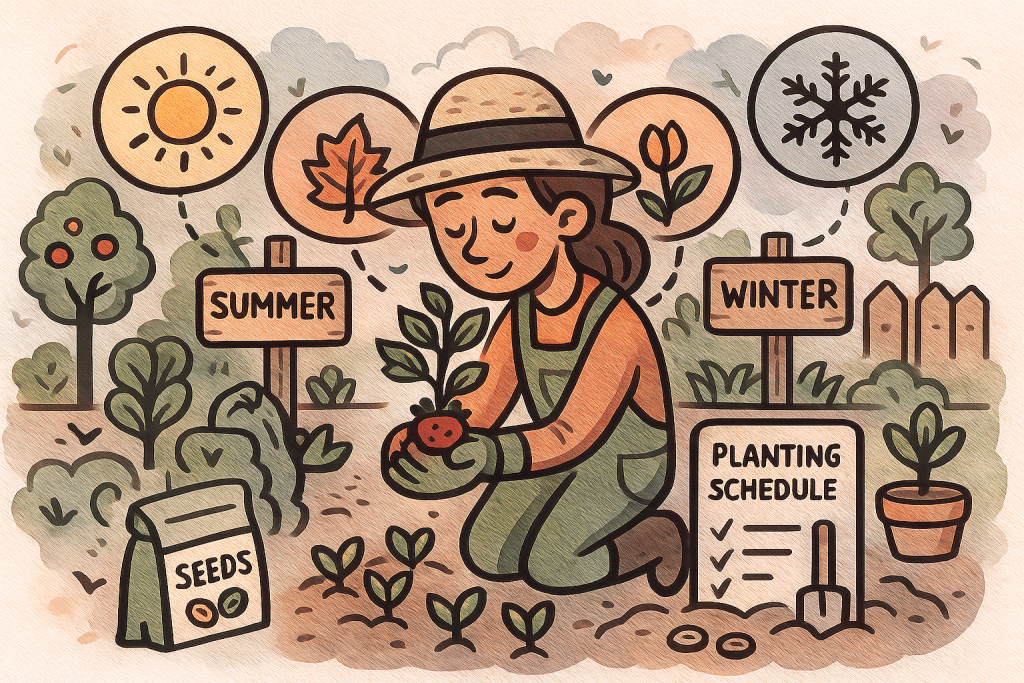
Why Seasonal Planting Matters Now
Seasonal planting ensures that your garden remains productive, resilient, and ecologically aligned. Instead of forcing plants into out-of-sync windows, gardeners are now considering weather shifts, microclimates, and adaptive techniques to allow continuous growth. This approach also helps with pest and disease control, as rotating plant families and planting at optimal times reduce stress on plants. Recent gardening forecasts list “year-round gardening” as a top trend for 2025, pointing to tools and strategies that support planting in extended seasons and off-peak months.
Trend: Climate-Adaptive Planting Zones & Microclimates
One emerging approach is treating your garden as a mosaic of microclimates. Even in the same yard, soil temperature, sun exposure, and wind patterns differ from one bed to another. By mapping these zones, gardeners can stagger planting windows within their own garden—earlier for warmer zones, later for cooler ones. This lets you plant in more than one “season” in a single yard. Technology is helping here: soil sensors, thermal mapping tools, and sun-path apps allow precise zone planning.
Succession Planting and Layered Seasons
Succession planting is a classic technique now getting renewed attention in the context of continuous planting cycles. It involves:
- Planting fast-maturing crops first
- Following up with another crop when the first is harvested
- Sometimes doing overlapping plantings in the same bed
This method lets you extend productive windows and avoid periods of garden idleness. In practice, you might plant lettuce and radishes early, then after a few weeks replace that with beans or squash. Or in colder climates, cover early spinach with row covers, then replace with summer crops as temperatures rise.
Smart Tools & Robotics Assisting Plant Timing
Technology is also entering the seasonal planting space. For example, PlantPal, a recent system combining precision agriculture robots with remote control, helps urban gardeners manage planting and care even when they’re not physically present. While still experimental, such tools point to a future where technology helps maintain a planted garden year-round—even in constrained spaces.
Additionally, the use of growing degree units (GDU) — tracking cumulative temperature metrics — is being integrated into planting schedulers. Research in scheduling planting time using optimization and weather forecasting shows that planting windows can be optimized based on expected temperature curves. Gardeners using more advanced weather modeling and GDU tracking can adjust when they plant seeds or transplant, making seasonal planting more precise.
Techniques That Encourage Year-Round Planting
Here are specific gardening techniques that help support seasonal planting in your garden:
1. Raised beds with deeper soil and thermal mass
Raised beds warm earlier and retain more heat in cold snaps. By building beds with good insulation and materials that hold heat (stone, brick, dark mulch), you can push back first planting dates and extend the fall season.
2. Use of low tunnels, row covers, and cold frames
These protective structures let you start earlier and end later. A simple hoop house or frost cloth can raise soil temperature a few degrees—enough to allow early planting of cold-tolerant crops like spinach, kale, or onions.
3. Intercropping & companion layering
Mix slower-growing plants with faster ones to stagger harvests and permit replanting. For example, plant tomatoes and basil together; as basil finishes early, replant that space with a later leafy crop. Companion layering also helps shade soil and conserve moisture, helping seeds germinate in warmer soil mid-season.
4. Adjusted planting windows with climate trends
With warming trends in many regions, gardeners are shifting planting calendars. For example, the traditional “last frost” dates may be less reliable. Tracking your local weather data over several years helps you adapt planting windows. Many gardening trend forecasts for 2025 emphasize the move toward local, resilient planting strategies over rigid calendars.
5. Polyculture and mixed plantings
Instead of monocultures, mixed planting allows layers of succession. As one crop matures, others underneath or beside it reach their own stage. This helps maximize use of space across seasons.
Example: A 3-Season Planting Plan
Here’s an example schedule in a temperate region (adjust for your climate):
| Season | First Plantings | Mid-Season | Later / Overlap |
|---|---|---|---|
| Early Spring | Spinach, radish, peas | Lettuce, kale, carrots | Cover with row cloth for tomatoes |
| Summer | Tomatoes, beans, peppers | Basil, squash, eggplants | Later plantings: okra, cucumbers |
| Fall / Late | Broccoli, spinach, cabbage | Kale, fall greens | Garlic, cold-tolerant herbs under covers |
By overlapping, rotating, and protecting, you maintain productivity throughout the year.
Benefits & Challenges
Benefits
- Higher yield and more consistent harvests
- Better resilience to climate fluctuations
- Efficient use of garden space
- Reduced idle periods in garden beds
Challenges
- Requires constant attention and planning
- May need investment in infrastructure (tunnels, soil amendments)
- Risk of pests or diseases carrying over between seasons
- Some crops simply aren’t suited outside their optimal windows
What to Watch Going Forward
- More adoption of smart sensors and soil monitoring for microclimate mapping
Affordable soil sensors and app-based tools now track moisture, nutrients, and temperature in real time, giving gardeners precise data for planting decisions. As these technologies become more accessible, they are expected to transform how seasonal planting is planned and managed. - Hybrid gardens combining indoor, greenhouse, and outdoor zones
Gardeners are increasingly blending outdoor beds with small greenhouses and indoor grow systems to extend harvest windows. - Ecosystem-focused planting: wild edges, pollinator strips, and low-maintenance margins
Incorporating native wildflowers, pollinator strips, and perennial borders enhances biodiversity and stabilizes planting cycles. - Climate-adjusted regional planting guides becoming mainstream. Traditional frost calendars are becoming less reliable due to shifting climate patterns. In response, localized planting guides tailored to new regional conditions are gaining traction among gardeners and seed companies.
Conclusion
Gardening techniques that encourage seasonal planting are reshaping how we garden. With adaptive zonal planning, succession strategies, climate-based timing, and even robotic assistance, gardeners are pushing past seasonal limits.
So, whether you garden in a small backyard or on an urban balcony, these strategies help you grow more, waste less, and work with nature’s rhythm rather than fighting it.
References
Gardenary. (2025). Garden Trends 2025: What’s Growing in the Year Ahead. Available at: https://www.gardenary.com/blog/garden-trends (Accessed: 1 October 2025).
Tom’s Guide. (2025). 5 Big Gardening Trends of 2025 According to Gardening Pros. Available at: https://www.tomsguide.com/home/outdoors/5-big-gardening-trends-of-2025-according-to-gardening-pros (Accessed: 1 October 2025).
Wikipedia. (2025). Succession Planting. Available at: https://en.wikipedia.org/wiki/Succession_planting (Accessed: 1 October 2025).

 Fitness Practices That Support Daily Activity