Mindfulness Practices That Support Mental Clarity
Lucia Fernandez September 19, 2025
In a world filled with notifications, endless scrolling, and constant noise, many people are searching for mindfulness practices that support mental clarity. These methods are not just spiritual trends; they are scientifically backed approaches helping people reduce stress, sharpen focus, and find inner balance.
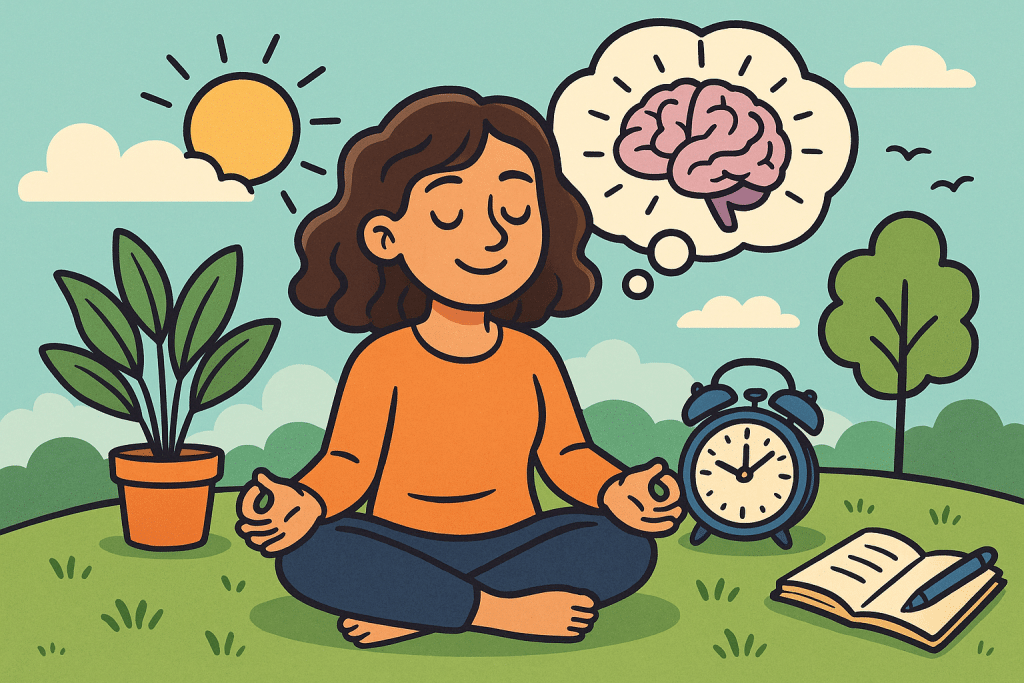
Why Mental Clarity Matters Today
Mental clarity is more than just “thinking clearly.” It serves as the foundation for productivity, emotional balance, and resilience. Increasingly, research shows that chronic stress and information overload impair cognitive performance, making it harder to make decisions or stay focused (American Psychological Association, 2022). Fortunately, mindfulness practices give the brain space to reset, helping individuals regain focus and emotional stability.
1. Breathwork: A Simple Tool with Deep Impact
One of the most powerful and accessible mindfulness practices for enhancing mental clarity is controlled breathing. Techniques like box breathing (inhale for 4, hold for 4, exhale for 4, hold for 4) are now widely adopted in corporate wellness programs and therapeutic settings.
Why it works: Breathwork activates the parasympathetic nervous system, which reduces stress hormones like cortisol (Harvard Health Publishing, 2021). As a result, individuals often feel calmer and more centered after just a few minutes of practice.
Emerging trend: Breathwork is becoming more mainstream, with a surge in breathwork apps and guided online sessions. These tools make the practice more accessible to people from all walks of life.
2. Digital Detox: Reclaiming Mental Space
In today’s hyperconnected world, constant exposure to screens—via smartphones, laptops, and streaming devices—contributes to “cognitive fatigue.” This state, characterized by scattered thinking, irritability, and difficulty concentrating, results from digital overload (Mark et al., 2016).
To counter this, stepping away from devices intentionally can help individuals reclaim focus and restore clarity.
Practical steps:
- Establish screen-free hours, especially before bedtime, as blue light exposure disrupts melatonin production and sleep cycles (Harvard Medical School, 2020).
- Use app blockers to limit social media usage.
- Adopt mindful phone habits, such as checking notifications only at set intervals.
Hot trend: A growing industry of “digital detox retreats” offers immersive, tech-free experiences. Hosted in tranquil environments, these programs encourage participants to engage in yoga, journaling, meditation, and nature immersion. Attendees often return with renewed focus and mental clarity.
Moreover, companies are increasingly adopting tech-free days or digital wellbeing initiatives to support employee mental health.
3. Mindful Movement for Focused Living
While mindfulness is often associated with stillness, it doesn’t have to be. Practices like yoga, tai chi, and mindful walking integrate physical activity with focused awareness, making them ideal for aligning the body and mind.
Scientific backing:
Research indicates that mindful movement enhances attention span, working memory, and emotional regulation. A study published in Current Directions in Psychological Science highlights the effectiveness of these practices in reducing anxiety and improving well-being (Creswell, 2017). Similarly, tai chi has been shown to improve cognitive flexibility, particularly in older adults (Wayne et al., 2018).
Practical applications:
Mindful movement is particularly helpful for those who find seated meditation challenging. Whether it’s a short stretching break or a walking meditation, these practices are easy to incorporate into busy schedules—and they don’t require any special equipment.
Workplace trend:
Modern workplaces are embracing movement-based mindfulness. Yoga breaks, walking meetings, and even tai chi sessions are becoming standard components of employee wellness programs. Such initiatives not only enhance focus but also encourage collaboration and creativity (Knight, 2017).
Why it matters now:
Given today’s demanding work culture and high burnout rates, mindful movement offers a practical, time-efficient solution for restoring mental clarity and resilience.
4. Journaling as a Mindfulness Tool
Another highly effective mindfulness practice is journaling. More than just documenting daily events, mindful journaling involves tuning into thoughts and emotions with curiosity and without judgment.
Why it matters:
Regular journaling helps reduce stress and improve memory recall (Pennebaker & Smyth, 2016). In fact, expressive writing has been linked to lower blood pressure, enhanced immune response, and fewer symptoms of anxiety and depression (Baikie & Wilhelm, 2005).
Additionally, mindful journaling boosts creativity and problem-solving by helping individuals clarify their thoughts and discover new perspectives.
Practical tip:
Start with just five minutes of “stream of consciousness” writing each day. Don’t worry about grammar—simply let the words flow. Ending with one thing you’re grateful for can help shift your mindset and cultivate presence over time.
5. Mindful Nutrition and Eating Habits
What we consume directly affects how we think and feel. Mindful eating encourages individuals to slow down, savor each bite, and pay attention to hunger and fullness cues.
Emerging trend:
Mindful eating is being integrated into weight-loss, digestive health, and mental wellness programs, where the focus is on awareness rather than restriction.
Science says:
Research supports that mindful eating helps reduce binge eating, promote healthier food choices, and foster a more balanced relationship with food (Katterman et al., 2014).
In practice, mindful nutrition can be as simple as eating without distractions, chewing slowly, and noticing how certain foods make you feel both physically and mentally.
6. Technology Meets Mindfulness
Although technology often contributes to mental overload, it is also fueling the mindfulness movement. Meditation apps like Headspace and Calm have millions of users and make daily mindfulness more approachable.
Future trend:
Virtual reality (VR) is taking mindfulness to the next level. VR meditation experiences offer immersive, nature-inspired environments where users can practice deep relaxation without leaving their homes.
Thus, rather than being an obstacle, technology is becoming an ally in supporting mental clarity—when used with intention.
Final Thoughts: The Mainstreaming of Mindful Clarity
The growing popularity of mindfulness reflects a broader cultural shift: people are seeking ways to pause, reset, and reclaim their mental clarity in an overstimulated world. Whether through breathwork, digital detox, mindful movement, journaling, or conscious eating, these tools offer real, evidence-based solutions.
As scientific research continues to affirm their benefits, and technology expands access to them, mindfulness practices are no longer fringe or optional—they are fast becoming essential for anyone looking to thrive in today’s fast-paced environment.
References
- Harvard Health Publishing. (2021) Mindfulness meditation may ease anxiety, mental stress. Available at: https://www.health.harvard.edu/ (Accessed: 19 September 2025).
- American Psychological Association (APA). (2019) Mindfulness meditation: A research-proven way to reduce stress. Available at: https://www.apa.org/topics/mindfulness(Accessed: 19 September 2025).
- National Center for Complementary and Integrative Health (NCCIH). (2022) Mindfulness meditation and health benefits. Available at: https://www.nccih.nih.gov/health/ (Accessed: 19 September 2025).

 Interior Decor Ideas That Create Relaxing Spaces