Smart Home Devices That Enhance Daily Life
Giulia Bianchi September 29, 2025
Smart home devices that enhance daily life are no longer futuristic luxuries—they’re becoming essential. From AI-powered assistants to energy-efficient appliances, the latest innovations are reshaping how we work, relax, and even sleep at home.
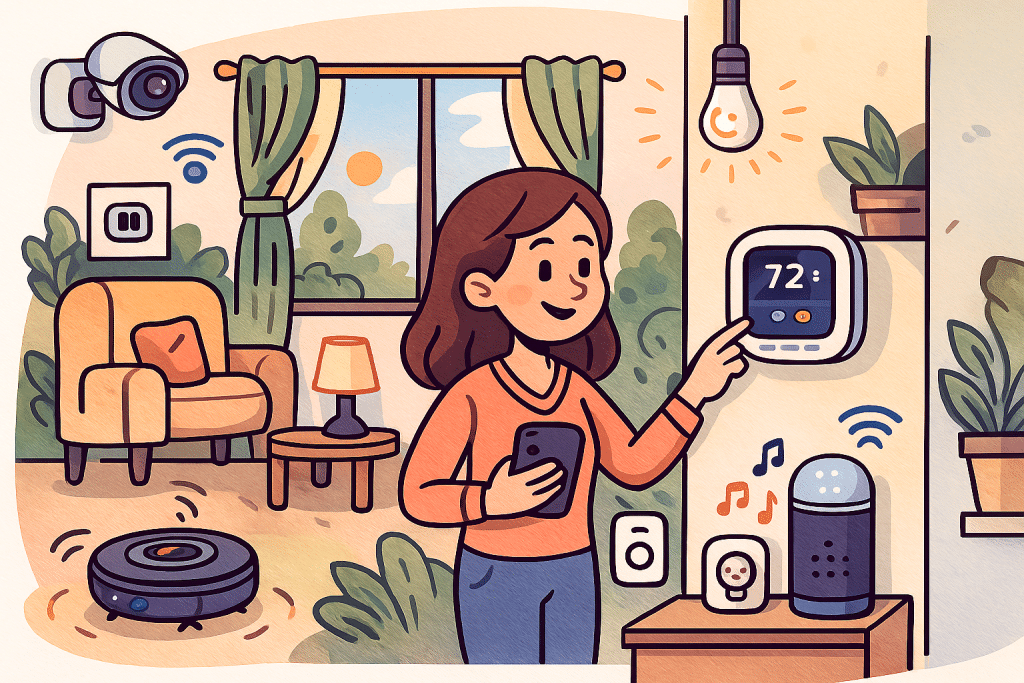
The Rise of AI-Powered Smart Homes
Artificial intelligence (AI) is at the heart of the smart home boom. Devices like Amazon Alexa and Google Nest are no longer just voice assistants—they’re evolving into full-fledged home managers. AI-driven systems now predict user needs, adjust to preferences, and streamline daily routines.
According to a Statista report, the global smart home market is projected to surpass 230 billion dollars by 2028, with AI-enabled devices accounting for a significant share (Statista 2023). This explosive growth shows that smart homes are moving from niche to mainstream.
Smart Lighting: More Than Just Illumination
Gone are the days of simple on-and-off switches. Smart lighting systems such as Philips Hue and Nanoleaf adapt brightness and color to improve mood, productivity, and sleep.
- Adaptive routines: Lights can dim automatically at bedtime and brighten gradually to simulate natural sunrise.
- Energy savings: Research by the U.S. Department of Energy shows that LED smart lighting can reduce energy use by up to 50% compared to traditional lighting (U.S. DOE 2022).
By integrating with AI assistants, users can create personalized lighting profiles—ideal for working, relaxing, or even hosting parties.
Smart Security: Peace of Mind Anytime, Anywhere
Smart home devices that enhance daily life also improve security. Modern systems go beyond traditional locks and alarms.
- Smart locks (like August or Yale) allow remote access, temporary codes for guests, and integration with mobile apps.
- AI-powered cameras detect suspicious activity, distinguish between humans, pets, and vehicles, and send instant alerts.
- Video doorbells such as Ring and Nest Hello provide real-time monitoring and package protection.
A recent survey found that 62% of homeowners feel safer with smart security systems installed (Pew Research 2023).
Smart Health Devices: Wellness at Home
Wellness-focused technology is one of the hottest emerging trends.
- Smart air purifiers monitor air quality and remove allergens automatically.
- Connected sleep devices like Withings Sleep Analyzer track rest patterns and recommend improvements.
- Smart kitchens integrate nutrition tracking with AI-guided cooking.
For example, Samsung’s Bespoke AI Oven uses AI-powered cameras to recognize dishes and recommend optimal cooking settings, reducing food waste and saving time (Samsung 2023).
Energy Management: Sustainability Meets Savings
One of the biggest drivers of smart home adoption is energy efficiency.
- Smart thermostats such as Nest and Ecobee learn user habits to optimize heating and cooling.
- Solar integration systems now sync with home automation, storing energy during peak times.
- Smart plugs and power strips monitor consumption and cut power to idle devices.
According to the International Energy Agency, smart energy management can reduce household energy bills by up to 30% (IEA 2022). This positions smart homes as not only convenient but also eco-friendly.
Entertainment and Lifestyle Upgrades
Entertainment has always been central to the smart home experience, and today’s devices blend leisure with convenience.
Smart TVs now go beyond streaming. They offer voice controls, personalized viewing suggestions, and even sync with smart lighting to set the mood for movie nights. Multi-room speakers such as Sonos bring music into every corner of the house, creating either a unified soundscape or different playlists for each room.
The next wave is already here: VR and AR integration. Virtual workouts, interactive concerts, or even testing new furniture through augmented reality will soon be part of everyday routines. Add in smart projectors for backyard movie nights or connected fitness mirrors, and “home entertainment” starts looking a lot more immersive.
These upgrades don’t just add fun. They transform how people relax, connect, and experience content within their homes.
These devices don’t just enhance leisure—they redefine how people experience content at home.
The Next Wave: Ambient and Predictive Living
The future of smart home devices that enhance daily life lies in ambient intelligence. Unlike traditional devices that require input, ambient systems predict and act without commands.
Imagine a home that:
- Lowers blinds automatically when sunlight becomes too harsh.
- Plays calming music when stress levels rise, detected via wearable integration.
- Adjusts temperature based on the number of occupants in the room.
Tech companies like Google and Apple are investing heavily in Matter, a new standard that promises seamless interoperability between all smart devices (CSA 2023). This could be the breakthrough that finally unifies the fragmented smart home ecosystem.
Challenges: PriChallenges: Privacy, Security, and Accessibility
The benefits of smart home devices are clear, but adoption still faces hurdles.
Privacy concerns
Smart devices generate constant streams of personal data—voice recordings, energy use, even location habits. This raises difficult questions about who controls that data and how it might be used beyond the home.
Cybersecurity risks
Weak security features make many devices easy targets for hackers. A compromised smart lock, baby monitor, or camera doesn’t just invade privacy—it can also threaten physical safety.
Accessibility
While costs have dropped, advanced systems remain expensive for many families. Accessibility also extends to usability; some devices are difficult for older adults or people with disabilities to navigate.
Analysts suggest that until these concerns are addressed—through stronger regulations, better security standards, and inclusive design—smart homes will struggle to move from niche to mainstream (Gartner 2023).
Conclusion: Smart Homes as the New Normal
Smart home devices that enhance daily life are transitioning from luxury to necessity. With AI-driven personalization, energy savings, improved wellness, and predictive living, these devices are redefining how we interact with our homes.
As standards like Matter improve interoperability and companies tackle privacy concerns, the path to a truly connected lifestyle looks clearer than ever. For homeowners, renters, and tech enthusiasts alike, the smart home is no longer an option—it’s becoming the new normal.
References
Statista (2023) Smart Home – Worldwide: Revenue and Users. Available at: https://www.statista.com(Accessed: 28 September 2025).
Energy.gov (2022) The Role of Smart Home Technology in Energy Efficiency. U.S. Department of Energy. Available at: https://www.energy.gov (Accessed: 28 September 2025).
Consumer Reports (2023) Best Smart Home Devices of 2023. Available at: https://www.consumerreports.org (Accessed: 28 September 2025).

 Trends in Real Estate Investment Opportunities