Steps to Make Your Home More Organized and Functional
Giulia Bianchi September 18, 2025
Making your home more organized and functional doesn’t require massive renovations. By following practical steps and embracing current design trends, you can transform your living space into a place that feels easier to manage and more enjoyable every day.
Why Home Organization Is More Important Than Ever
In 2025, people are rethinking how their homes function. With hybrid work models and busy family routines, homes are no longer just places to relax—they must serve as offices, gyms, and classrooms too. According to a study published in Building and Environment, clutter has a measurable negative impact on mental health and productivity, making home organization more than just an aesthetic choice (Germani et al. 2022).
A functional home means:
✔ Less stress from clutter – When your living space is organized and free from unnecessary mess, your mind feels clearer, and your stress levels drop. You no longer waste time searching for things or feel overwhelmed by visual chaos.
✔ More space without moving to a bigger house – Smart storage solutions, multi-purpose furniture, and strategic layouts can drastically expand your usable space. It’s like gaining extra square footage without paying for it.
✔ Better daily routines that save time – A well-planned home layout supports efficient workflows—from prepping meals faster in a thoughtfully organized kitchen to managing laundry or cleaning in a fraction of the time. Your home becomes a tool that works for you, not against you.
✔ Increased comfort and livability – Every room serves its purpose better. Whether it’s a cozy, quiet reading nook or an efficient home office setup, every corner adds value to your lifestyle.
✔ Boost in home value and appeal – Functional improvements not only make your day-to-day easier but also increase your home’s marketability. Buyers love homes that feel spacious, efficient, and easy to maintain.
✔ Easier upkeep and lower maintenance costs – When everything has a place and purpose, it’s easier to clean and maintain. You’ll spend less on repairs, replacements, and cleaning services.
Step 1: Start With Smart Decluttering
Decluttering remains the foundation of any functional home. Instead of tackling everything at once, focus on one room at a time. The “one-year rule” works well: if you haven’t used it in a year, you probably don’t need it.
Emerging trends like minimalist living and sustainable decluttering encourage people to recycle or donate items responsibly rather than sending them to landfills. Apps like Freecycle and Buy Nothing groups on Facebook make it easier to give items a second life.
Step 2: Invest in Multi-Functional Furniture
Small-space living is driving innovation in furniture. From sofa beds with hidden storage to foldable desks that double as shelves, multi-functional furniture is becoming a staple in modern homes.
A report from Grand View Research predicts the global modular furniture market will grow significantly by 2030, fueled by consumer demand for space-saving and customizable pieces (Grand View Research 2023).
Consider options like:
- Ottoman storage benches
- Coffee tables with lift-up tops
- Wall-mounted drop-leaf dining tables
Step 3: Maximize Vertical Storage
When floor space is limited, walls become your best friend. Vertical storage solutions not only clear clutter but also add style when done thoughtfully.
Trendy options include:
- Floating shelves for books, plants, and décor
- Wall-mounted organizers in kitchens and bathrooms
- Over-the-door storage racks for shoes, bags, or cleaning supplies
This approach makes small rooms feel larger and ensures that everything has a place.
Step 4: Embrace Smart Home Technology
Organization in 2025 isn’t just physical—it’s digital too. Smart home tools help streamline everyday tasks:
- Voice-controlled assistants (Alexa, Google Home) manage shopping lists and reminders.
- Smart storage systems track pantry items and alert you when supplies run low.
- Robot vacuums and mops maintain cleanliness automatically.
According to Statista, smart home device adoption continues to rise, with over 60 million U.S. households expected to own at least one smart device by 2025 (Statista 2023).
Step 5: Create Functional Zones
Open-concept living remains popular, but it can also make homes feel chaotic. The solution? Functional zones. Instead of having undefined spaces, assign every area a clear purpose.
Examples:
- A reading corner with a chair, lamp, and small shelf
- A mini home office with a foldable desk
- A mudroom zone near the entry with hooks and shoe racks
Defined zones not only improve organization but also create a natural flow in your daily routine.
Step 6: Adopt the “Container System”
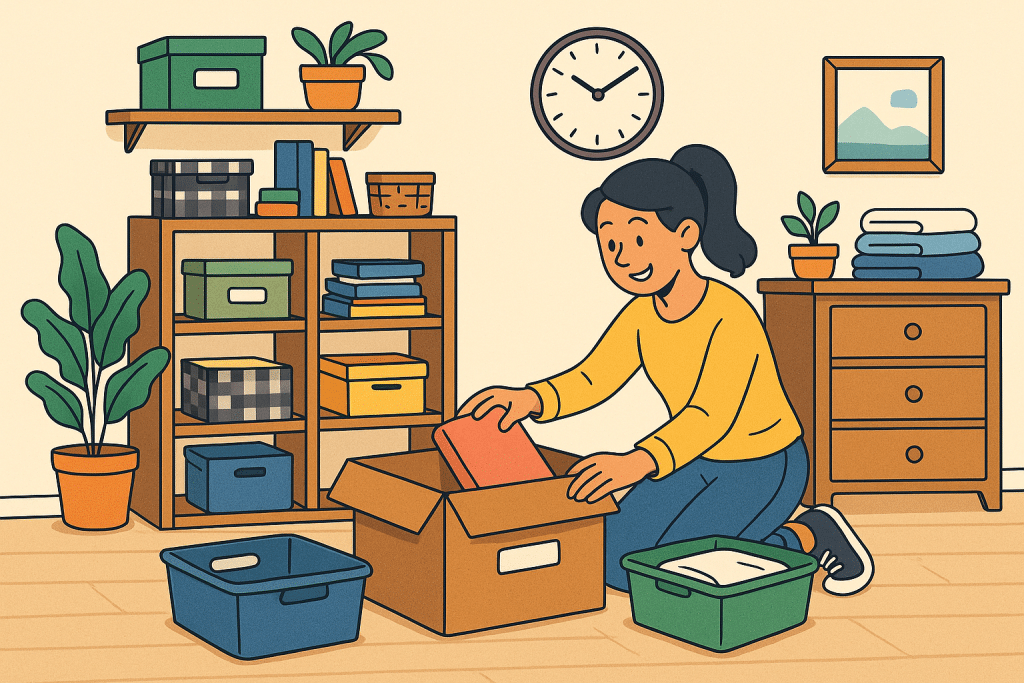
Containers and bins are the unsung heroes of organization. The key is visibility—transparent bins or labeled boxes reduce the “out of sight, out of mind” problem.
Best uses:
- Pantry staples in clear jars
- Seasonal clothing in labeled bins
- Office supplies in drawer organizers
This system reduces clutter creep and makes it easier to find what you need instantly.
Step 7: Upgrade Closet Systems
Closets are often the most underutilized spaces in homes. By upgrading to modular closet systems with adjustable rods, pull-out drawers, and shoe racks, you can multiply storage capacity without increasing square footage.
Walk-in closet trends are moving toward capsule wardrobes—keeping fewer, higher-quality items that mix and match easily. This not only cuts clutter but also simplifies daily dressing decisions.
Step 8: Streamline Digital Clutter
A truly organized home isn’t only about physical items. Digital clutter—like endless notifications, emails, and unorganized files—affects how efficiently you function at home.
Steps to fix this:
- Use a shared family calendar app to track activities.
- Digitize paper clutter (receipts, manuals, bills).
- Set aside weekly “digital decluttering” time.
Reducing mental load improves how you interact with your living space.
Step 9: Focus on Sustainable Organization
Eco-friendly organization is becoming a mainstream expectation. Instead of buying cheap plastic containers, consumers are opting for bamboo, glass, and recycled materials.
Sustainability also means buying less but better—choosing durable furniture and organizing tools that last. This shift reduces both environmental waste and household clutter in the long run.
Step 10: Maintain With Daily Micro-Habits
The final step is maintenance. Even the most organized home can spiral into chaos without consistent habits. The trick is to create micro-habits that take less than five minutes daily.
Examples:
- Putting away coats and shoes immediately when you enter
- Doing a quick “10-minute tidy” each evening
- Keeping a donation box accessible for items you no longer need
Over time, these small habits prevent big messes and keep your home consistently functional.
Conclusion
Organizing your home in 2025 is about more than neatness—it’s about creating a space that works with your lifestyle, not against it. By decluttering, using smart storage, adopting technology, and maintaining micro-habits, you can build a functional home that feels less stressful and more enjoyable.
References
- Better Homes & Gardens. (2023) 30 Home Organization Ideas That Will Change Your Life. Available at: https://www.bhg.com (Accessed: 17 September 2025).
- The Spruce. (2022) 50 Easy Organizing Ideas for Your Home. Available at: https://www.thespruce.com (Accessed: 17 September 2025).
- Good Housekeeping. (2024) The Ultimate Guide to Decluttering and Organizing Your Home. Available at: https://www.goodhousekeeping.com (Accessed: 17 September 2025).

 Strategies for Maintaining Physical Fitness on a Tight Schedule