Wellness Routines That Improve Focus
Lucia Fernandez September 24, 2025
Staying sharp in today’s world is harder than ever. Between endless notifications, hybrid work stress, and sleepless nights, our ability to concentrate is constantly under attack. But new wellness routines that improve focus are changing the game, blending neuroscience, lifestyle hacks, and functional wellness into daily habits anyone can adopt.
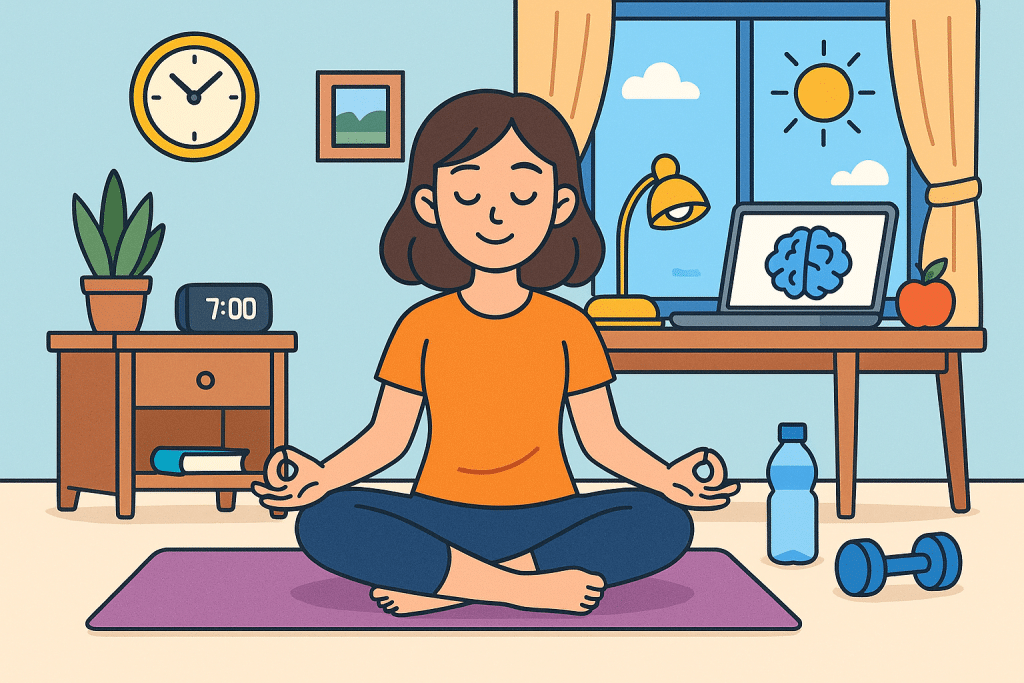
Why Focus Has Become a Wellness Priority
The global wellness industry has shifted from simply looking good to actually performing well. With burnout rates at record highs, people are demanding practical ways to stay productive without sacrificing health. A recent Gallup survey revealed that 62% of employees struggle with focus due to stress and fatigue, making it one of the top workplace performance challenges (Gallup 2023).
Focus is now seen as a skill—one that can be trained and supported through intentional wellness practices. From biohacking routines to simple mindfulness, the latest trends show a surge in demand for natural, accessible solutions.
1. Morning Movement: The Natural Brain Primer
One of the most reliable wellness routines that improve focus is morning exercise. A 20-minute cardio session is proven to increase cerebral blood flow, activating the prefrontal cortex—the brain region responsible for attention and decision-making (Pontifex et al. 2019).
Best Practices:
- Short HIIT workouts: 10–15 minutes can stimulate dopamine and norepinephrine.
- Outdoor walks: Natural light regulates circadian rhythm and improves mental alertness.
- Stretching + breathing: Even low-impact yoga primes the nervous system for focus.
Pro tip: Keep workouts light in the morning. Intense training may cause fatigue instead of sharpening concentration.
2. Functional Nutrition for Cognitive Clarity
The concept of “brain fuel” is going mainstream. Functional wellness now emphasizes nootropic foods and supplements that support neurotransmitter activity.
Trending Foods & Supplements:
- Omega-3 fatty acids (salmon, chia seeds) – linked to improved memory and focus (Gómez-Pinilla 2008).
- Adaptogens like ashwagandha and rhodiola – help balance cortisol, reducing stress-related brain fog.
- Caffeine + L-theanine – a natural combo in green tea that enhances alertness while minimizing jitters.
Nutritionists recommend avoiding refined sugar spikes since they lead to “focus crashes” later in the day.
3. Tech-Assisted Focus: Biohacking Tools
Emerging tech has entered the wellness space, offering personalized routines that improve focus.
- Wearable EEG headbands track brainwave patterns and guide meditation sessions.
- Blue-light filtering glasses help remote workers maintain circadian health.
- Pomodoro timers and focus apps integrate breathing exercises with productivity cycles.
A report from the Global Wellness Institute shows that wellness technology adoption has grown by 65% since 2020, with cognitive performance tools leading the surge (GWI 2022).
4. Mindfulness as a Daily Reset
Meditation isn’t new, but its application for focus training is exploding. Neuroscience research confirms that mindfulness strengthens the anterior cingulate cortex, the brain’s “attention controller” (Tang, Hölzel and Posner 2015).
Practical Mindfulness Routines:
- Micro-meditations: 2–3 minutes of breath focus before big tasks.
- Body scan breaks: Reduces tension and restores mental clarity.
- Digital detox windows: Scheduled “offline” time to refresh attention span.
Companies like Google and SAP even integrate mindfulness sessions into their employee wellness programs, citing higher productivity outcomes.
5. The Role of Sleep and Circadian Alignment
Poor sleep is one of the most underestimated killers of focus. A 2023 study by the American Academy of Sleep Medicine found that sleep-deprived adults experience up to 50% slower cognitive reaction times (AASM 2023).
Routines to Support Sleep and Focus:
- Consistent bedtime: Even on weekends.
- Blue-light cutoff: No screens an hour before bed.
- Magnesium-rich foods: Pumpkin seeds, dark chocolate, or supplements for deeper sleep quality.
By regulating circadian rhythms, people report more natural energy during working hours, reducing dependence on caffeine.
6. Scalp and Focus: The Overlooked Connection
Interestingly, scalp health is being linked to cognitive performance. Poor circulation in the scalp not only affects hair health but may also reduce oxygen delivery near the brain. Wellness practitioners are now introducing scalp massage routines as part of holistic focus improvement.
Benefits of Scalp Care for Focus:
- Increases blood flow near cranial tissues.
- Reduces tension headaches caused by desk posture.
- Acts as a meditative, sensory ritual before high-focus work.
Scalp-focused practices—like acupressure massage tools and essential oil blends—are a fast-growing trend in functional wellness.
7. Building a Personalized Focus Routine
Consistency matters more than intensity when it comes to focus. A routine only works if it feels natural to you, so the goal is to layer small habits that fit your lifestyle. Over time, these habits reinforce each other and create steady, long-term improvements.
Sample Daily Routine for Focus
- Wake up + light cardio: Ten minutes of jogging, yoga, or stretching boosts circulation and signals to your brain that the day has started.
- Brain-fuel breakfast: An omega-3 smoothie with chia and greens gives your brain the nutrients it needs to stay sharp.
- Morning Pomodoro cycles: Work in short bursts with mindful pauses. Even a two-minute breathing break can reset your concentration.
- Midday scalp massage: Five minutes with oil or a massage tool relieves tension and recharges your senses after hours at the desk.
- Focused work blocks: Use blue-light filters through the afternoon to reduce eye strain and keep your energy from dipping.
- Digital sunset: Step away from screens an hour before bed. Journal, read, or prep for tomorrow to ease your mind.
- Sleep optimization: Keep your room cool, dark, and quiet. A calming tea or magnesium supplement can also help your body wind down.
This mix of movement, nutrition, mental breaks, and rest creates a balanced framework. You don’t need to copy it exactly—swap in habits that feel sustainable, and let the routine evolve as you do.
Conclusion: Focus as the New Wellness Currency
The shift toward wellness routines that improve focus reflects a cultural moment: health isn’t just about longevity, but about performing better in everyday life. The most effective routines combine movement, nutrition, mindfulness, sleep, and even scalp care into a sustainable lifestyle.
As 2025 continues, expect the lines between productivity and wellness to blur further—making focus not just a personal advantage, but a wellness essential.
References
- Harvard Health Publishing. (2021) Meditation: A simple, fast way to reduce stress. Harvard Medical School. Available at: https://www.health.harvard.edu/mind-and-mood (Accessed: 23 September 2025).
- American Psychological Association. (2020) The exercise effect. Available at: https://www.apa.org/monitor/2020/04/exercise (Accessed: 23 September 2025).
- National Sleep Foundation. (2022) How sleep affects focus and concentration. Available at: https://www.thensf.org/sleep-focus-concentration (Accessed: 23 September 2025).

 Gardening Ideas That Enhance Outdoor Spaces