Gardening Tips for Urban Spaces
Giulia Bianchi September 23, 2025
Urban gardening is transforming how city residents connect with nature. With limited room, people are embracing gardening tips for urban spaces that focus on vertical setups, container gardening, and smart tech. In 2025, these solutions are not only trendy but also practical for sustainable living.
Why Urban Gardening Matters in 2025
The rise of urban living has left many without access to traditional gardens. However, the benefits of greenery—improved air quality, reduced stress, and access to fresh food—are driving new innovations in urban gardening. According to the United Nations, by 2050 nearly 68% of the global population will live in cities, making green solutions more critical than ever (United Nations 2019).
Key Gardening Tips for Urban Spaces
1. Vertical Gardens for Maximum Yield
For small balconies or walls, vertical gardens are ideal. Using wall planters, trellises, or modular shelving, you can grow herbs, leafy greens, and even strawberries. This approach increases yield per square foot and doubles as stylish décor.
Pro Tip: Choose low-maintenance plants like pothos, ferns, and basil for faster success.
2. Container Gardening for Flexibility
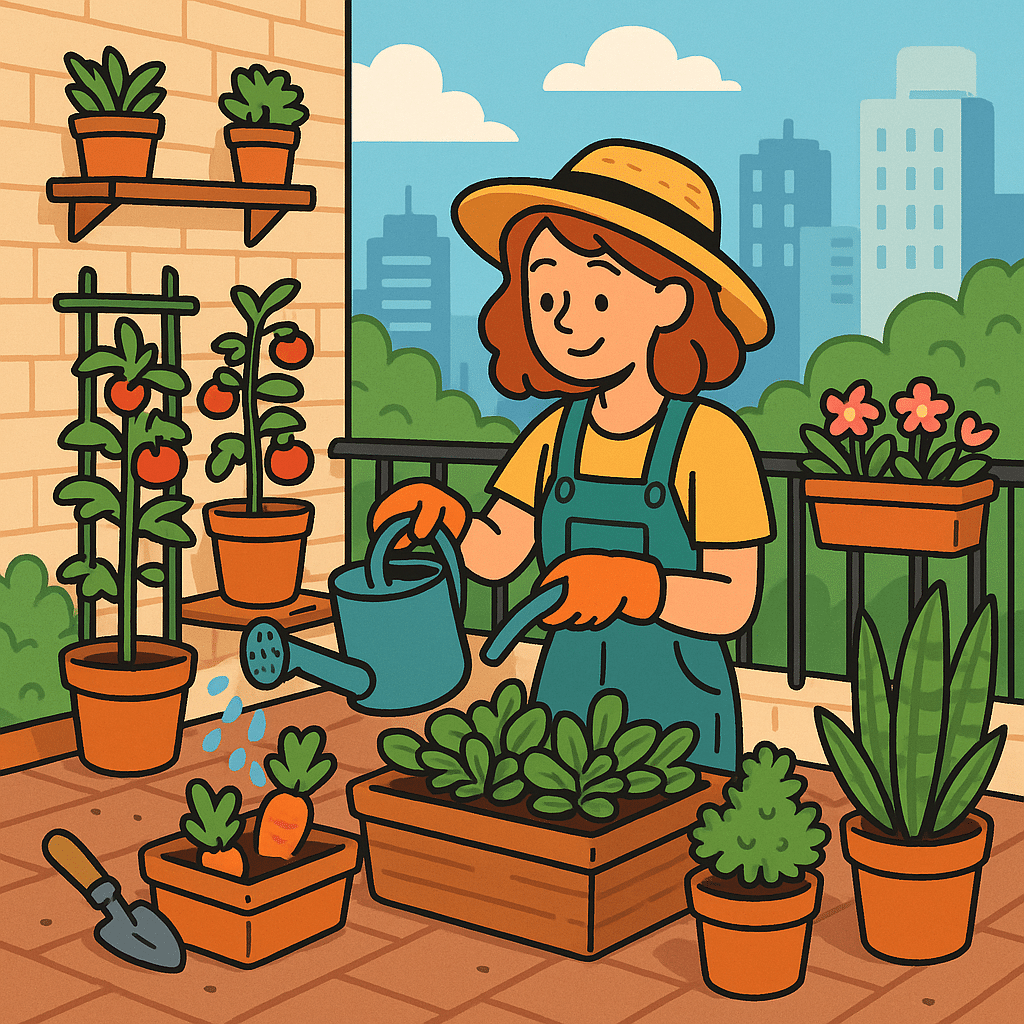
Containers allow city dwellers to experiment with everything from tomatoes to peppers in tight areas. Lightweight pots, grow bags, and self-watering planters make maintenance simple.
- Use light soil mixes for better drainage.
- Rotate containers to ensure all plants get sunlight.
- Opt for compact or dwarf plant varieties designed for small areas.
Research shows that container gardening not only improves food security but also supports mental well-being for urban residents (Armstrong 2000).
3. Smart Gardening with Hydroponics & IoT
Hydroponic systems are becoming a major trend in 2025. These soil-free setups use nutrient-rich water and can be managed via smartphone apps. With compact hydroponic kits, residents can grow lettuce or herbs year-round in apartments.
- Indoor LED grow lights simulate sunlight.
- IoT sensors monitor soil moisture, pH, and temperature.
- Automated watering saves time and ensures healthy plants.
The global hydroponics market is projected to grow to $16 billion by 2025 (MarketsandMarkets 2021), showing how much momentum this trend carries.
4. Rooftop Gardens for Community Living
Rooftops offer untapped potential in crowded cities where green space is scarce. Turning them into gardens goes far beyond private use. Shared rooftop gardens can bring neighbors together, foster small-scale farming projects, and improve the overall health of the building and its surroundings. They also reduce the “urban heat island” effect by cooling surfaces, and they play a role in managing stormwater runoff by absorbing rainfall before it overwhelms city drains.
Community rooftop gardens can be as simple as potted plants tended by a few residents, or as ambitious as organized urban farms that supply local households. They create opportunities for workshops, shared meals, and intergenerational learning, making rooftops places where people connect instead of just empty spaces above their heads.
Benefits of rooftop gardening:
- Lowers indoor cooling costs. Green cover helps insulate buildings, reducing reliance on air conditioning during hot months.
- Provides pollinator habitats. Bees, butterflies, and other pollinators thrive in rooftop ecosystems, helping urban biodiversity.
- Strengthens neighborhood food resilience. Residents can grow vegetables, herbs, and fruits locally, cutting food miles and offering fresher, healthier produce.
- Improves mental well-being. Tending plants and sharing green spaces can reduce stress and encourage a sense of belonging.
- Boosts property value. Buildings with functional green rooftops often stand out, attracting environmentally conscious tenants or buyers.
A well-designed rooftop garden doesn’t just decorate a skyline—it turns unused square footage into a productive, social, and ecological asset.
5. Choosing Native and Edible Plants
Native plants require less water and adapt better to local conditions. Pairing them with edible plants like lettuce, kale, or cherry tomatoes creates functional beauty—balconies that are both attractive and productive.
6. Composting in Small Spaces
Even in apartments, mini compost bins or bokashi systems make it possible to recycle food scraps into nutrient-rich fertilizer. Composting reduces waste and closes the loop for a more sustainable urban ecosystem.
Practical Urban Gardening Starter Guide
If you’re starting small, here’s a step-by-step plan to get your hands dirty—without needing acres of land.
1. Assess your space
Look around carefully. A sunny balcony, a windowsill with a few hours of direct light, a rooftop corner, or even a bare wall can all be turned into a productive growing spot. Pay attention to how much sunlight that area gets each day and whether it’s windy, shaded, or prone to heavy rain. These details will shape what you can grow successfully.
2. Pick your method
Urban gardening isn’t one-size-fits-all. If your space is tiny, vertical gardening with wall planters or hanging pots might be your best bet. Containers work well if you have a balcony or rooftop—old buckets, crates, and ceramic pots all do the job. If you’re more tech-curious, hydroponics lets you grow without soil, perfect for people with no outdoor access.
3. Select easy plants
Begin with forgiving plants that don’t demand too much. Herbs like mint, basil, parsley, and chives are fast-growing and rewarding. Leafy greens such as lettuce and spinach do well in containers. If you’ve got a bit more room, cherry tomatoes and chili peppers thrive in pots and bring color to your setup. Start small, then add variety as you gain confidence.
4. Invest in tools
The right tools make life easier. Self-watering pots keep plants alive even when you forget to water for a couple of days. LED grow lights help if your home doesn’t get much natural sun. A compact compost bin lets you recycle kitchen scraps into free fertilizer. You don’t need to buy everything at once—begin with the basics and expand gradually.
5. Track growth
Staying organized helps you learn faster. Apps like Vera or Planta let you log what you’re growing, track watering schedules, and even remind you when it’s time to fertilize. If you prefer old-school methods, a simple notebook or calendar works too. Record what thrives and what fails—you’ll spot patterns and improve with each season.
6. Enjoy the process
Urban gardening isn’t just about fresh food. It’s about creating a little pocket of green in the middle of concrete. Take pride in those first sprouts, celebrate your first harvest, and don’t be discouraged by a plant or two that doesn’t make it. Every mistake teaches you something useful for the next round.
The Future of Gardening Tips for Urban Spaces
In 2025, urban gardening is more than a hobby—it’s a survival strategy. Cities are increasingly integrating green infrastructure, and individuals are turning small balconies into thriving mini-farms. With smart tools, flexible systems, and creative designs, anyone can grow food and greenery—even in the smallest apartment.
References
- American Horticultural Society. (2021) Urban gardening: How small spaces can make a big impact. Available at: https://www.ahsgardening.org/ (Accessed: 22 September 2025).
- Royal Horticultural Society. (2022) Small-space gardening ideas for city living. Available at: https://www.rhs.org.uk/advice/ (Accessed: 22 September 2025).
- Environmental Protection Agency (EPA). (2023) Green roofs and urban gardens for sustainable cities. Available at: https://www.epa.gov/green-infrastructure/ (Accessed: 22 September 2025).

 Financial Habits That Build Long-Term Stability