Fitness Routines That Improve Mental Health
Lucia Fernandez September 30, 2025
Mental health and physical fitness are more connected than ever before. Today, emerging fitness routines not only sculpt the body but also support emotional resilience, reduce anxiety, and improve cognitive function. This article explores the most effective fitness routines that improve mental health, backed by science and practical guidance you can use right now.
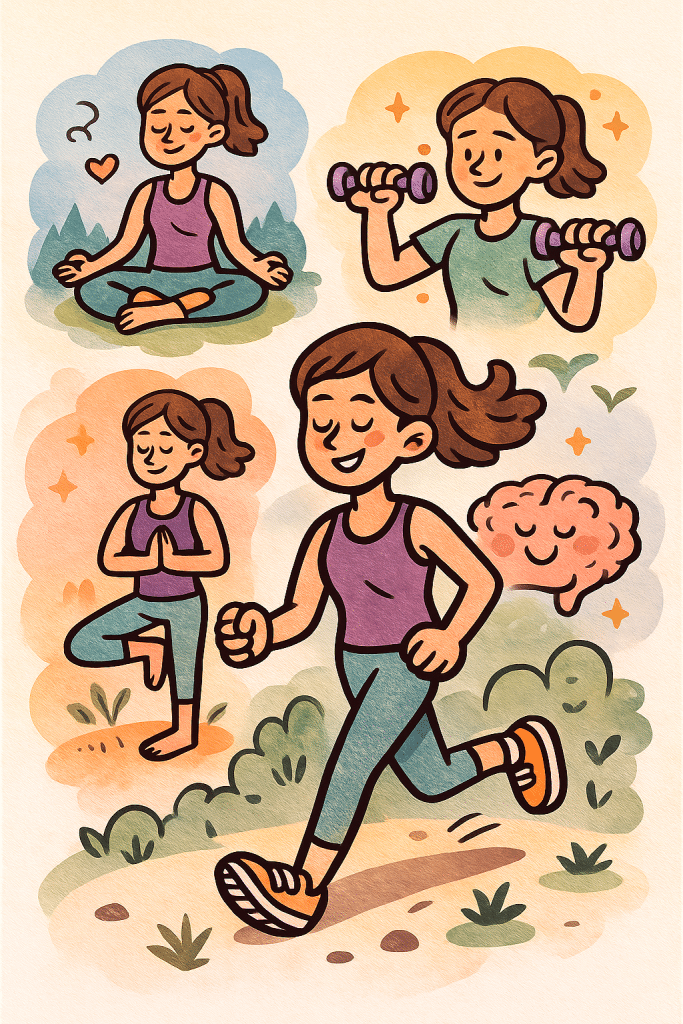
Why Fitness and Mental Health Are Linked
Exercise is often described as “medicine for the brain.” Regular physical activity stimulates the release of endorphins, serotonin, and dopamine—neurochemicals that regulate mood and motivation. Research from the Mayo Clinic confirms that physical activity reduces symptoms of depression and anxiety while improving overall mental outlook (Mayo Clinic 2022).
Additionally, exercise reduces inflammation and enhances neuroplasticity, meaning the brain adapts more effectively to stress and new challenges. This makes certain types of exercise particularly powerful in managing conditions like chronic stress and even mild depression.
1. The Rise of Mindful Fitness: Yoga and Breathwork
Why It Works
Yoga has long been associated with calmness, but new studies reveal that it can significantly reduce cortisol, the body’s primary stress hormone. Controlled breathing paired with movement stimulates the parasympathetic nervous system, promoting relaxation and resilience to daily stress.
Hot Trend: Yoga with Integrated Breathwork Apps
Tech-enabled yoga is becoming a major trend. Apps now guide not only poses but also synchronized breathing, making the practice more accessible. Studies show yoga can improve symptoms of generalized anxiety disorder by as much as 30% (Streeter et al. 2018).
Pro Tip: For maximum effect, try 20 minutes of slow, deep-breath yoga flow in the morning. Pair it with guided breathwork using an app like Calm or Headspace to amplify benefits.
2. Strength Training for Mental Resilience
Why It Works
Strength training isn’t just about building muscle. A 2020 study published in JAMA Psychiatry found that resistance training significantly reduces depressive symptoms, even in individuals without diagnosed depression (Gordon et al. 2020).
The act of progressive overload—gradually lifting heavier weights—creates a sense of accomplishment, which reinforces self-esteem and mental toughness. This makes it especially valuable for people struggling with self-image or motivation.
Hot Trend: Hybrid Workouts (Strength + Meditation)
Some boutique gyms now combine weightlifting sessions with guided meditation, capitalizing on the mental health benefits of both. This hybrid approach emphasizes discipline while encouraging mindfulness.
3. The Mental Health Boost of Outdoor Workouts
Why It Works
Exercising outdoors, especially in natural settings, offers unique advantages. Exposure to natural light regulates circadian rhythms, improving sleep and mood. Green spaces also lower perceived stress levels, according to the American Psychological Association (APA 2021).
Hot Trend: “Green Exercise” and Ecotherapy
Running clubs, hiking groups, and outdoor bootcamps are on the rise. These activities combine community, nature, and movement—three powerful factors in reducing loneliness and depression.
Pro Tip: Try scheduling at least two workouts a week outdoors, whether it’s a walk in the park or a trail run.
4. High-Intensity Interval Training (HIIT) for Stress Release
Why It Works
HIIT workouts—short bursts of high effort followed by rest—are scientifically proven to increase brain-derived neurotrophic factor (BDNF), a protein that supports brain health and reduces cognitive decline (Szuhany et al. 2015).
HIIT is also efficient. In as little as 20 minutes, participants can achieve both physical fitness and measurable reductions in anxiety.
Hot Trend: Virtual HIIT Communities
Online platforms now host live HIIT sessions with integrated leaderboards, combining social motivation with fitness. This gamified approach not only enhances adherence but also combats the isolation often linked to mental health struggles.
5. Group Fitness and Social Connection
Why It Works
Humans are social by nature, and group exercise taps into that need for connection. Group fitness has been shown to improve adherence to workout programs while reducing stress and feelings of loneliness.
A study from the University of New England revealed that individuals in group fitness classes reported a 26% reduction in perceived stress compared to solo exercisers (Yorks et al. 2017).
Hot Trend: Hybrid In-Person and Virtual Classes
The pandemic accelerated the popularity of live-streamed group classes. Now, many gyms offer hybrid memberships, allowing participants to join in-person or virtually. This ensures accessibility while maintaining the social benefits of group training.
6. Dance Fitness and Joyful Movement
Why It Works
Dance-based workouts combine physical exertion with creative expression. This dual stimulation of body and mind helps reduce symptoms of depression while enhancing cognitive flexibility.
Research from the Journal of Applied Gerontology found that dancing significantly improves mood and reduces stress hormones in adults of all ages (Kattenstroth et al. 2013).
Hot Trend: TikTok and Social Media Dance Workouts
Platforms like TikTok have transformed dance fitness into a global trend. These short, choreographed routines not only provide cardiovascular benefits but also encourage participation in a community-driven activity that enhances joy and connection.
7. Running and the “Runner’s High”
Why It Works
Running triggers the release of endocannabinoids, natural compounds in the brain that produce feelings of calm and euphoria. This phenomenon, often called the “runner’s high,” is now backed by neuroscience studies.
Long-distance runners report reductions in symptoms of depression and anxiety, and consistent running routines are linked to lower rates of relapse in individuals with mental health disorders (Craft and Perna 2004).
Hot Trend: Mental Health Running Clubs
Organizations like “Run for Mental Health” are blending exercise with advocacy, creating supportive communities where physical activity and mental wellness intersect.
8. Technology-Enhanced Fitness for Mental Health
Why It Works
Wearables and mental health tracking apps now integrate with fitness routines. Devices like Fitbit and Apple Watch can track heart rate variability (HRV), an indicator of stress and recovery.
Hot Trend: AI-Personalized Workouts
AI-driven apps are now tailoring routines specifically for mood and stress management, recommending exercises based on biometric feedback. For example, if HRV indicates high stress, the app might suggest yoga over HIIT for that day.
Practical Guide: Building Your Mental Health Fitness Routine
To integrate these trends into daily life, follow this practical blueprint:
- Mix It Up: Combine strength, cardio, and mindfulness-based practices.
- Set Realistic Goals: Aim for 150 minutes of moderate-intensity activity per week, as recommended by the WHO.
- Track Progress: Use wearables or journaling to monitor mood changes.
- Prioritize Consistency: Small daily efforts matter more than occasional intense sessions.
- Include Social Fitness: Join group classes or virtual communities for added accountability.
Final Thoughts
Mental health challenges are increasingly common, but fitness provides an accessible, powerful, and science-backed way to manage stress, anxiety, and depression. Whether through mindful yoga, outdoor runs, or cutting-edge tech-enhanced workouts, the right fitness routines that improve mental health can transform both body and mind.
The key is consistency, variety, and a willingness to embrace both the physical and emotional aspects of exercise.
References
- Mayo Clinic Staff. (2023) Exercise and stress: Get moving to manage stress. Mayo Clinic. Available at: https://www.mayoclinic.org (Accessed: 30 September 2025).
- Harvard Health Publishing. (2021) Exercising to relax. Harvard Medical School. Available at: https://www.health.harvard.edu (Accessed: 30 September 2025).
- American Psychological Association. (2022) The exercise effect: How fitness boosts mental health. APA. Available at: https://www.apa.org (Accessed: 30 September 2025).

 Interior Decor Ideas That Maximize Comfort