Fitness Challenges That Support Overall Health
Lucia Fernandez October 2, 2025
Many people start fitness challenges to push limits, but the smartest ones now aim not just for intensity but for sustainability, consistency, and holistic well-being. Fitness challenges that support overall health are trending in 2025 with designs rooted in habit formation, personalized nudges, and community incentives. These new formats help participants build lasting behavior, not just chase quick results.
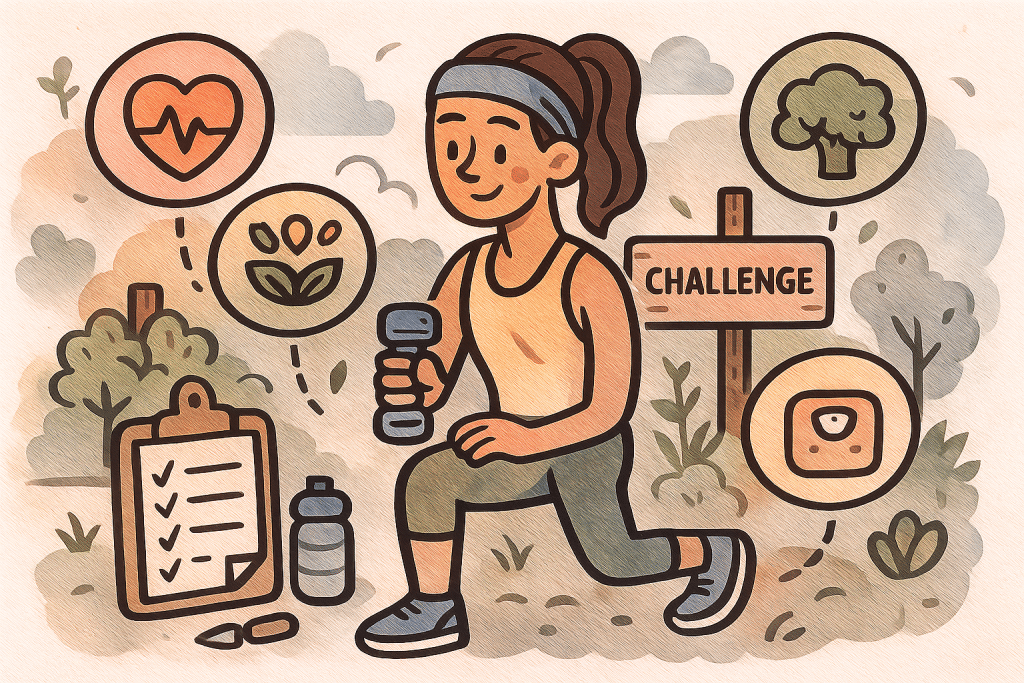
The Shift from Extremes to Habit-Based Challenges
Earlier viral fitness challenges (think 75 Hard) emphasized rigid rules, daily extremes, and strict diets. The new wave pivots toward flexibility, adaptiveness, and consistency. A recent study on habit formation found that there are “critical periods” when consistent gym attendance is more likely to convert into a long-term habit, especially when supported by personalized coaching or social prompts.
In the same vein, AI platforms are increasingly used to deliver “nudges” that encourage small daily movement — a 2024 trial showed algorithmic nudges boosted moderate-to-vigorous activity by about 7.6% over 12 weeks.
Popular Fitness Challenges That Support Overall Health
1. Micro-movement challenges
Rather than demanding a full hour at the gym, these challenges ask participants to insert short bursts of movement — 5 to 10 minutes several times daily. Over weeks and months, those micro-sessions accumulate into meaningful health benefits. They reduce the barrier of “no time” and help maintain consistency on busy days.
2. Step count or walking challenges
Walking remains one of the most accessible, low-risk forms of exercise. In 2025, walking challenges are being reshaped into smart-phone based accountability programs — for example, challenges to hit 8,000–10,000 steps per day for 60 days, with tiered rewards and progress tracking. Because many people fall below recommended physical activity levels, walking challenges help bridge that gap.
3. Hybrid challenges combining strength + mobility
These incorporate both resistance work and flexibility or mobility routines over a set period. A 30- or 60-day hybrid challenge might alternate strength training days with yoga or mobility work to promote balanced fitness. This approach mitigates injury risk, supports joint health, and better aligns with long-term health goals.
4. Community or accountability cohort challenges
Group challenges harness social motivation: betas, groups, or cohorts commit together to shared goals. Apps and platforms now combine peer interaction, leaderboards, and coach feedback to sustain momentum. The ACSM 2025 fitness trends report lists wearable technology and digital health integrations as key drivers of engagement in group-based programming.
How to Design a Health-Centered Fitness Challenge
Here’s a step-by-step guide to building or choosing a fitness challenge that supports overall health rather than only chasing aesthetics or extremes.
Step 1: Define your health goals
Decide your primary aims — strength, cardiovascular health, flexibility, mental well-being, or a blend. Challenges fare better when participants can see multiple dimensions of success, not just weight loss.
Step 2: Set realistic, incremental targets
- Use SMART goals (Specific, Measurable, Achievable, Relevant, Time-bound).
- For example: 15 pushups or 10 minutes of brisk walking every day for 30 days.
- Build in rest days and recovery weeks.
Step 3: Add nudges, reminders, and feedback
- Use push notifications or app alerts
- Include mid-day check-ins or motivational messages
- Give visual progress (bars, badges, streaks)
These help maintain engagement and reinforce consistency.
Step 4: Incorporate variety and recovery
- Alternate modalities (strength, mobility, cardio)
- Include active rest or yoga/stretch days
- Emphasize sleep, hydration, and nutrition as part of the challenge
A well-structured challenge keeps the body balanced and prevents burnout.
Step 5: Make it social or accountable
- Invite an accountability buddy or group
- Use shared logs or leaderboards
- Hold periodic check-ins or mini-competitions
The social factor multiplies motivation and helps sustain adherence.
Example: 60-Day Balanced Health Challenge Plan
| Phase | Focus | Daily Goal | Notes |
|---|---|---|---|
| Days 1–10 | Build Habit | 6,000 steps + 5–10 min bodyweight work | Start small to build consistency |
| Days 11–30 | Increase Load | 8,000 steps + 15 min strength + 10 min mobility | Alternate strength and mobility days |
| Days 31–50 | Peak | 10,000+ steps + 20 min strength + 15 min mobility | Add optional community mini-tasks |
| Days 51–60 | Consolidation | Continue same or taper volume | Reflect on progress and plan next steps |
Couple this with daily nutrition guidance, sleep tracking, and rest support for full health impact.
Why These Challenges Support Overall Health
- Encourage daily movement: They help you move regularly, which counters the risks of a sedentary lifestyle such as poor circulation, weight gain, and reduced energy.
- Promote balanced programming: By combining strength, mobility, and cardiovascular activity, they reduce injury risks and support multiple systems — muscular, cardiovascular, and joint health alike.
- Build lasting habits: Using habit-formation frameworks, these challenges make behavior change more sustainable by focusing on small, repeatable actions instead of short bursts of intensity.
- Enhance accountability: With social and tech support, participants stay engaged through reminders, progress tracking, and group motivation that keeps them consistent over time..
Things to Watch & Potential Risks
- Overdoing it in early stages can cause injury or fatigue
Many people start fitness challenges with enthusiasm and push too hard in the first week. This often leads to strains, burnout, or discouragement, which can derail the entire challenge before real progress is made. - Strict or punitive rules may backfire mentally
Programs that frame missed days as failure or enforce rigid daily requirements can create guilt instead of motivation. A healthier challenge emphasizes flexibility and progress, encouraging participants to continue even if they slip once or twice. - Not all challenges account for individual differences (age, ability, health conditions)
A “one-size-fits-all” plan can put unnecessary stress on participants with preexisting conditions or different fitness levels. It’s important to adapt exercises, intensity, and goals to each person’s capacity to ensure challenges remain safe and sustainable. - Be wary of platforms that promote unhealthy practices (excessive restriction, overtraining)
Some fitness challenges overemphasize weight loss or extreme discipline at the expense of overall well-being. Overtraining, excessive calorie restriction, or ignoring recovery can cause long-term health setbacks rather than improvements.
Where This Trend Is Headed
- More AI-driven personalization in challenge design (adjusting intensity in real time)
- Integration with wearables and health platforms for seamless data feedback
- Hybrid formats mixing virtual and in-person components
- Emphasis on holistic health: mental health, sleep, diet, movement rather than singular metrics
Conclusion
Fitness challenges in 2025 are shifting from push-your-limits tactics to sustainable, health-centered formats. The new breed of fitness challenges that support overall health emphasizes habit building, personalization, community, and balanced movement. Whether you join one or design your own, prioritize consistency, recovery, and adaptability — that’s the path toward an endurance of health, not just a short burst of performance.
References
World Health Organization (WHO). (2023). Physical activity. Available at: https://www.who.int/news-room/fact-sheets/detail/physical-activity (Accessed: 1 October 2025).
American College of Sports Medicine (ACSM). (2025). Worldwide Survey of Fitness Trends for 2025. Available at: https://www.acsm.org/education-resources/trending-topics-resources/acsm-fitness-trends (Accessed: 1 October 2025).
Zhang, A., et al. (2024). AI nudges to promote physical activity: evidence from a 12-week intervention. arXiv preprint arXiv:2401.10816. Available at: https://arxiv.org/abs/ (Accessed: 1 October 2025).

 Interior Design Ideas That Enhance Comfort